

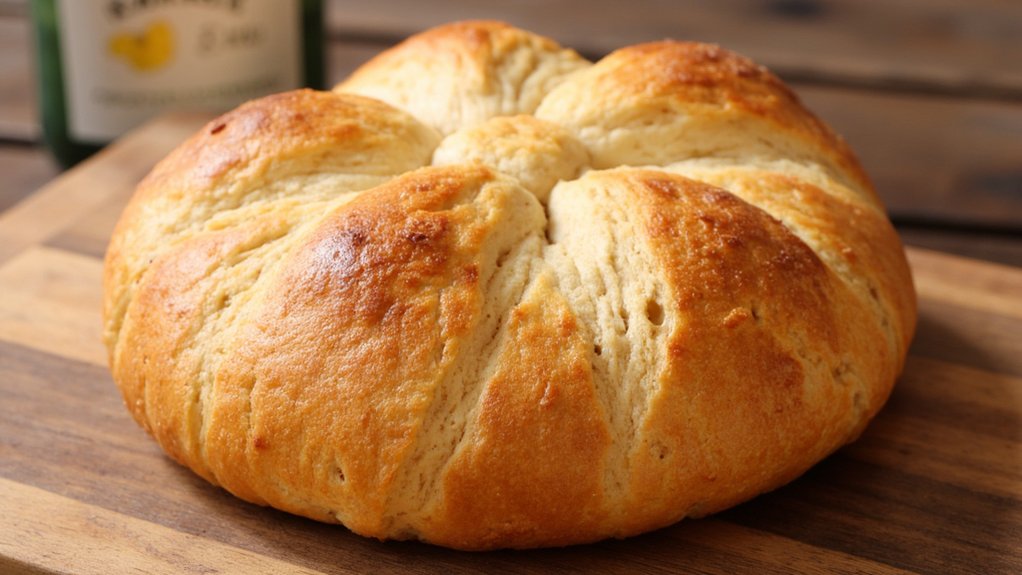
Easter is just around the corner, and it’s the perfect time to explore some sweet Italian treats. I still cherish the memory of my first taste of Colomba Di Pasqua, with its almond glaze and citrus-infused crumb—a true delight. Sharing such desserts with family makes Easter gatherings even more special. If you’re looking for more Italian delights to enhance your celebration, you’re in for a treat. Let’s uncover some delicious recipes that are sure to bring joy to your Easter table.
Colomba Di Pasqua
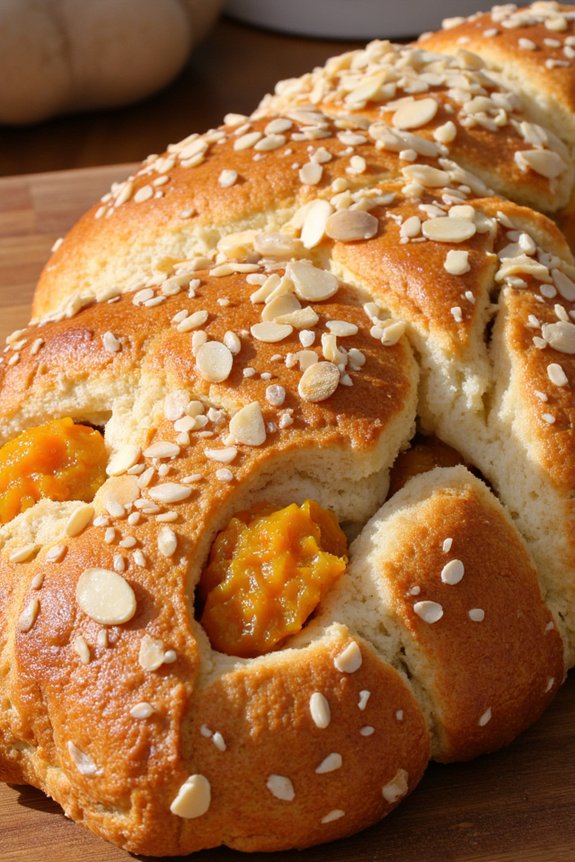
Colomba Di Pasqua, also known as Italian Easter Dove Bread, is a traditional sweet bread enjoyed during Easter celebrations in Italy. This festive treat is similar in texture and flavor to the well-known Panettone but is distinctively shaped like a dove, symbolizing peace and renewal. The bread is traditionally flavored with candied orange peel and almonds, providing a delightful blend of citrus and nutty aromas. The dough is enriched with butter and eggs, giving it a soft, fluffy texture that’s perfect for a celebratory Easter breakfast or dessert.
Creating Colomba Di Pasqua is a labor of love, requiring patience and attention to detail. The process involves multiple rises to achieve its airy texture and a careful folding technique to form the dove shape. The final touch is a crunchy almond glaze that adds a delightful contrast to the tender crumb of the bread. While it may take some time to prepare, the result is a show-stopping centerpiece for your Easter table, bringing the spirit of Italian tradition to your celebration.
Ingredients (Serves 4-6)
- 500g all-purpose flour
- 150g granulated sugar
- 2 teaspoons active dry yeast
- 200ml warm milk
- 4 large eggs, room temperature
- 150g unsalted butter, softened
- 1 teaspoon vanilla extract
- 1 teaspoon salt
- Zest of 1 orange
- 100g candied orange peel
- 100g almonds, chopped
- 100g pearl sugar (or coarse sugar)
- 50g almond flour
- 1 egg white
Instructions
- Prepare the Dough Base: In a bowl, dissolve the yeast in warm milk and let it sit for about 10 minutes until foamy. This indicates that the yeast is activated. In a large mixing bowl, combine the flour, sugar, and salt. Add the yeast mixture, eggs, softened butter, and vanilla extract. Mix until the dough comes together.
- Knead the Dough: Transfer the dough onto a floured surface and knead for about 10 minutes until smooth and elastic. You can also use a stand mixer with a dough hook for this step. Incorporate the orange zest and candied orange peel during the final few minutes of kneading.
- First Rise: Place the dough in a lightly oiled bowl, cover with a damp cloth, and let it rise in a warm place for about 2 hours or until it has doubled in size.
- Shape the Dough: Punch down the dough to release gases, then divide it into two parts. Shape one part into a log for the dove’s body. Divide the other part into two smaller pieces to form the wings. Arrange the pieces in a dove-shaped mold or form the shape manually on a baking tray lined with parchment paper.
- Second Rise: Cover the shaped dough with a cloth and let it rise again for 1 hour until it has doubled in size.
- Prepare the Topping: Preheat the oven to 180°C (350°F). In a small bowl, mix the almond flour with egg white to form a paste. Gently spread this paste over the risen dough. Sprinkle chopped almonds and pearl sugar over the top.
- Bake the Colomba: Place the bread in the preheated oven and bake for 30-35 minutes, or until golden brown and a skewer inserted into the center comes out clean.
- Cool and Serve: Allow the bread to cool completely on a wire rack before slicing and serving. This helps set the texture.
Extra Tips
When making Colomba Di Pasqua, verify all your ingredients are at room temperature to help the dough rise evenly. If you don’t have a dove-shaped mold, you can create a similar silhouette with a regular pan by shaping the dough manually before the second rise.
For a more aromatic bread, consider adding a teaspoon of almond extract in place of or alongside the vanilla extract. Finally, avoid opening the oven door during baking, as sudden temperature changes can cause the bread to collapse.
Pastiera Napoletana
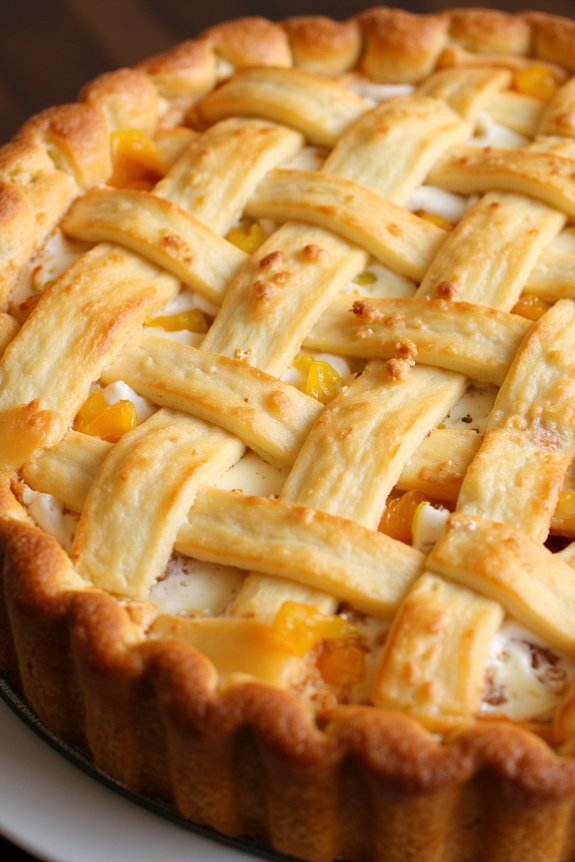
Pastiera Napoletana is a classic Italian dessert that dates back to ancient times, traditionally prepared during the Easter period. This rich, aromatic pie hails from Naples and is renowned for its unique combination of wheat berries, ricotta cheese, eggs, and fragrant orange blossom water. The crust is made from a buttery pastry, which perfectly complements the creamy, sweet filling.
The Pastiera Napoletana isn’t only a delicious treat but also a symbol of spring and renewal, making it a beloved centerpiece on Easter tables across Italy.
The preparation of Pastiera Napoletana involves several steps and requires a bit of patience, but the end result is well worth the effort. The filling’s distinctive flavor comes from the combination of cooked wheat, ricotta, and candied citrus, with the addition of cinnamon and vanilla for depth. This dessert is often prepared a few days in advance to allow the flavors to meld together beautifully.
Here, we provide a recipe to make Pastiera Napoletana for a serving size of 4-6 people, guaranteeing you can share this traditional delight with family and friends.
Ingredients
- For the Pastry:
- 250g all-purpose flour
- 125g unsalted butter, chilled and cubed
- 100g granulated sugar
- 1 large egg
- Zest of 1 lemon
- A pinch of salt
- For the Filling:
- 200g cooked wheat berries
- 250ml whole milk
- 50g unsalted butter
- 500g ricotta cheese
- 300g granulated sugar
- 3 large eggs
- 2 egg yolks
- 1 teaspoon vanilla extract
- 2 teaspoons orange blossom water
- 100g candied citrus peel, chopped
- Zest of 1 orange
- Zest of 1 lemon
- 1/2 teaspoon ground cinnamon
Cooking Instructions
- Prepare the Pastry:
- In a mixing bowl, combine the flour, sugar, lemon zest, and salt. Add the cubed butter and rub it into the flour mixture using your fingertips until it resembles coarse crumbs.
- Add the egg and mix until the dough comes together. Shape it into a disk, wrap it in plastic wrap, and refrigerate for at least 30 minutes.
- Cook the Wheat Berries:
- In a saucepan, combine the cooked wheat berries, milk, and butter. Cook over medium heat until the mixture thickens and becomes creamy, about 10-15 minutes. Set aside to cool.
- Prepare the Filling:
- In a large mixing bowl, beat the ricotta, sugar, eggs, and egg yolks until smooth. Stir in the vanilla extract, orange blossom water, zests, cinnamon, and candied citrus peel.
- Fold the cooled wheat berry mixture into the ricotta mixture until well combined.
- Assemble the Pie:
- Preheat the oven to 180°C (350°F). Roll out the chilled pastry on a floured surface to about 1/8-inch thickness. Line a 9-inch pie pan with the pastry, trimming the excess.
- Pour the filling into the pastry shell, smoothing the top with a spatula.
- Roll out the remaining pastry dough and cut it into strips. Arrange the strips in a lattice pattern over the top of the filling.
- Bake the Pastiera:
- Place the pie in the preheated oven and bake for 60-70 minutes, or until the filling is set and the top is golden brown.
- Allow the Pastiera to cool completely in the pan on a wire rack. For best results, let it rest for 1-2 days before serving.
Extra Tips
For the best flavor, prepare the Pastiera Napoletana a couple of days in advance, allowing the flavors to meld and develop.
When rolling out the pastry, work quickly to prevent the butter from melting, which can make the crust tough. If fresh wheat berries aren’t available, canned pre-cooked wheat can be used as a convenient alternative.
Finally, verify that the ricotta cheese is drained of excess moisture to prevent the filling from becoming too watery. Enjoy this delightful dessert with a dusting of powdered sugar just before serving.
Torta Pasqualina
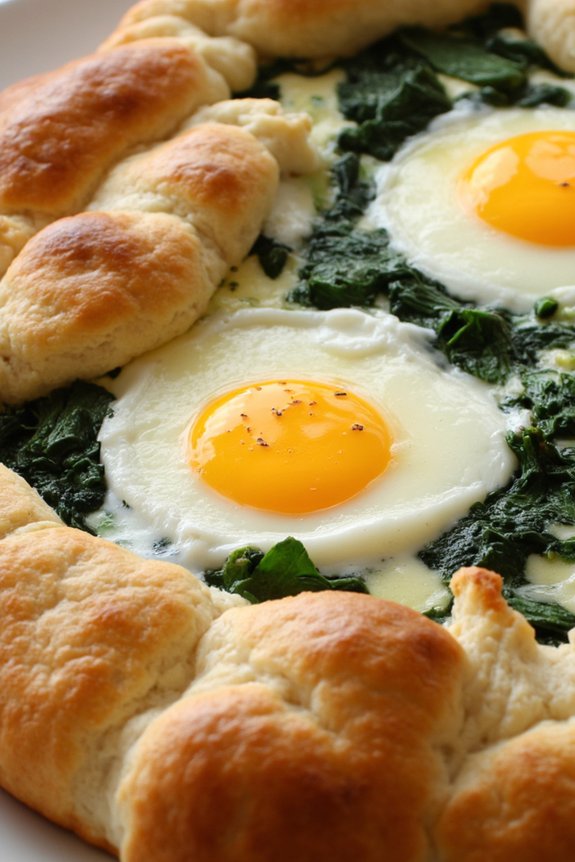
Torta Pasqualina is a traditional Italian Easter pie that hails from the Liguria region. This savory pie is a celebration of spring, featuring layers of flaky pastry filled with a delightful mixture of ricotta cheese, spinach or Swiss chard, and eggs. Historically, Torta Pasqualina was made with 33 layers of thin pastry to represent the years of Christ’s life, but modern versions are often simplified while still capturing the essence of this festive dish.
It’s a delightful way to enjoy the fresh flavors of the season and is a staple at many Italian Easter tables. This dish isn’t only a feast for the taste buds but also a visual treat. When you cut into the pie, you reveal whole eggs nestled into the filling, creating a beautiful and surprising presentation. The combination of creamy ricotta, earthy greens, and the richness of eggs encapsulated in golden pastry is simply irresistible.
Perfect for serving as a main course or a substantial side, Torta Pasqualina is sure to be a hit with family and friends during your Easter celebration.
Ingredients (Serves 4-6)
- 1 package of puff pastry (about 2 sheets)
- 500 grams of spinach or Swiss chard
- 400 grams of ricotta cheese
- 100 grams of Parmesan cheese, grated
- 6 eggs
- 1 onion, finely chopped
- 2 tablespoons olive oil
- Nutmeg, a pinch
- Salt and pepper, to taste
Cooking Instructions
- Prepare the Greens: Begin by washing the spinach or Swiss chard thoroughly. Drain and chop them. Heat olive oil in a skillet over medium heat, add the chopped onion, and sauté until translucent. Add the greens to the skillet and cook until wilted. Season with salt, pepper, and a pinch of nutmeg. Remove from heat and allow it to cool.
- Prepare the Filling: In a large mixing bowl, combine the ricotta cheese, grated Parmesan, and two of the eggs. Mix well until smooth. Add the cooled spinach mixture to the ricotta blend and stir until fully incorporated. Adjust seasoning as necessary.
- Prepare the Pastry: Preheat your oven to 180°C (350°F). Roll out one sheet of puff pastry and line it in a greased 9-inch pie pan, allowing the edges to hang over the sides.
- Assemble the Torta: Spoon the ricotta and spinach mixture into the pastry-lined pan and smooth the top. Make four shallow wells in the filling and crack one egg into each well, being careful not to break the yolks.
- Top the Pastry: Roll out the second sheet of puff pastry and place it over the filling. Trim any excess pastry, and crimp the edges to seal the pie. Make a few small slits on top to allow steam to escape. Beat the remaining egg and brush it over the pastry for a golden finish.
- Bake: Place the pie in the preheated oven and bake for about 45-50 minutes, or until the pastry is golden brown and crisp. Allow it to cool slightly before serving.
Extra Tips
When preparing Torta Pasqualina, verify that the greens are well-drained to prevent the filling from becoming too watery. If Swiss chard is unavailable, spinach is a great substitute.
Using fresh, high-quality ricotta will enhance the creaminess and flavor of the filling. Additionally, if you prefer a lighter pastry, you can use phyllo dough instead of puff pastry, layering multiple sheets brushed with olive oil for a similar traditional effect.
Finally, the torta can be made a day in advance and gently reheated, making it an excellent choice for a stress-free Easter celebration.
Cassata Siciliana
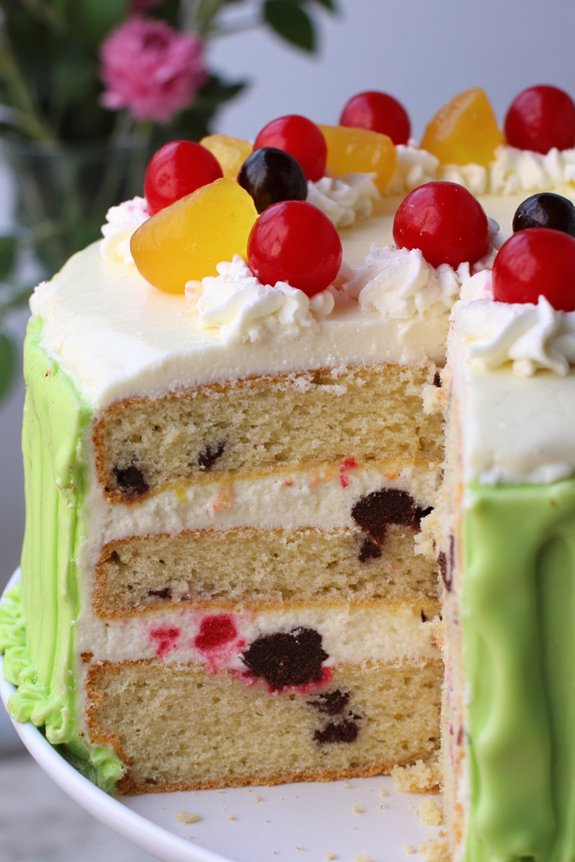
Cassata Siciliana is a traditional Italian dessert that hails from Sicily, known for its vibrant colors and rich flavors. This exquisite cake is a delightful combination of ricotta cheese, candied fruits, and a light sponge cake, all encased in a sweet marzipan shell and topped with a layer of icing and candied fruit decorations.
It’s particularly popular around Easter time, making it a festive addition to any holiday table. The origins of Cassata Siciliana can be traced back to the Arab rule in Sicily, and over the centuries, it has evolved into the beloved dessert we enjoy today.
This dessert is a true showstopper, thanks to its beautiful presentation and the intricate balance of flavors. The creamy ricotta filling is blended with sugar and a variety of candied fruits, creating a sweet and tangy center that contrasts beautifully with the delicate sponge cake layers.
The outer marzipan shell not only adds a nutty sweetness but also helps to keep the cake moist. To make this dessert for a gathering of 4-6 people, you’ll need a variety of ingredients that bring together the unique textures and tastes of Cassata Siciliana, making it a memorable treat for everyone.
Ingredients for 4-6 servings:
- 1 sponge cake (about 9 inches in diameter)
- 2 cups ricotta cheese
- 1 cup powdered sugar
- 1 teaspoon vanilla extract
- 1/2 cup mixed candied fruits, chopped
- 1/4 cup chocolate chips
- 1/4 cup maraschino cherries, halved
- 1/2 cup marzipan
- Green food coloring
- 1/2 cup apricot jam
- 1 cup powdered sugar (for icing)
- 2-3 tablespoons water (for icing)
- Additional candied fruits for decoration
Cooking Instructions:
- Prepare the Ricotta Filling: In a large mixing bowl, combine the ricotta cheese, powdered sugar, and vanilla extract. Mix until smooth and creamy. Fold in the chopped candied fruits and chocolate chips. Cover and refrigerate the filling while you prepare the rest of the cake.
- Color and Roll the Marzipan: Knead the marzipan with a few drops of green food coloring until you achieve the desired shade. Roll it out on a surface lightly dusted with powdered sugar into a thin sheet large enough to cover the sides of the cake.
- Assemble the Cake: Slice the sponge cake horizontally into two layers. Place the bottom layer on a serving plate and spread a thin layer of apricot jam on top. Spoon the ricotta filling over the jam, spreading it evenly. Place the second layer of sponge cake on top.
- Cover with Marzipan: Wrap the green marzipan around the sides of the cake, pressing gently to adhere. Trim any excess marzipan.
- Prepare the Icing: In a small bowl, mix the remaining powdered sugar with water to create a thick icing. Pour this over the top of the cake, allowing it to drip slightly down the sides.
- Decorate the Cake: Arrange the maraschino cherries and additional candied fruits on top of the icing while it’s still wet, pressing them gently into the icing to secure.
- Chill and Serve: Refrigerate the cassata for at least two hours before serving to allow the flavors to meld and the filling to set. Slice and enjoy!
Extra Tips: When making Cassata Siciliana, it’s important to use fresh ricotta for the best texture and flavor. If possible, prepare the dessert a day ahead to allow the flavors to fully develop.
Be patient while working with marzipan, as it can be delicate; dust your hands and rolling pin with powdered sugar to prevent sticking. For a more traditional look, you can pipe decorative icing patterns on top of the cake before adding the candied fruits.
Biscotti Di Pasqua

Biscotti Di Pasqua, or Italian Easter Cookies, are delightful treats that embody the spirit of Easter with their vibrant colors and sweet flavors. Traditionally made during the Easter season, these cookies are enjoyed by families across Italy and are often shared as a symbol of good luck and prosperity.
The cookies are lightly sweetened and have a unique texture that’s both crunchy and tender, making them perfect for enjoying with a cup of coffee or tea. These cookies often feature decorative icing and colored sprinkles, reminiscent of Easter eggs, which make them a festive addition to any holiday table.
The preparation of Biscotti Di Pasqua can be a fun family activity, as the dough is easy to work with and allows for creativity in shaping and decorating. Whether you’re making them for a gathering or as a gift, these cookies are sure to bring joy and a taste of Italian tradition to your Easter celebrations.
Ingredients (Serves 4-6 people):
- 3 1/2 cups all-purpose flour
- 1 cup granulated sugar
- 1 tablespoon baking powder
- 1/2 teaspoon salt
- 3 large eggs
- 1/2 cup unsalted butter, softened
- 1 teaspoon vanilla extract
- 1/2 teaspoon almond extract
- Zest of 1 lemon
- 1/4 cup milk
- Assorted colored sprinkles
- 1 cup powdered sugar
- 2 tablespoons milk
- 1 teaspoon vanilla extract (for icing)
Cooking Instructions:
- Preheat the Oven: Begin by preheating your oven to 350°F (175°C). Line two baking sheets with parchment paper to prevent the cookies from sticking.
- Prepare the Dry Ingredients: In a large mixing bowl, whisk together the flour, sugar, baking powder, and salt. This guarantees the leavening agent is evenly distributed throughout the flour.
- Blend Wet Ingredients: In a separate bowl, beat together the eggs, softened butter, vanilla extract, almond extract, and lemon zest until well combined and creamy.
- Combine Ingredients: Gradually add the wet mixture to the dry ingredients, alternating with the milk. Mix until a soft dough forms. If the dough is too sticky, you can add a little more flour until it’s manageable.
- Shape the Cookies: Divide the dough into small pieces, about the size of a golf ball. Roll each piece into a rope about 6 inches long, then shape into a loop or twist, pressing the ends together.
- Bake the Cookies: Place the shaped dough on the prepared baking sheets, leaving some space between each cookie. Bake in the preheated oven for 18-20 minutes or until the cookies are lightly golden.
- Prepare the Icing: While the cookies are baking, make the icing by mixing powdered sugar, milk, and vanilla extract in a small bowl until smooth.
- Decorate: Once the cookies are out of the oven and have cooled slightly, drizzle the icing over the top and sprinkle with colored sprinkles. Allow the icing to set before serving.
Extra Tips:
For an authentic Italian touch, you can incorporate a splash of anise extract instead of almond extract, which is a traditional flavor in Italian cookies. If you prefer a richer color for the icing, food coloring can be added to the mixture.
Dough that’s too dry can be adjusted with a little more milk, while too sticky dough can be remedied with additional flour. Remember, these cookies are highly customizable, so feel free to experiment with different shapes and decorations to make them your own!
Zeppole Di San Giuseppe
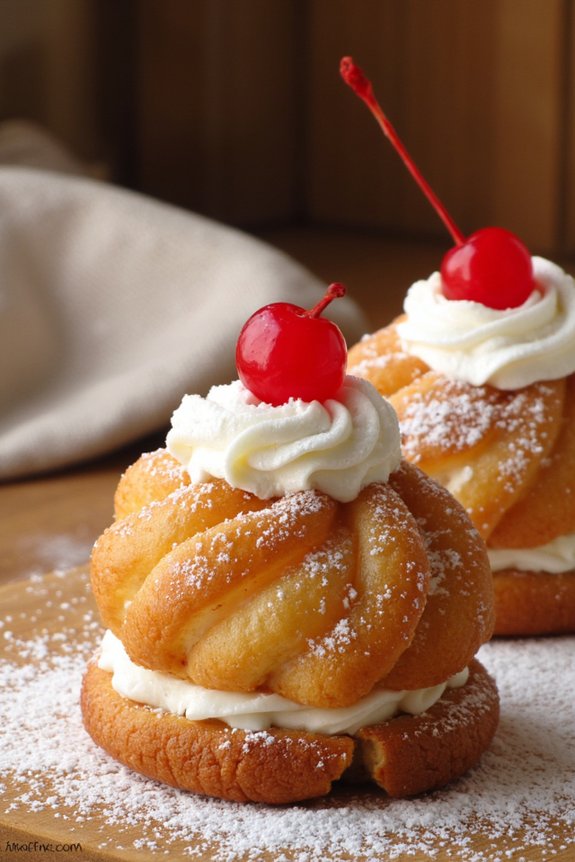
Zeppole Di San Giuseppe is a delightful Italian pastry traditionally prepared to celebrate St. Joseph’s Day on March 19th. These delicious treats are a perfect addition to your Easter dessert table. Zeppole are light and airy choux pastry doughnuts, typically filled with a rich pastry cream and topped with a cherry. They’re a symbol of Italian culinary tradition and can be found in many bakeries across Italy during this festive period.
The origin of Zeppole Di San Giuseppe can be traced back to the southern regions of Italy, particularly Naples, where they’re deep-fried to golden perfection. However, baked versions are also popular, offering a slightly lighter alternative. The combination of the crispy outer shell with the creamy interior makes this dessert a favorite among families celebrating Easter. Prepare to indulge in these delectable pastries that bring together tradition and taste in every bite.
Ingredients (serving size: 4-6 people):
- 1 cup of water
- 1/2 cup of unsalted butter
- 1 cup of all-purpose flour
- 4 large eggs
- Pinch of salt
- Vegetable oil (for frying)
- 2 cups of milk
- 1/2 cup of granulated sugar
- 1/4 cup of cornstarch
- 4 egg yolks
- 1 teaspoon of vanilla extract
- Powdered sugar (for dusting)
- Maraschino cherries (for topping)
Cooking Instructions:
- Prepare the Pastry Dough: In a medium saucepan, combine water, butter, and a pinch of salt, bringing the mixture to a boil over medium heat. Once boiling, reduce the heat to low and add the flour all at once, stirring vigorously with a wooden spoon until the mixture forms a ball and pulls away from the sides of the pan.
- Incorporate the Eggs: Remove the dough from heat and let it cool slightly. Add the eggs one at a time, mixing well after each addition until the dough is smooth and glossy.
- Shape the Zeppole: Transfer the dough to a piping bag fitted with a large star tip. Pipe circles onto parchment-lined baking sheets if baking, or directly into hot oil if frying, making certain a space in the center for filling later.
- Fry or Bake the Zeppole: If frying, heat vegetable oil in a deep pan to 350°F (175°C) and fry the zeppole in batches until golden brown, about 4 minutes per side. If baking, preheat the oven to 375°F (190°C) and bake for 25-30 minutes until puffed and golden.
- Prepare the Pastry Cream: In a saucepan, heat the milk until just simmering. In a separate bowl, whisk together sugar, cornstarch, and egg yolks until smooth. Gradually pour the hot milk into the egg mixture, whisking constantly. Return the mixture to the saucepan and cook over medium heat until thickened. Remove from heat, stir in vanilla extract, and let it cool.
- Assemble the Zeppole: Once the zeppole are cooled, fill a piping bag with the pastry cream. Cut the zeppole horizontally or create a small hole in the side, and fill them generously with the cream. Dust with powdered sugar and top each with a maraschino cherry.
Extra Tips:
For best results, make sure the dough cools slightly before adding the eggs to prevent them from cooking prematurely. If you opt for the baked version, make certain to let the zeppole cool in the oven with the door slightly ajar to prevent them from deflating.
The pastry cream can be made a day in advance and stored in the refrigerator, making the assembly process quicker. Finally, be mindful of the oil temperature when frying to achieve an even golden color without burning.
Tiramisu Pasquale
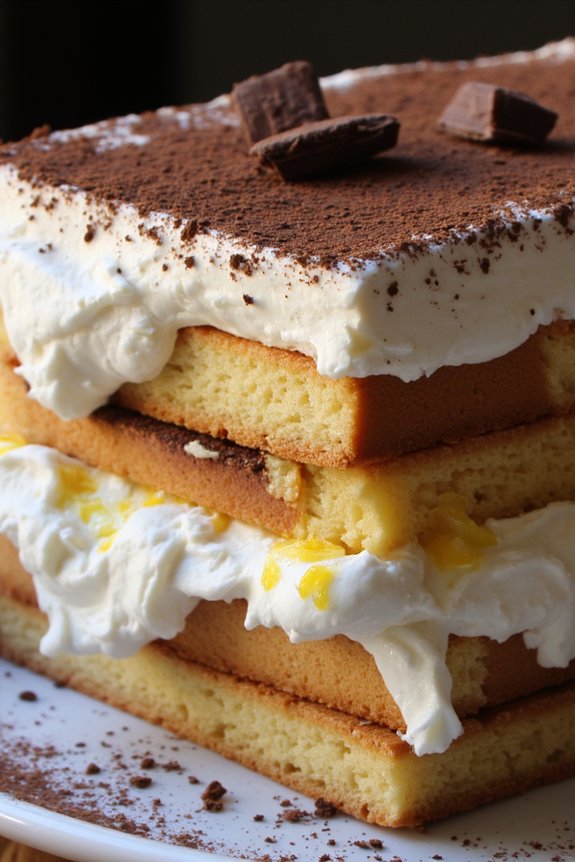
Tiramisu Pasquale is a delightful twist on the classic Italian dessert, perfect for celebrating Easter with a sweet touch. This version incorporates traditional Easter flavors, such as the zest of citrus and the subtle warmth of spices, making it a unique addition to your holiday spread. The layers of creamy mascarpone, espresso-soaked ladyfingers, and a hint of zesty brightness create a harmonious blend that’s both invigorating and indulgent.
This dessert can be prepared ahead of time, making it a convenient choice for Easter gatherings. Its rich and creamy texture, coupled with the light citrusy notes, offers a perfect balance that will satisfy both adults and children alike. Whether you’re hosting a large family dinner or a small gathering of friends, Tiramisu Pasquale is sure to impress your guests and become a beloved Easter tradition.
Ingredients for 4-6 servings:
- 400g ladyfingers (Savoiardi)
- 500g mascarpone cheese
- 4 large eggs, separated
- 150g granulated sugar
- 1 cup strong brewed espresso, cooled
- Zest of 1 orange
- Zest of 1 lemon
- 1 teaspoon vanilla extract
- 1 teaspoon ground cinnamon
- 1/2 teaspoon ground nutmeg
- Cocoa powder, for dusting
- Dark chocolate shavings (optional)
- A pinch of salt
Cooking Instructions:
- Prepare the Egg Mixture: Begin by separating the egg yolks from the whites. In a large bowl, combine the egg yolks and half of the sugar. Whisk the mixture until it becomes pale and creamy. Add the mascarpone cheese, orange zest, lemon zest, and vanilla extract, mixing well until smooth and fully combined.
- Whip the Egg Whites: In a separate, clean bowl, whisk the egg whites with a pinch of salt until they form soft peaks. Gradually add the remaining sugar, continuing to whisk until stiff peaks form. Gently fold the whipped egg whites into the mascarpone mixture, making sure to maintain a light and airy texture.
- Soak the Ladyfingers: Pour the cooled espresso into a shallow dish and quickly dip each ladyfinger into the espresso, ensuring they’re soaked but not soggy. Arrange a layer of soaked ladyfingers at the bottom of a serving dish or individual dessert cups.
- Layer the Tiramisu: Spread half of the mascarpone mixture over the layer of ladyfingers. Sprinkle half of the ground cinnamon and nutmeg on top. Add another layer of soaked ladyfingers and cover with the remaining mascarpone mixture. Smooth the top with a spatula.
- Chill and Serve: Cover the dish with plastic wrap and refrigerate for at least 4 hours, or overnight, to allow the flavors to meld and the dessert to set. Before serving, dust the top with cocoa powder and garnish with dark chocolate shavings if desired.
Extra Tips:
To maintain the mascarpone mixture’s light and airy quality, fold in the egg whites gently and avoid over-mixing. If you prefer a stronger coffee flavor, consider adding a splash of coffee liqueur to the espresso. For a more festive presentation, you can layer the tiramisu in individual glasses, allowing guests to see the beautiful layers.
Ciaramicola
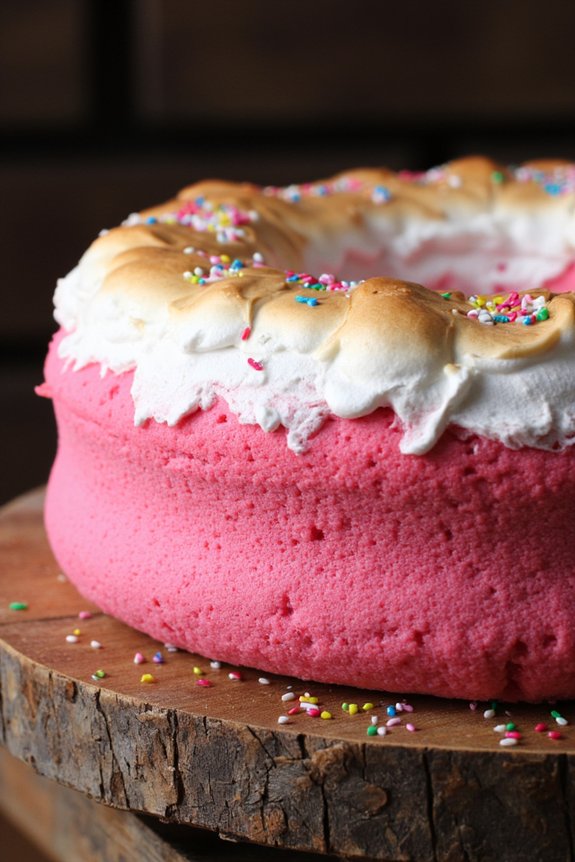
Ciaramicola is a delightful Italian Easter dessert that hails from the Umbria region. This traditional cake is known for its vibrant pink color and its unique anise flavor, which sets it apart from other Easter treats. Topped with a sweet meringue and colorful sprinkles, Ciaramicola isn’t only a feast for the taste buds but also a visually appealing centerpiece for your Easter table.
The pink hue commemorates the passion of Christ, while the meringue symbolizes purity and resurrection, making it a meaningful addition to the holiday. The cake itself is light and fluffy, thanks to the combination of eggs and yeast, and is often baked in a ring mold. Its distinct anise flavor pairs beautifully with the sweetness of the meringue topping, offering a perfect balance of flavors.
Making Ciaramicola may require a few extra steps compared to simpler cakes, but the end result is well worth the effort. Whether you’re hosting a festive Easter brunch or simply want to try something new, this recipe for Ciaramicola serves 4-6 people and is sure to impress your guests.
Ingredients
- 3 cups all-purpose flour
- 1 cup granulated sugar
- 1/2 cup unsalted butter, softened
- 3 large eggs
- 1/2 cup red wine
- 1 tablespoon anise seeds
- 1 tablespoon baking powder
- 1/2 teaspoon salt
- 3 egg whites
- 1/2 cup powdered sugar
- Red food coloring
- Colorful sprinkles
Cooking Instructions
- Preheat the Oven: Begin by preheating your oven to 350°F (175°C). Grease and flour a ring mold or bundt pan to prepare it for the batter.
- Prepare the Batter: In a large mixing bowl, cream together the softened butter and granulated sugar until light and fluffy. Add in the three large eggs one at a time, mixing well after each addition.
- Mix Dry Ingredients: In a separate bowl, combine the flour, baking powder, anise seeds, and salt. Gradually add the dry ingredients to the butter mixture, alternating with the red wine. Mix until all ingredients are well incorporated and the batter is smooth. Add a few drops of red food coloring to achieve the desired pink hue.
- Bake the Cake: Pour the batter into the prepared ring mold, spreading it evenly. Bake in the preheated oven for 35-40 minutes, or until a toothpick inserted into the center of the cake comes out clean.
- Prepare the Meringue: While the cake is baking, beat the egg whites in a clean, dry bowl until soft peaks form. Gradually add the powdered sugar, continuing to beat until the meringue is glossy and forms stiff peaks.
- Top with Meringue: Once the cake is baked, remove it from the oven and allow it to cool slightly. Spread the meringue evenly over the top of the cake, then return it to the oven and bake for an additional 10-12 minutes, or until the meringue is lightly golden.
- Decorate: Remove the cake from the oven and immediately sprinkle the top with colorful sprinkles. Allow the cake to cool completely before removing it from the mold and serving.
Extra Tips
When making Ciaramicola, it’s crucial to verify that the butter is softened to room temperature for easier mixing. The red wine not only contributes to the cake’s pink color but also enhances its flavor, so choose a wine with a taste you enjoy.
Be sure to beat the egg whites until they form stiff peaks for a stable meringue topping, and don’t hesitate to be generous with the sprinkles for a festive look. Enjoy this traditional Italian Easter dessert with a cup of coffee or tea to complete the experience.
Agnello Di Pasqua
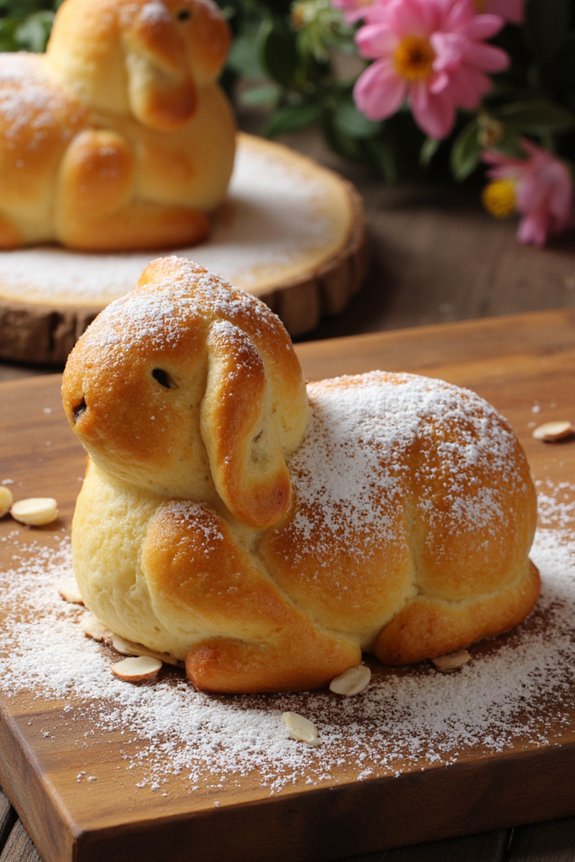
Agnello Di Pasqua, or Easter Lamb Cake, is a traditional Italian dessert that symbolizes new life and the resurrection of Jesus. This delightful cake is often made in the shape of a lamb and is known for its light and fluffy texture. Typically enjoyed during Easter celebrations, Agnello Di Pasqua isn’t only a feast for the taste buds but also serves as a centerpiece for the festive table.
The cake is often flavored with almonds and lemon, offering a delicate balance of sweetness and citrus. Creating Agnello Di Pasqua at home can be a joyous experience, as the process allows you to infuse your own personal touch into this classic Italian treat. Ideal for serving 4-6 people, this recipe will guide you through the steps to craft a perfect lamb-shaped cake that’s both delicious and visually appealing.
Whether you’re celebrating with family or friends, this cake is sure to bring warmth and joy to your Easter festivities.
Ingredients for 4-6 People:
- 1 cup all-purpose flour
- 1/2 cup almond flour
- 1 cup granulated sugar
- 1/2 cup unsalted butter, softened
- 3 large eggs
- 1/4 cup milk
- 1 teaspoon vanilla extract
- Zest of 1 lemon
- 1 teaspoon baking powder
- 1/4 teaspoon salt
- Powdered sugar, for dusting
- Almond slivers, for decoration (optional)
Cooking Instructions:
- Preheat the Oven: Start by preheating your oven to 350°F (175°C). Grease and flour a lamb-shaped cake mold to prevent the cake from sticking.
- Cream the Butter and Sugar: In a large mixing bowl, beat the softened butter and granulated sugar together until light and fluffy. This should take about 3-5 minutes.
- Add Eggs and Flavorings: Add the eggs one at a time, beating well after each addition. Mix in the vanilla extract and lemon zest until fully incorporated.
- Combine Dry Ingredients: In a separate bowl, whisk together the all-purpose flour, almond flour, baking powder, and salt.
- Mix Wet and Dry Ingredients: Gradually add the dry ingredients to the wet mixture, alternating with the milk. Begin and end with the dry ingredients, mixing just until combined.
- Pour into Mold: Carefully pour the batter into the prepared lamb-shaped mold, spreading it evenly with a spatula.
- Bake the Cake: Place the mold on a baking sheet and bake in the preheated oven for 35-40 minutes, or until a toothpick inserted into the center comes out clean.
- Cool and Decorate: Allow the cake to cool in the mold for about 15 minutes. Carefully unmold the cake onto a wire rack to cool completely. Once cooled, dust with powdered sugar and decorate with almond slivers if desired.
Extra Tips:
When making Agnello Di Pasqua, verify that the butter is at room temperature to achieve a smooth and creamy texture when beaten with sugar.
If you don’t have a lamb-shaped mold, you can use a regular cake pan and decorate the cake with a lamb design on top. Additionally, you can enhance the almond flavor by adding a few drops of almond extract.
For a moister cake, be careful not to overbake; keep an eye on the baking time and check for doneness with a toothpick. Enjoy this beautiful and symbolic dessert as part of your Easter celebration!
Schiacciata Di Pasqua
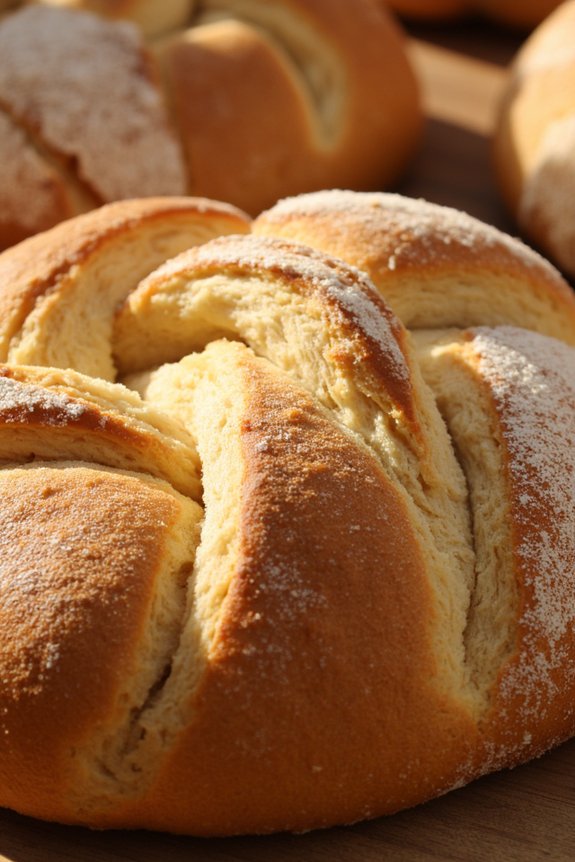
Schiacciata Di Pasqua, also known as Italian Easter Bread, is a delightful sweet bread traditionally enjoyed during the Easter festivities in Tuscany, Italy. This fragrant and fluffy bread is infused with the zest of oranges and lemons, creating a citrusy aroma that fills the kitchen as it bakes.
The bread’s unique flavor profile is enhanced by the addition of anise seeds, which impart a subtle licorice note, making it a truly unique Easter treat. This bread is typically enjoyed with a cup of coffee or as part of a festive Easter breakfast.
The dough is enriched with eggs and butter, giving it a tender crumb and a golden, slightly crispy crust. Schiacciata Di Pasqua is often shaped into a round or braided loaf and sometimes finished with a sprinkle of sugar before baking, adding a delightful sweetness to each bite.
This recipe serves 4-6 people, making it perfect for sharing with family and friends during the holiday.
Ingredients:
- 3 1/2 cups all-purpose flour
- 1/2 cup sugar
- 2 1/4 teaspoons (1 packet) active dry yeast
- 1/4 cup warm milk (about 110°F or 43°C)
- 1/2 cup butter, softened
- 4 large eggs
- Zest of 1 orange
- Zest of 1 lemon
- 1 tablespoon anise seeds
- 1 teaspoon salt
- 1 teaspoon vanilla extract
- Extra flour for dusting
- Optional: 1 tablespoon sugar for topping
Cooking Instructions:
- Activate the Yeast: In a small bowl, combine the warm milk and yeast. Let it sit for about 5-10 minutes until it becomes frothy, indicating that the yeast is active.
- Mix the Dry Ingredients: In a large mixing bowl, whisk together the flour, sugar, salt, and anise seeds. This guarantees even distribution of ingredients.
- Combine Wet Ingredients: In a separate bowl, beat the eggs until well combined. Add the softened butter, orange zest, lemon zest, and vanilla extract. Mix until smooth.
- Form the Dough: Make a well in the center of the dry ingredients and pour in the yeast mixture and the wet ingredient mixture. Stir with a wooden spoon or your hands until a dough begins to form.
- Knead the Dough: Transfer the dough to a floured surface and knead for about 10 minutes, or until the dough is smooth and elastic. Add more flour as needed to prevent sticking.
- First Rise: Place the dough in a lightly oiled bowl, cover it with a damp towel, and let it rise in a warm place for about 1-2 hours or until it has doubled in size.
- Shape the Loaf: Once the dough has risen, punch it down to release the air. Shape it into a round or braided loaf and place it on a baking sheet lined with parchment paper.
- Second Rise: Cover the shaped dough with a towel and let it rise again for about 30-45 minutes, or until it has puffed up.
- Preheat and Bake: Preheat your oven to 350°F (175°C). If desired, sprinkle the loaf with sugar before baking. Bake for 25-30 minutes, or until the bread is golden brown and sounds hollow when tapped on the bottom.
- Cool and Serve: Allow the bread to cool on a wire rack before slicing and serving. Enjoy with a cup of coffee or as part of your Easter breakfast spread.
Extra Tips:
For the best results, verify all your ingredients are at room temperature before beginning, as this helps with even mixing and rising.
If you find the dough is too sticky while kneading, add flour gradually until it’s workable. Be patient during the rising phases, as this is essential for developing the bread’s texture and flavor.
If you prefer a more pronounced anise flavor, consider lightly toasting the anise seeds before adding them to the dough. Enjoy the process and the delightful aroma that will fill your kitchen!
Cuddura Cu L’ova
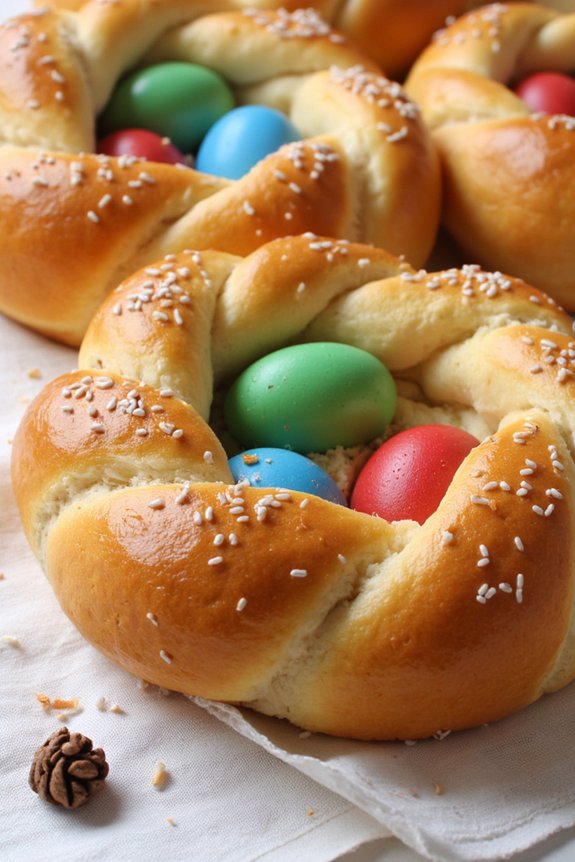
Cuddura Cu L’ova is a traditional Italian Easter dessert that’s as delightful to make as it’s to eat. This Sicilian treat is a beautiful representation of the holiday, with its sweet bread dough shaped into various forms like baskets, dolls, or rings, and adorned with colorful eggs. The eggs are often dyed in vibrant hues, symbolizing new life and the arrival of spring.
Cuddura Cu L’ova isn’t only a feast for the taste buds but also for the eyes, making it a perfect centerpiece for your Easter table.
The dough for Cuddura Cu L’ova is enriched with ingredients like butter and sugar, making it tender and slightly sweet. Once prepared, the dough can be shaped into different forms, then decorated with raw, dyed eggs that cook along with the bread. This traditional recipe isn’t only a wonderful way to celebrate Easter but also a fun activity for the whole family, especially for kids who’ll enjoy dyeing the eggs and shaping the dough.
Whether you’re an experienced baker or trying your hand at this recipe for the first time, Cuddura Cu L’ova is a rewarding and delicious project.
Ingredients (serving size: 4-6 people):
- 500 grams of all-purpose flour
- 150 grams of granulated sugar
- 2 teaspoons of baking powder
- 100 grams of unsalted butter, softened
- 3 large eggs
- 1 teaspoon of vanilla extract
- Zest of 1 lemon
- A pinch of salt
- 6 raw eggs, dyed with food coloring
- 1 egg yolk for brushing
- Sprinkles for decoration
Cooking Instructions:
- Prepare the Dough: In a large mixing bowl, combine the flour, sugar, baking powder, and salt. Add the softened butter and use your fingers or a pastry cutter to blend until the mixture resembles coarse crumbs.
- Mix Wet Ingredients: In a separate bowl, whisk together the eggs, vanilla extract, and lemon zest. Gradually add this mixture to the dry ingredients, stirring until a soft dough forms. If the dough is too sticky, add a little more flour.
- Knead the Dough: Turn the dough out onto a lightly floured surface and knead it gently for about 5 minutes, until it’s smooth and elastic. Wrap the dough in plastic wrap and let it rest for 30 minutes.
- Shape the Dough: Preheat the oven to 180°C (350°F). Divide the dough into 4-6 equal portions. Shape each portion into your desired forms, such as rings, baskets, or dolls. Press a dyed egg into each shape, making sure it’s secure.
- Decorate and Bake: Place the shaped dough on a baking sheet lined with parchment paper. Brush the dough lightly with beaten egg yolk and sprinkle with colorful sprinkles. Bake in the preheated oven for 20-25 minutes or until golden brown and firm to the touch.
- Cool: Remove from the oven and allow the Cuddura Cu L’ova to cool on a wire rack before serving.
Extra Tips:
When dyeing the eggs, verify they’re completely dry before inserting them into the dough to prevent them from slipping out. If you want to add a more festive touch, use different shapes and sizes to create a variety of designs.
Be careful not to over-knead the dough; it should remain soft yet pliable. The Cuddura Cu L’ova can be stored at room temperature for up to three days, making it a great make-ahead option for your Easter celebrations.
Enjoy this delightful treat with a hot cup of coffee or tea for a perfect holiday experience.
Fugassa Veneta
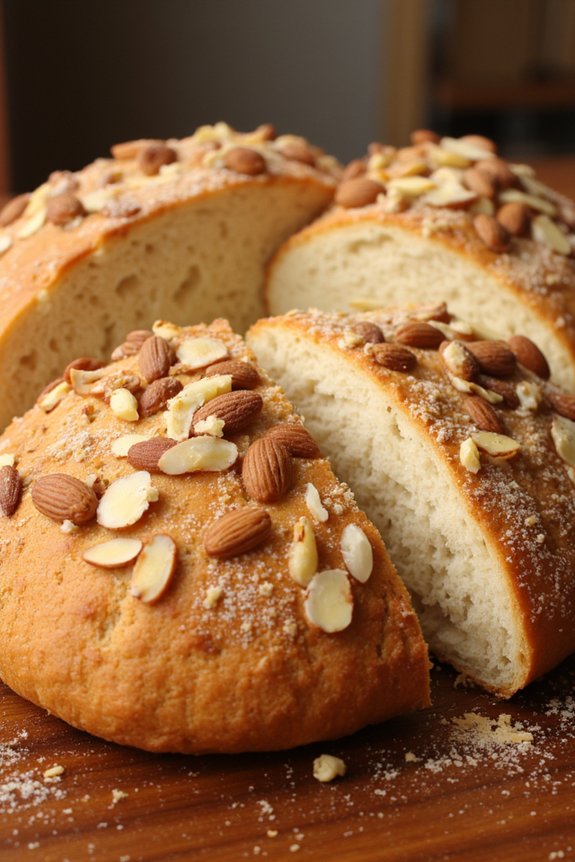
Fugassa Veneta, a traditional Italian Easter dessert, is a delightful sweet bread hailing from the Veneto region. This cake-like bread is known for its light and airy texture with a slightly sweet flavor, making it a perfect treat for celebrating Easter festivities. Typically enjoyed during the holiday season, Fugassa Veneta is often decorated with pearl sugar and almonds, adding a lovely crunch to its soft interior.
The process of making Fugassa Veneta is similar to that of baking a brioche, as both involve rich, buttery doughs that require careful kneading and proofing. The key to achieving the perfect Fugassa Veneta lies in its slow fermentation, which develops the flavors and guarantees a tender crumb. This recipe is designed to serve 4-6 people, making it an ideal choice for a family gathering or a festive brunch.
Ingredients (for 4-6 servings):
- 500 grams of all-purpose flour
- 100 grams of granulated sugar
- 4 large eggs
- 100 grams of unsalted butter, softened
- 150 ml of whole milk
- 25 grams of fresh yeast or 7 grams of active dry yeast
- 1 teaspoon of vanilla extract
- Zest of 1 lemon
- 1/4 teaspoon of salt
- Pearl sugar for topping
- Almonds for topping
Cooking Instructions:
- Prepare the Yeast Mixture: In a small bowl, dissolve the fresh yeast in lukewarm milk. Let it sit for about 10 minutes until it becomes frothy. This step guarantees that the yeast is active and ready to help the dough rise effectively.
- Mix the Dough: In a large mixing bowl, combine the flour, sugar, salt, lemon zest, and vanilla extract. Add the yeast mixture and start mixing. Gradually incorporate the eggs one at a time, making sure each is fully mixed in before adding the next.
- Incorporate the Butter: Add the softened butter to the dough mixture. Knead the dough in the bowl until the butter is fully incorporated and the dough becomes smooth and elastic. This might take about 10-15 minutes of kneading by hand or using a stand mixer with a dough hook.
- First Proofing: Shape the dough into a ball and place it in a greased bowl. Cover it with plastic wrap or a damp cloth and let it rise in a warm, draft-free area for about 2 hours, or until it doubles in size.
- Shape and Second Proofing: Once the dough has risen, punch it down to release the air. Shape it into a loaf and place it in a greased loaf pan. Let it rise again for about 1 hour, or until it doubles in size.
- Preheat the Oven: While the dough is proofing, preheat your oven to 180°C (350°F).
- Prepare for Baking: Once the dough is ready, brush the top with a little milk for a golden crust. Sprinkle pearl sugar and almonds generously over the top of the loaf.
- Bake: Place the loaf in the preheated oven and bake for 30-35 minutes, or until the top is golden brown and a skewer inserted into the center comes out clean.
- Cool and Serve: Allow the Fugassa Veneta to cool in the pan for about 10 minutes before transferring it to a wire rack to cool completely. Slice and serve as part of your Easter celebration.
Extra Tips:
For a more pronounced flavor, you can add a splash of almond extract to the dough. If using active dry yeast instead of fresh yeast, be sure to activate it in warm water before mixing it with the flour.
Adding a pinch of salt to the dough is essential for balancing the sweetness and enhancing the overall flavor of the bread. If you find the dough too sticky to handle, lightly flour your hands or the work surface.
Remember that patience is key; allowing ample time for the dough to rise will yield the best results.
Pigna Di Pasqua
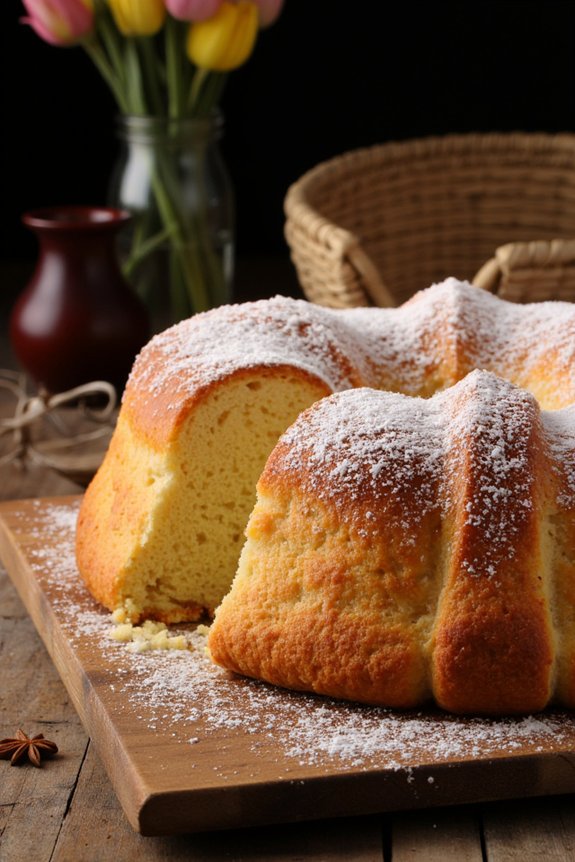
Pigna Di Pasqua, a traditional Italian Easter cake, is a delightful treat that embodies the essence of Italian Easter celebrations. Originating from the regions of Abruzzo and Molise, this sweet bread-like cake is known for its rich, aromatic flavor and light, fluffy texture. It’s often enjoyed during the Easter holiday, symbolizing renewal and festivity.
The cake is typically flavored with citrus zest, vanilla, and anise, which give it a distinctive taste that’s both invigorating and comforting. A perfect addition to any Easter table, Pigna Di Pasqua is loved for its soft crumb and enticing aroma that fills the house as it bakes.
The preparation of Pigna Di Pasqua is a cherished tradition in many Italian households, with recipes often passed down through generations. Creating this cake involves a blend of simple ingredients, careful kneading, and patient waiting for the dough to rise. The result is a beautifully golden and fragrant cake that’s often topped with a sugary glaze or left plain to showcase its natural flavors.
Whether enjoyed on its own or with a cup of coffee, Pigna Di Pasqua is an exquisite dessert that captures the spirit of Italian Easter and brings families together in celebration.
Ingredients for Pigna Di Pasqua (serving size: 4-6 people):
- 500g all-purpose flour
- 150g granulated sugar
- 3 large eggs
- 100g unsalted butter, softened
- 200ml milk
- 1 packet (7g) active dry yeast
- Zest of 1 lemon
- Zest of 1 orange
- 1 tablespoon anise seeds
- 1 teaspoon vanilla extract
- 1/2 teaspoon salt
- Powdered sugar for dusting (optional)
Cooking Instructions:
- Activate the Yeast: In a small bowl, warm the milk to a lukewarm temperature (about 110°F or 43°C). Add the active dry yeast and a teaspoon of sugar. Stir gently and let it sit for about 10 minutes until it becomes frothy, indicating that the yeast is activated.
- Prepare the Dough: In a large mixing bowl, combine the flour, granulated sugar, lemon zest, orange zest, salt, and anise seeds. Mix well to distribute the ingredients evenly.
- Incorporate Wet Ingredients: Make a well in the center of the dry ingredients and add the softened butter, eggs, vanilla extract, and the activated yeast mixture. Mix until a sticky dough forms.
- Knead the Dough: Transfer the dough onto a floured surface and knead for about 10-15 minutes until it becomes smooth and elastic. This step is essential for developing the dough’s gluten structure, which contributes to the cake’s airy texture.
- First Rise: Place the dough in a lightly greased bowl, cover with a clean kitchen towel, and let it rise in a warm, draft-free area for about 1-2 hours, or until it doubles in size.
- Shape the Cake: Once risen, punch down the dough to release excess air. Shape it into a round loaf and place it on a parchment-lined baking sheet.
- Second Rise: Cover the shaped dough with a towel and let it rise again for about 30-45 minutes until it puffs up slightly.
- Bake the Cake: Preheat your oven to 350°F (175°C). Bake the Pigna Di Pasqua for 30-35 minutes, or until the top is golden brown and a skewer inserted into the center comes out clean.
- Cool and Serve: Allow the cake to cool on a wire rack before dusting with powdered sugar, if desired. Serve the cake warm or at room temperature.
Extra Tips:
When making Pigna Di Pasqua, patience is key, especially during the rising phases. Confirm your kitchen is warm, as a cooler environment can slow down the proofing process.
If you prefer a more pronounced anise flavor, consider soaking the anise seeds in a bit of warm water before adding them to the dough. Additionally, for a richer taste, you can substitute some of the milk with a splash of your favorite liqueur, such as Sambuca or anise liqueur.
Finally, to prevent the cake from drying out, store any leftovers in an airtight container. Enjoy this delightful Easter treat with friends and family!
Crescia Di Pasqua
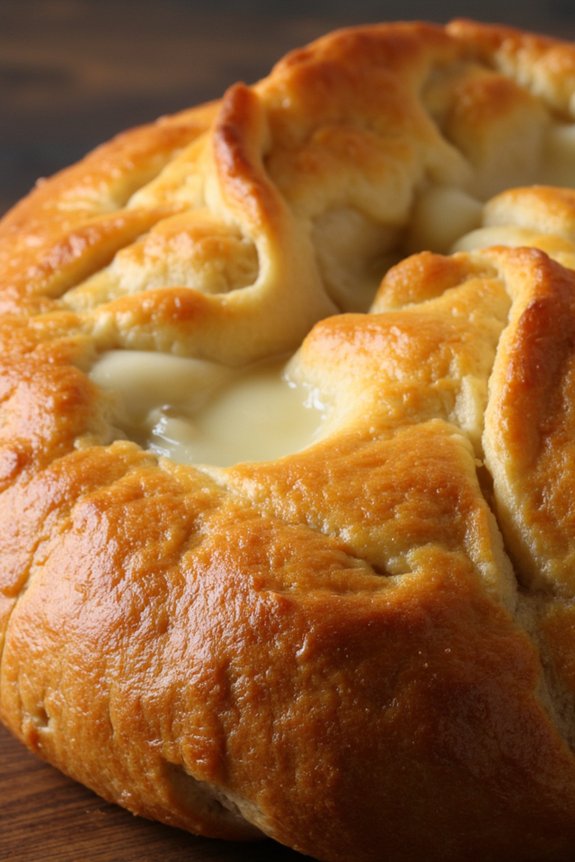
Crescia Di Pasqua, also known as Easter Bread, is a traditional Italian dish that’s typically enjoyed during the Easter season. This savory bread is a delightful combination of cheese and eggs, making it the perfect accompaniment to your Easter meal. With its fluffy texture and rich flavor, Crescia Di Pasqua is a beloved dish in many Italian households. The bread is often prepared a few days before Easter and shared with family and friends during holiday gatherings.
The origins of Crescia Di Pasqua can be traced back to the regions of Marche and Umbria in Italy, where it has been a staple in Easter celebrations for generations. This dish isn’t only delicious but also holds cultural significance, as it symbolizes the end of Lent and the beginning of a festive period. The cheese used in the bread varies, but a combination of Parmesan and Pecorino Romano is commonly used to give the bread its distinctive taste.
Whether you’re of Italian descent or simply looking to try something new, Crescia Di Pasqua is sure to bring a taste of Italy to your Easter table.
Ingredients for Crescia Di Pasqua (Serves 4-6):
- 4 cups all-purpose flour
- 1 tablespoon sugar
- 1 teaspoon salt
- 2 teaspoons active dry yeast
- 1 cup warm milk (about 110°F)
- 4 large eggs
- 1/2 cup grated Parmesan cheese
- 1/2 cup grated Pecorino Romano cheese
- 1/4 cup olive oil
- 1/2 teaspoon ground black pepper
Cooking Instructions:
- Prepare the yeast mixture: In a small bowl, dissolve the active dry yeast and sugar in warm milk. Let it sit for about 10 minutes, or until it becomes frothy. This indicates that the yeast is active and ready to use.
- Combine dry ingredients: In a large mixing bowl, combine the all-purpose flour and salt. Mix well to guarantee the salt is evenly distributed throughout the flour.
- Mix wet ingredients: In another bowl, beat the eggs and add the grated Parmesan and Pecorino Romano cheeses, olive oil, and ground black pepper. Mix until the ingredients are well combined.
- Combine mixtures: Add the yeast mixture to the flour, followed by the egg and cheese mixture. Stir the ingredients together until a dough begins to form.
- Knead the dough: Transfer the dough onto a lightly floured surface and knead for about 10 minutes, or until the dough is smooth and elastic. If the dough is sticky, add a little more flour as needed.
- First rise: Place the dough in a greased bowl, cover it with a damp cloth, and let it rise in a warm, draft-free area for about 1.5 to 2 hours, or until it has doubled in size.
- Shape the dough: Punch down the dough to remove excess air. Shape it into a round loaf and place it in a greased, round baking pan or a high-sided cake pan.
- Second rise: Cover the dough again and let it rise for another hour, or until it has doubled in size.
- Bake the bread: Preheat your oven to 375°F (190°C). Bake the Crescia Di Pasqua for 35-40 minutes, or until the top is golden brown and a skewer inserted into the center comes out clean.
- Cool and serve: Remove the bread from the oven and let it cool in the pan for 10 minutes before transferring it to a wire rack to cool completely. Slice and serve at room temperature.
Extra Tips:
For a more authentic result, try using an Italian bread flour, which can provide a slightly different texture and flavor to the Crescia Di Pasqua. If you prefer a more pronounced cheese flavor, feel free to increase the amount of cheese used in the recipe.
Additionally, if you don’t have Pecorino Romano, you can substitute it with more Parmesan cheese. Finally, make sure to let the bread cool completely before slicing to guarantee that it maintains its structure and doesn’t become crumbly.
Enjoy your Crescia Di Pasqua as part of your Easter feast or with any meal for a taste of Italian tradition.
