


Picture yourself enjoying the creamy layers of a classic tiramisu, with the aroma of espresso and rich mascarpone filling the air. These authentic desserts, from crunchy biscotti to luscious panna cotta, are a true celebration of tradition and flavor. Let’s explore these sweet recipes together, each one promising to transport your taste buds straight to Italy’s charming trattorias. Are you ready to begin this delightful journey?
Tiramisu

Tiramisu is a quintessential Italian dessert that embodies the perfect balance of coffee-soaked ladyfingers, creamy mascarpone, and a hint of cocoa. Originating from Italy’s Veneto region, this delightful dessert has become a beloved favorite worldwide. Its name, which translates to “pick me up,” is a nod to the energizing kick from the espresso and indulgent layers that make this dessert irresistible.
Whether you’re whipping it up for a special occasion or simply craving a sweet treat, making tiramisu at home is both rewarding and delicious. This classic tiramisu recipe is designed to serve 4-6 people, making it ideal for small gatherings or family dinners.
The key to a great tiramisu lies in using high-quality ingredients and allowing the flavors to meld together over time. Preparing the dessert ahead of time is essential, as it needs to be refrigerated for several hours to achieve the perfect texture and taste. Follow the steps below to create a traditional tiramisu that will transport your taste buds straight to Italy.
Ingredients:
- 3 large eggs
- 1 cup granulated sugar
- 1 cup mascarpone cheese
- 1 cup heavy cream
- 1 teaspoon vanilla extract
- 2 cups strong brewed espresso, cooled
- 2 tablespoons coffee liqueur (optional)
- 24 ladyfingers (savoiardi)
- 2 tablespoons unsweetened cocoa powder
- Dark chocolate shavings for garnish (optional)
Instructions:
- Prepare the Egg Mixture: Separate the egg yolks and whites. In a large mixing bowl, whisk the egg yolks with the granulated sugar until the mixture is pale and creamy. This should take about 3-4 minutes.
- Incorporate the Mascarpone: Gently fold the mascarpone cheese into the egg yolk mixture. Stir until smooth and well combined, ensuring there are no lumps.
- Whip the Cream: In a separate bowl, whip the heavy cream and vanilla extract until stiff peaks form. Carefully fold the whipped cream into the mascarpone mixture, taking care not to deflate the cream.
- Brew and Flavor the Espresso: Brew strong espresso and let it cool. Stir in the coffee liqueur if using. Pour the mixture into a shallow dish.
- Soak the Ladyfingers: Quickly dip each ladyfinger into the espresso mixture, ensuring they’re soaked but not soggy. Layer half of the soaked ladyfingers in the bottom of a 9×9 inch dish.
- Layer the Mascarpone Mixture: Spread half of the mascarpone mixture over the layer of ladyfingers, smoothing the surface with a spatula.
- Repeat Layers: Add another layer of soaked ladyfingers, followed by the remaining mascarpone mixture. Smooth the top layer evenly.
- Chill the Tiramisu: Cover the dish with plastic wrap and refrigerate for at least 4 hours, or ideally overnight, to allow the flavors to meld and the dessert to set.
- Finish with Cocoa and Chocolate: Before serving, dust the top with unsweetened cocoa powder and garnish with dark chocolate shavings if desired.
Extra Tips:
To achieve the best results, use fresh, room-temperature eggs and high-quality mascarpone cheese. Be cautious when dipping the ladyfingers in espresso; a brief dip is sufficient to avoid making them overly soggy.
For a non-alcoholic version, simply omit the coffee liqueur. Allowing the tiramisu to rest in the refrigerator overnight will enhance the flavors and improve the texture, making it richer and more delicious. Enjoy your homemade tiramisu with a cup of espresso or a glass of dessert wine for an authentic Italian experience.
Cannoli

Cannoli are a classic Italian dessert that have delighted taste buds around the world. Originating from Sicily, these delightful treats consist of a crisp pastry shell filled with a sweet, creamy ricotta filling. The contrast between the crunchy shell and the luscious filling makes cannoli an irresistible indulgence.
Whether you’re serving them at a dinner party or simply treating yourself, homemade cannoli are bound to impress. Making cannoli at home may seem intimidating, but with a little patience and the right ingredients, you can recreate this Italian delight in your own kitchen.
The key to perfect cannoli lies in the balance of flavors and textures. You’ll need to prepare a crispy shell, which can be made by frying or baking, and a smooth, flavorful filling. This recipe will guide you through each step to guarantee that your cannoli turn out as delicious as those from an Italian bakery.
Ingredients for 4-6 servings:
- 2 cups all-purpose flour
- 1 tablespoon sugar
- 1/4 teaspoon salt
- 1 tablespoon unsalted butter (cold and cubed)
- 1 egg yolk
- 1/2 cup sweet Marsala wine
- Vegetable oil (for frying)
- 2 cups ricotta cheese (drained)
- 1 cup powdered sugar
- 1 teaspoon vanilla extract
- 1/2 cup mini chocolate chips
- 1/4 cup chopped pistachios
- Powdered sugar for dusting
Cooking Instructions:
1. Prepare the Dough: In a mixing bowl, combine the flour, sugar, and salt. Add the cold butter and mix until the mixture resembles coarse crumbs. Stir in the egg yolk and Marsala wine until the dough comes together.
Knead the dough on a lightly floured surface until smooth, about 5 minutes. Wrap in plastic wrap and refrigerate for at least 30 minutes.
2. Roll and Cut the Dough: After chilling, roll out the dough on a floured surface to a thickness of about 1/8 inch. Use a round cookie cutter (about 4 inches in diameter) to cut circles from the dough. Reroll scraps and cut additional circles as needed.
3. Shape the Shells: Gently wrap each dough circle around a metal cannoli form, sealing the edges with a dab of water. Confirm that the dough is snug but not too tight on the form.
4. Fry the Shells: In a deep saucepan, heat vegetable oil to 350°F (175°C). Carefully drop a few dough-wrapped forms into the oil and fry until golden brown, about 2-3 minutes.
Remove and drain on paper towels, then gently slide the shell off the form. Repeat with remaining circles.
5. Prepare the Filling: In a mixing bowl, combine the ricotta cheese, powdered sugar, and vanilla extract. Stir until smooth. Fold in the mini chocolate chips.
6. Fill the Cannoli: Using a pastry bag or a spoon, fill each cooled shell with the ricotta mixture. Dip the ends of the filled cannoli in chopped pistachios.
7. Serve and Enjoy: Dust the cannoli with powdered sugar just before serving. Enjoy your homemade cannoli fresh and with a cup of espresso.
Extra Tips:
To guarantee your cannoli shells are crispy, make sure the oil temperature remains consistent during frying. If you don’t have Marsala wine, you can substitute it with white wine or even water, although the flavor profile will slightly differ.
Draining the ricotta cheese overnight in the refrigerator can help achieve a thicker, more stable filling. If you prefer baked shells, preheat your oven to 375°F (190°C) and bake the shells on a baking sheet for about 15-20 minutes, or until golden brown. This will yield a slightly different texture but is a good alternative for those who prefer not to fry.
Panna Cotta
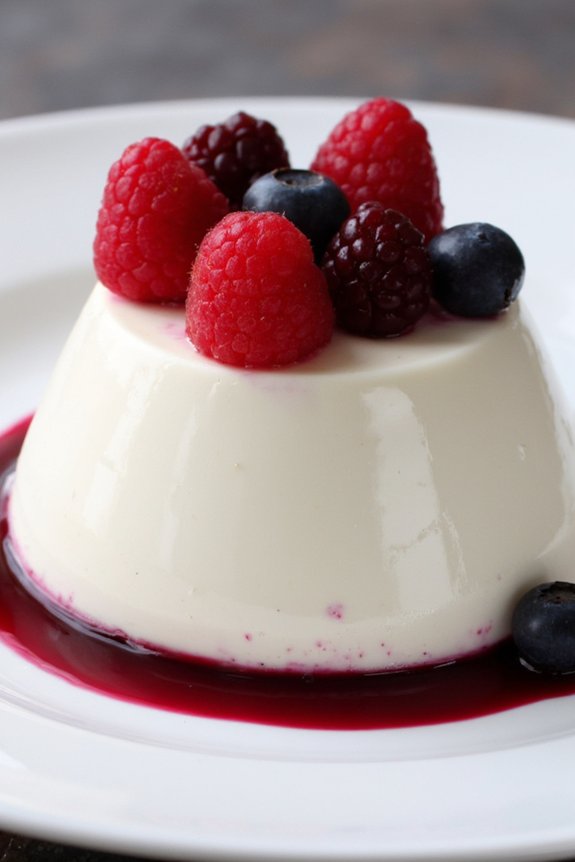
Panna Cotta is a classic Italian dessert that translates to “cooked cream.” It’s a simple yet elegant dish that’s creamy, silky, and subtly sweet, perfect for rounding off any meal. Traditionally, panna cotta is flavored with vanilla, but it can be enhanced with a variety of other flavors such as coffee, chocolate, or citrus.
This dessert is often served with a fruit coulis, fresh berries, or a drizzle of caramel to add an extra layer of flavor. It’s a versatile dish that’s loved by many for its delicate texture and rich taste.
Creating the perfect panna cotta involves heating cream, sugar, and flavorings until they’re well-mixed and hot, then incorporating gelatin to set the mixture into a smooth and luscious dessert. The mixture is then poured into molds and chilled until firm. This recipe serves 4-6 people, making it ideal for a family gathering or dinner party. With the right ingredients and a little patience, panna cotta can be a delightful addition to your dessert repertoire.
Ingredients (Serves 4-6):
- 2 cups heavy cream
- 1/2 cup whole milk
- 1/2 cup granulated sugar
- 1 tablespoon vanilla extract
- 2 1/2 teaspoons powdered gelatin
- 3 tablespoons cold water
- Fresh berries or fruit coulis for serving
Cooking Instructions:
- Prepare Gelatin: In a small bowl, sprinkle the gelatin over 3 tablespoons of cold water. Let it stand for about 5-10 minutes to allow the gelatin to bloom, which guarantees it dissolves smoothly in the cream mixture.
- Heat Cream Mixture: In a medium saucepan, combine the heavy cream, whole milk, and granulated sugar. Stir the mixture over medium heat until the sugar completely dissolves, and the mixture is hot but not boiling. Remove from heat and stir in the vanilla extract.
- Incorporate Gelatin: Add the bloomed gelatin to the hot cream mixture, stirring until the gelatin is completely dissolved. Confirm there are no lumps and the mixture is smooth.
- Pour into Molds: Pour the panna cotta mixture into individual serving molds or ramekins. Allow them to cool to room temperature before covering with plastic wrap.
- Chill: Transfer the molds to the refrigerator and chill for at least 4 hours, or until the panna cotta is set and firm to the touch.
- Serve: To serve, dip the molds in hot water for a few seconds to loosen the panna cotta, then invert them onto serving plates. Garnish with fresh berries or a drizzle of fruit coulis.
Extra Tips:
When selecting gelatin, confirm that it’s unflavored to avoid altering the taste of the panna cotta. It’s also important to avoid boiling the cream mixture, as this can affect the texture of the final product.
For a more intense vanilla flavor, consider using a vanilla bean pod by splitting it, scraping out the seeds, and adding both seeds and pod to the cream mixture as it heats, then removing the pod before pouring the mixture into molds. Adjust the sweetness by tasting the cream mixture before adding the gelatin, adding more sugar if desired.
Biscotti

Biscotti, the quintessential Italian treat, is a twice-baked cookie that’s perfect for dipping into coffee or tea. Originating from the Tuscan region, these crunchy delights have become a beloved staple worldwide. The name “biscotti” comes from the Latin “bis” (twice) and “coctus” (cooked), referring to their unique baking process.
Traditionally, biscotti are made with almonds, but they can also include various nuts, dried fruits, or chocolate for added flavor. This classic almond biscotti recipe yields a firm yet tender cookie with a subtle sweetness and a satisfying crunch.
Perfect for serving 4-6 people, this recipe will fill your home with the comforting aroma of vanilla and toasted almonds. Making biscotti from scratch is a simple yet rewarding process, involving a few basic ingredients that you likely already have in your pantry. Whether you’re preparing them for a festive occasion, as a gift, or just as an everyday treat, these biscotti are sure to impress. Their long shelf life makes them an ideal make-ahead dessert, with the added bonus of being a lower-fat option compared to many other cookies.
Ingredients:
- 2 cups all-purpose flour
- 1 cup granulated sugar
- 1 teaspoon baking powder
- 1/2 teaspoon salt
- 3 large eggs
- 1 teaspoon vanilla extract
- 1 teaspoon almond extract
- 1 cup whole almonds, toasted and coarsely chopped
- Zest of 1 orange (optional)
Cooking Instructions:
- Preheat the Oven: Start by preheating your oven to 350°F (175°C). Line a baking sheet with parchment paper or a silicone baking mat to prevent sticking.
- Mix Dry Ingredients: In a large bowl, whisk together the flour, sugar, baking powder, and salt until well combined.
- Combine Wet Ingredients: In a separate bowl, beat the eggs, vanilla extract, and almond extract until well mixed. If using orange zest, add it to the wet ingredients.
- Form the Dough: Gradually add the wet ingredients to the dry ingredients, mixing until a sticky dough forms. Fold in the chopped almonds until evenly distributed throughout the dough.
- Shape the Biscotti: Divide the dough in half and transfer it to the prepared baking sheet. Shape each half into a log approximately 12 inches long and 2 inches wide, spacing them at least 3 inches apart as they’ll spread during baking.
- First Bake: Place the baking sheet in the preheated oven and bake for 25-30 minutes, or until the logs are golden brown and firm to the touch.
- Cool and Slice: Remove the logs from the oven and allow them to cool on the baking sheet for about 10 minutes. Reduce the oven temperature to 325°F (160°C). Once slightly cooled, transfer the logs to a cutting board and slice them diagonally into 1/2-inch thick slices.
- Second Bake: Arrange the slices cut side down on the baking sheet. Return them to the oven and bake for an additional 10-12 minutes per side, or until they’re crisp and golden. Let the biscotti cool completely on a wire rack before serving.
Extra Tips:
For the best texture, confirm that the biscotti logs are cooled before slicing to prevent crumbling. If you prefer softer biscotti, reduce the second baking time slightly.
Feel free to experiment with different flavorings or mix-ins, such as chocolate chips, pistachios, or cranberries, to suit your taste. Store the cooled biscotti in an airtight container to maintain their crispness for up to two weeks.
To toast almonds, spread them on a baking sheet and bake at 350°F (175°C) for about 8-10 minutes, stirring occasionally, until they’re fragrant.
Sfogliatelle
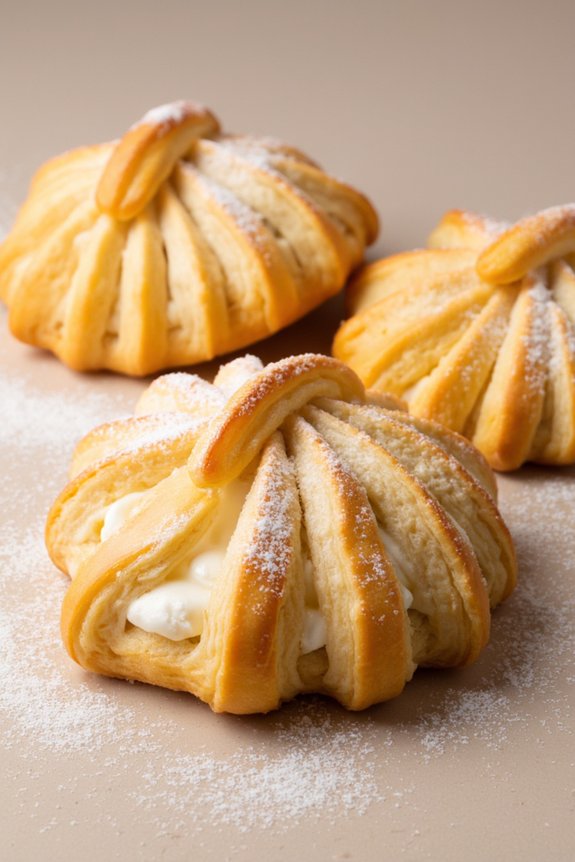
Sfogliatelle, pronounced “sfo-lee-a-tell-eh,” is a classic Italian pastry that hails from the region of Campania. Known for its unique shell shape and crispy, flaky layers, this dessert is filled with a sweet, creamy ricotta mixture that offers a delightful contrast to the crunchy exterior.
Making sfogliatelle from scratch can be a labor of love, but the reward is a deliciously satisfying treat that embodies the rich culinary tradition of Italy.
The process of making sfogliatelle involves preparing a dough similar to puff pastry, but with a distinct texture and flavor. The dough is rolled thin, layered with butter, and then shaped into shells before being filled with a luscious ricotta filling flavored with orange zest and cinnamon.
Once baked, the sfogliatelle emerge golden brown, with a crisp, buttery shell encasing the sweet, aromatic filling. This recipe will serve 4-6 people, perfect for a small gathering or a special family dessert.
Ingredients (serving size: 4-6 people):
- 2 cups all-purpose flour
- 1/4 teaspoon salt
- 1 cup unsalted butter, softened
- 1/2 cup water
- 1 cup ricotta cheese
- 1/2 cup granulated sugar
- 1 teaspoon vanilla extract
- 1 teaspoon orange zest
- 1/2 teaspoon ground cinnamon
- 1/4 cup semolina flour
- 1 large egg
- Confectioners’ sugar, for dusting
Instructions:
- Prepare the Dough:
- In a large bowl, combine the all-purpose flour and salt. Gradually add water, mixing until a dough forms.
- Knead the dough on a lightly floured surface for about 5 minutes until smooth and elastic. Wrap in plastic wrap and refrigerate for at least 2 hours.
- Roll and Layer the Dough:
- Roll the chilled dough into a thin rectangle on a floured surface. Spread softened butter evenly over the dough.
- Roll the dough tightly into a log, starting from the short side. Wrap the log in plastic wrap and refrigerate for another 2 hours.
- Prepare the Filling:
- In a medium bowl, mix together ricotta cheese, granulated sugar, vanilla extract, orange zest, cinnamon, and semolina flour. Stir until smooth and well combined.
- Shape the Sfogliatelle:
- Preheat the oven to 375°F (190°C). Line a baking sheet with parchment paper.
- Slice the chilled dough log into 1/2-inch thick rounds. Flatten each round into a thin oval using a rolling pin.
- Place a tablespoon of ricotta filling in the center of each oval. Fold the dough over the filling, pinching the edges to seal and form a shell shape.
- Bake the Sfogliatelle:
- Arrange the shaped pastries on the prepared baking sheet. Beat the egg and brush it lightly over the tops of the pastries.
- Bake for 20-25 minutes or until the sfogliatelle are golden brown and crispy. Remove from the oven and let cool slightly on a wire rack.
- Serve:
- Dust the sfogliatelle with confectioners’ sugar before serving. Enjoy them warm or at room temperature.
Extra Tips:
When making sfogliatelle, patience is key. Confirm that the dough is well-chilled before rolling and shaping, as this will help in achieving the characteristic flaky layers.
If you find the dough difficult to handle, let it sit at room temperature for a few minutes to soften slightly. Additionally, resist the temptation to overfill the pastries, as this can cause the filling to leak during baking.
Finally, if you prefer a more traditional flavor, you can add a hint of candied orange peel to the ricotta filling for an extra touch of authenticity.
Panettone

Panettone is a traditional Italian sweet bread that’s typically enjoyed during the holiday season, particularly at Christmas and New Year’s. This delightful dessert originated in Milan and is known for its tall, dome shape and soft, fluffy texture. The bread is enriched with butter, eggs, and studded with dried fruits such as raisins and candied citrus peels, giving it a unique and festive flavor.
Making Panettone at home can be a rewarding experience, as the process of allowing the dough to rise slowly brings out its rich flavors and airy texture. This recipe will guide you through the steps to create an authentic Panettone that serves 4-6 people. The key to a successful Panettone is patience and precision, as the dough requires sufficient resting and rising time to achieve its signature lightness.
While the process may seem intricate, following these detailed instructions will help you master this iconic Italian dessert. So, gather your ingredients and prepare to fill your kitchen with the sweet, aromatic scent of freshly baked Panettone.
Ingredients (serves 4-6 people):
- 1/2 cup warm milk
- 1 tablespoon active dry yeast
- 1/2 cup granulated sugar
- 4 cups all-purpose flour
- 1 teaspoon salt
- 1 teaspoon vanilla extract
- 4 large eggs, room temperature
- 1/2 cup unsalted butter, softened
- 1 cup raisins
- 1/3 cup candied citrus peel
- Zest of 1 orange
- Zest of 1 lemon
- 1/4 cup of dark rum (optional)
- 1 tablespoon butter, melted (for brushing)
Instructions:
- Prepare the Yeast: In a small bowl, combine the warm milk and active dry yeast. Stir gently and let it sit for about 10 minutes until it becomes frothy. This indicates that the yeast is active.
- Make the Dough: In a large mixing bowl, whisk together the sugar, flour, and salt. Create a well in the center and add the yeast mixture, vanilla extract, and eggs. Mix until a soft dough forms.
- Knead the Dough: Transfer the dough to a lightly floured surface and knead for about 10 minutes until smooth and elastic. Gradually incorporate the softened butter, a little at a time, kneading continuously until fully absorbed.
- First Rise: Place the dough in a lightly greased bowl, cover it with a damp cloth, and let it rise in a warm place for about 1-2 hours, or until doubled in size.
- Prepare the Fruits: In a separate bowl, combine the raisins, candied citrus peel, orange zest, lemon zest, and rum. Mix well and let it sit while the dough is rising.
- Incorporate the Fruits: Once the dough has risen, gently deflate it and knead in the fruit mixture until evenly distributed.
- Shape and Second Rise: Form the dough into a round shape and place it in a greased, round panettone mold or a high-sided cake pan. Cover with a damp cloth and let it rise again in a warm place for 1 hour or until doubled.
- Preheat the Oven: Preheat your oven to 350°F (175°C).
- Bake: Brush the top of the dough with melted butter. Place the panettone in the oven and bake for 35-40 minutes, or until a skewer inserted into the center comes out clean and the top is golden brown.
- Cool and Serve: Allow the panettone to cool in the mold for a few minutes before transferring it to a wire rack to cool completely. Slice and serve when cooled.
Extra Tips:
When making Panettone, it’s important to use room temperature ingredients to facilitate the dough rising properly. If your kitchen is cool, consider proofing the dough in a slightly warmed oven (turned off) or near a radiator.
If you don’t have a panettone mold, you can use a deep cake tin lined with parchment paper to support the dough as it rises and bakes. Finally, for a richer flavor, soak the raisins and candied peel in the rum overnight if time permits.
Enjoy your homemade Panettone with a cup of coffee or a glass of sweet wine for an authentic Italian dessert experience.
Zeppole

Zeppole, a classic Italian dessert, are delightful fried dough balls that are often enjoyed during special occasions or festive celebrations. These scrumptious treats have a crispy exterior and a soft, airy interior, making them irresistible to anyone with a sweet tooth. Traditionally served during Saint Joseph’s Day in Italy, Zeppole can be enjoyed with a variety of fillings or toppings, such as powdered sugar, honey, or pastry cream.
Whether you’re looking to bring a taste of Italy into your home or simply want to try something new, this recipe will guide you in creating these delectable bites. Making Zeppole at home might seem intimidating, but with the right ingredients and a bit of patience, you can easily whip up a batch that rivals those found in Italian bakeries.
The key to perfect Zeppole lies in the dough, which must be light and fluffy yet sturdy enough to hold its shape while frying. Once cooked, these golden-brown treats can be dusted with powdered sugar or drizzled with honey for a sweet finish. Follow this recipe to serve 4-6 people, and enjoy the delightful taste of Zeppole with your family and friends.
Ingredients:
- 1 cup water
- 1/2 cup unsalted butter
- 1 tablespoon granulated sugar
- 1/4 teaspoon salt
- 1 cup all-purpose flour
- 4 large eggs
- Vegetable oil, for frying
- Powdered sugar, for dusting
Cooking Instructions:
- Prepare the Dough: In a medium saucepan, combine water, butter, granulated sugar, and salt. Bring the mixture to a boil over medium heat, confirming the butter has fully melted.
- Incorporate the Flour: Reduce the heat to low, then add the flour all at once. Stir vigorously with a wooden spoon until the mixture forms a smooth ball and pulls away from the sides of the pan, about 2-3 minutes.
- Cool and Add Eggs: Remove the pan from heat and let the dough cool slightly. Add the eggs one at a time, mixing thoroughly after each addition until the dough is smooth and glossy.
- Heat the Oil: In a large, heavy-bottomed pot or deep fryer, heat vegetable oil to 350°F (175°C). Use a deep-frying thermometer to monitor the temperature.
- Fry the Zeppole: Using a small cookie scoop or two teaspoons, carefully drop small balls of dough into the hot oil. Fry in batches to avoid overcrowding, turning occasionally, until golden brown and puffed, about 4-5 minutes per batch.
- Drain and Serve: Remove the Zeppole from the oil using a slotted spoon and transfer them to a paper towel-lined plate to drain excess oil. Once drained, dust with powdered sugar while still warm. Serve immediately.
Extra Tips:
When preparing Zeppole, confirm that the oil temperature is maintained at 350°F (175°C) throughout the frying process to achieve the perfect texture. If the oil is too hot, the Zeppole will brown too quickly on the outside and remain undercooked on the inside. Conversely, if the oil isn’t hot enough, they’ll absorb too much oil and become greasy.
Additionally, while adding eggs to the dough, confirm that the dough isn’t too hot to prevent the eggs from cooking prematurely. Enjoy your freshly made Zeppole with a sprinkle of powdered sugar or your favorite topping for an authentic Italian dessert experience.
Zabaglione

Zabaglione is a classic Italian dessert that embodies simple elegance and a rich, creamy texture. This delightful treat is made from a mixture of egg yolks, sugar, and a sweet wine, traditionally Marsala. Its origins trace back to the 16th century, and it remains a beloved dessert throughout Italy and beyond.
Zabaglione is often served warm, but can also be chilled for a revitalizing finish to a meal. Whether enjoyed on its own or paired with fresh fruits or biscotti, Zabaglione is a reflection of the beauty of Italian culinary tradition.
Preparing Zabaglione requires minimal ingredients, yet demands attention to technique to achieve the perfect consistency. The key to a successful Zabaglione is in the gentle cooking process, which creates a light, airy custard rather than a heavy pudding. The dessert is often whisked over a double boiler to allow the eggs to cook slowly and evenly, preventing curdling.
Once you master the technique, you’ll find Zabaglione to be a versatile and impressive dessert for any occasion.
Ingredients for Zabaglione (Serves 4-6):
- 6 large egg yolks
- 1/2 cup granulated sugar
- 2/3 cup Marsala wine (or other sweet wine)
- Optional: Fresh berries or biscotti for serving
Cooking Instructions:
- Prepare Your Setup: Fill a medium saucepan with about an inch of water and bring it to a simmer. Once simmering, reduce the heat to low. Set a large heatproof bowl over the saucepan, ensuring that the bottom of the bowl doesn’t touch the water. This creates a double boiler.
- Mix Ingredients: In the heatproof bowl, combine the egg yolks and sugar. Use a whisk to beat the mixture until it becomes pale and creamy, about 2-3 minutes.
- Add the Wine: Gradually add the Marsala wine to the egg and sugar mixture, whisking continuously to incorporate it smoothly.
- Cook the Zabaglione: Place the bowl over the simmering water. Whisk the mixture constantly, using a figure-eight motion, until the Zabaglione thickens and triples in volume, which should take about 10-15 minutes. The mixture should be thick enough to coat the back of a spoon.
- Serve: Once thickened, remove the bowl from the heat. Divide the Zabaglione into individual serving glasses or bowls. Serve it warm for a traditional approach, or allow it to cool to room temperature and refrigerate for a chilled version. Garnish with fresh berries or serve with biscotti, if desired.
Extra Tips:
When making Zabaglione, the key is to maintain a gentle heat to avoid scrambling the eggs. Whisking continuously is essential, as it incorporates air, giving the dessert its signature light and airy texture.
If you don’t have Marsala wine, you can substitute it with other sweet wines like Madeira or even a dry white wine with a touch of sugar. Experimenting with the wine can yield interesting variations in flavor.
Remember to serve Zabaglione immediately if preferred warm, as it can lose volume and texture if left to sit for too long.
Ricotta Cheesecake
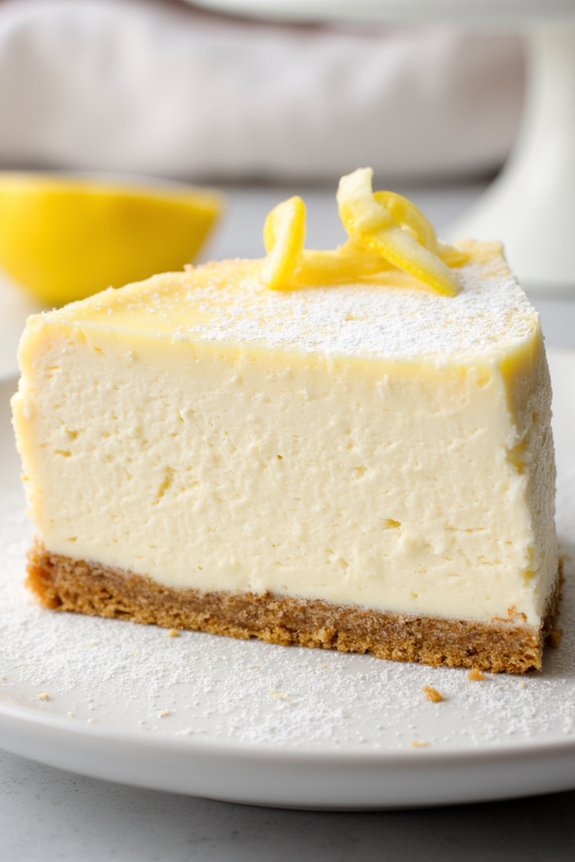
Ricotta Cheesecake is a delightful variation of the traditional cheesecake, offering a light, creamy texture and a subtle sweetness that’s perfectly balanced by a hint of lemon zest. Originating from Italy, this dessert is ideal for those who want a refined and elegant finish to any meal.
The use of ricotta cheese instead of the usual cream cheese gives this cheesecake a unique flavor profile that’s both invigorating and indulgent. Whether you’re serving it at a family gathering or a dinner party, Ricotta Cheesecake is bound to impress your guests with its rich taste and beautiful presentation.
The beauty of Ricotta Cheesecake lies in its simplicity and its reliance on high-quality ingredients. The ricotta cheese should be fresh and creamy, the eggs should be at room temperature, and the lemon zest should be fragrant and bright.
This dessert is relatively easy to make, requiring just a few steps to achieve perfection. With a buttery graham cracker crust and a smooth, luscious filling, this cheesecake is a proof of how a few simple ingredients can come together to create something truly special.
Ingredients (Serves 4-6 people):
- 2 cups graham cracker crumbs
- 1/2 cup unsalted butter, melted
- 2 cups ricotta cheese
- 1 cup granulated sugar
- 4 large eggs
- 1 teaspoon vanilla extract
- Zest of 1 lemon
- 1/4 cup all-purpose flour
- 1/4 teaspoon salt
- Powdered sugar, for dusting (optional)
Cooking Instructions:
- Preheat the Oven: Start by preheating your oven to 325°F (165°C). This will guarantee the cheesecake cooks evenly.
- Prepare the Crust: In a medium-sized bowl, combine the graham cracker crumbs and melted butter. Mix until the crumbs are evenly coated with butter. Press the mixture into the bottom of a 9-inch springform pan to form an even crust. Set aside.
- Mix the Filling: In a large mixing bowl, beat the ricotta cheese and sugar together until smooth and creamy. Add in the eggs, one at a time, making sure each egg is fully incorporated before adding the next.
- Add Flavorings: Stir in the vanilla extract and lemon zest, mixing well. Gradually add the flour and salt, and continue to mix until all ingredients are fully combined and the mixture is smooth.
- Assemble the Cheesecake: Pour the ricotta mixture over the prepared crust in the springform pan, smoothing the top with a spatula to guarantee an even layer.
- Bake: Place the cheesecake in the preheated oven and bake for about 50-60 minutes, or until the edges are set and the center is slightly wobbly. The cheesecake will continue to set as it cools.
- Cool and Serve: Allow the cheesecake to cool at room temperature for about an hour, then refrigerate for at least 4 hours or overnight. Before serving, dust the top with powdered sugar if desired.
Extra Tips:
For the best results, make sure that all your ingredients are at room temperature before you start preparing the cheesecake. This helps the ingredients blend more smoothly, resulting in a more even texture.
If you’re concerned about cracks forming on the surface of the cheesecake, consider baking it in a water bath. Simply wrap the outside of the springform pan with aluminum foil and place it in a larger baking dish filled with about an inch of hot water. This will help the cheesecake bake more gently and evenly.
Enjoy your Ricotta Cheesecake with a cup of espresso or a glass of dessert wine for a truly Italian experience.
Amaretti Cookies

Amaretti Cookies are a classic Italian sweet treat that boast a delightful balance of crispness and chewiness. Originating from the Lombardy region, these almond-flavored cookies are traditionally enjoyed with a cup of espresso or dessert wine.
The name “amaretti” comes from the Italian word “amaro,” meaning bitter, which refers to the use of bitter almonds or apricot kernels in the recipe. However, sweet almonds are often used in modern recipes, providing a milder yet equally irresistible flavor profile.
Amaretti Cookies are perfect for any occasion, whether you’re hosting a dinner party or simply looking to indulge in a small, sweet delight.
Making Amaretti Cookies at home is a straightforward process, and the result is a batch of cookies that are both visually appealing and incredibly tasty. The main ingredients include almonds, sugar, and egg whites, which are combined to create a dough that’s then shaped into small balls and baked until golden.
The aroma of freshly baked Amaretti Cookies is sure to fill your home with a warm and inviting scent. This recipe serves 4-6 people, making it ideal for sharing with family and friends.
Ingredients:
- 200 grams of blanched almonds
- 200 grams of granulated sugar
- 2 large egg whites
- 1 teaspoon of almond extract
- A pinch of salt
- Confectioners’ sugar for dusting
Cooking Instructions:
- Preheat and Prepare: Preheat your oven to 160°C (320°F) and line two baking sheets with parchment paper. This guarantees your cookies bake evenly and don’t stick to the pans.
- Process the Almonds: Place the blanched almonds and half of the granulated sugar into a food processor. Pulse until the mixture resembles a fine almond meal. Be careful not to over-process as this can turn the almonds into almond butter.
- Beat the Egg Whites: In a separate large bowl, beat the egg whites with a pinch of salt until soft peaks form. Soft peaks are achieved when the egg whites hold a slight shape but are still soft enough to fold over.
- Combine Ingredients: Gradually fold in the remaining sugar, almond extract, and almond meal into the beaten egg whites. Mix gently until a smooth, slightly sticky dough forms.
- Shape the Cookies: Using a teaspoon, scoop small amounts of dough and roll them into balls with your hands. Place them on the prepared baking sheets, leaving a little space between each cookie.
- Dust and Bake: Lightly dust the cookies with confectioners’ sugar and bake in the preheated oven for about 20-25 minutes, or until the cookies are lightly golden and set.
- Cool and Serve: Allow the cookies to cool on the baking sheet for a few minutes before transferring them to a wire rack to cool completely. Serve with coffee or a sweet dessert wine.
Extra Tips:
For a more intense almond flavor, you can add a few drops of bitter almond extract, but be cautious as it’s very potent.
If you prefer a chewier texture, slightly underbake the cookies as they’ll continue to firm up while cooling.
To achieve a consistent size for your Amaretti Cookies, use a small ice cream scoop or a tablespoon to measure the dough.
Additionally, storing the cookies in an airtight container will keep them fresh for up to a week. Enjoy your homemade Amaretti Cookies as a delightful finish to any meal or as a midday treat!
Torrone

Torrone is a traditional Italian nougat confection, typically enjoyed during the festive season. This delightful treat is characterized by its sweet, chewy texture, and is often flavored with honey, vanilla, and a mix of nuts, such as almonds, hazelnuts, or pistachios.
Originating from Italy, this dessert has been a staple at celebrations and special occasions, bringing a touch of Mediterranean flavor to tables across the world. With its rich history and delectable taste, Torrone is a quintessential Italian dessert that captures the essence of Italian pastry craftsmanship.
Creating Torrone at home can be a rewarding culinary experience, allowing you to share a piece of Italian tradition with family and friends. This recipe serves 4-6 people and embodies the classic taste and texture that has made Torrone a beloved treat for generations. Following this recipe, you’ll craft a batch of Torrone that’s certain to impress with its authentic flavors and satisfying chewiness.
Ingredients:
- 2 cups whole almonds or hazelnuts
- 1 1/2 cups sugar
- 1 cup honey
- 2 large egg whites
- 1/4 cup water
- 1 teaspoon vanilla extract
- Edible rice paper or wafers (for lining the pan)
- A pinch of salt
Cooking Instructions:
- Prepare the Nuts: Preheat your oven to 350°F (175°C). Spread the almonds or hazelnuts on a baking sheet and roast them for about 8-10 minutes until they’re golden brown and aromatic. Allow them to cool and then chop roughly.
- Line the Pan: Take a baking pan (approximately 9×9 inches) and line it with edible rice paper or wafers. This will prevent the Torrone from sticking and add a professional finish.
- Make the Syrup: In a heavy-bottomed saucepan, combine the sugar, honey, and water. Stir the mixture over medium heat until the sugar dissolves. Once dissolved, increase the heat and bring it to a boil without stirring. Use a candy thermometer to monitor the temperature, and heat until it reaches 260°F (127°C).
- Whip the Egg Whites: While the syrup is cooking, beat the egg whites with a pinch of salt in a stand mixer or with a hand mixer until stiff peaks form. This should take about 3-4 minutes.
- Combine the Ingredients: Once the sugar syrup reaches the desired temperature, slowly pour it into the egg whites while continuing to beat at a low speed. Increase the speed to medium and beat until the mixture is thick and glossy, around 5-8 minutes.
- Add Flavor and Nuts: Mix in the vanilla extract and then fold in the roasted nuts with a spatula until evenly distributed throughout the nougat.
- Set the Torrone: Quickly transfer the nougat mixture into the prepared pan, smoothing the top with a spatula. Cover the top with more rice paper or wafers, pressing gently to adhere.
- Cool and Slice: Let the Torrone cool at room temperature for at least 4-6 hours or until it firms up. Once set, use a sharp knife to cut it into desired shapes and sizes.
Extra Tips:
When making Torrone, it’s essential to monitor the temperature of the sugar syrup carefully, as this affects the final texture of the nougat.
Make sure your equipment is clean and free of any grease, as this can impact the whipping of the egg whites. If you find the nougat too sticky while slicing, lightly oil your knife for smoother cuts. Enjoy your Torrone with a cup of espresso or a glass of dessert wine for an authentic Italian experience!
Semifreddo
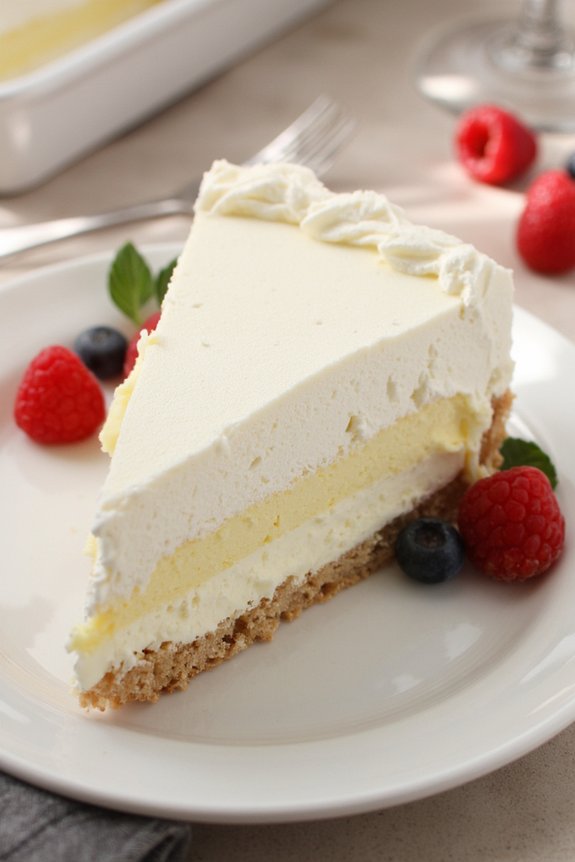
Semifreddo, an Italian word meaning “half-cold,” is an elegant dessert that perfectly balances the creaminess of ice cream with the lightness of mousse. Unlike traditional ice cream, semifreddo doesn’t require churning, making it an ideal dessert for those who lack an ice cream maker but still crave a frozen treat.
This delightful dessert is versatile and can be flavored with a variety of ingredients such as chocolate, fruits, nuts, or coffee, allowing for endless creativity in the kitchen.
The texture of semifreddo is achieved by folding whipped cream into a rich, flavored custard base, and then freezing the mixture until it’s set. This process results in a luscious, airy dessert with a smooth, velvety consistency.
Semifreddo is typically served sliced, making it a stunning presentation for dinner parties or special occasions, and it pairs beautifully with fresh berries or a drizzle of chocolate sauce. Below is a classic recipe for vanilla semifreddo, perfect for serving 4-6 people.
Ingredients:
- 4 large eggs, separated
- 1 cup granulated sugar
- 1 teaspoon pure vanilla extract
- 2 cups heavy cream
- Pinch of salt
Instructions:
- Prepare the Egg Mixture: In a heatproof bowl, whisk together the egg yolks and half of the sugar. Place the bowl over a pot of simmering water (double boiler method) and whisk constantly until the mixture becomes thick and pale, about 5 minutes. Remove from the heat and stir in the vanilla extract. Set aside to cool.
- Whip the Cream: In a separate bowl, whip the heavy cream until soft peaks form. Be careful not to overwhip, as the cream should be light and airy.
- Beat the Egg Whites: In another clean bowl, beat the egg whites with a pinch of salt until soft peaks form. Gradually add the remaining sugar and continue beating until stiff peaks form.
- Combine the Mixtures: Gently fold the cooled egg yolk mixture into the whipped cream, making certain not to deflate the cream. Then, carefully fold in the beaten egg whites until the mixture is well combined and smooth.
- Freeze the Semifreddo: Pour the mixture into a loaf pan lined with plastic wrap, smoothing the top with a spatula. Cover with more plastic wrap and freeze for at least 4 hours or overnight until firm.
- Serve: When ready to serve, remove the semifreddo from the freezer and let it sit at room temperature for a few minutes to soften slightly. Invert onto a serving platter, remove the plastic wrap, and slice to serve. Garnish with fresh berries or your choice of toppings.
Extra Tips:
To guarantee the semifreddo achieves the perfect texture, it’s vital to be gentle when folding the mixtures together, preserving as much air as possible.
Additionally, it’s important to use fresh, high-quality eggs, as their flavor and texture are central to the dessert.
If you want to add a twist to the classic vanilla semifreddo, consider folding in chocolate chips, crushed cookies, or a swirl of fruit puree before freezing.
Finally, remember that semifreddo can be prepared a day in advance, making it a convenient dessert for entertaining.
