

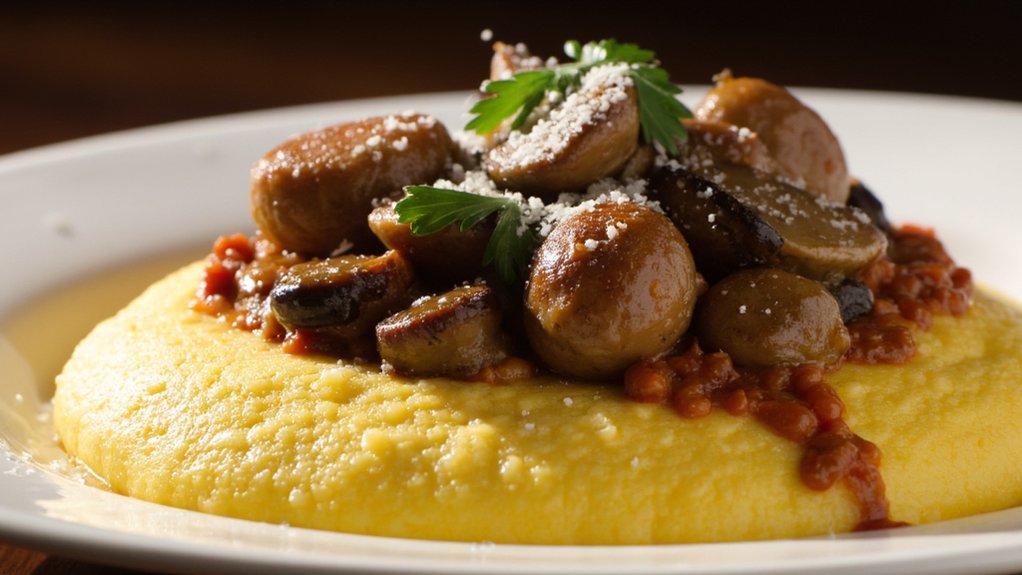
When I think about Italian Christmases, my heart instantly warms up with cherished memories. Each dish, from the indulgent Panettone to the comforting Lasagna Alla Bolognese, carries a story of family and tradition. The kitchen is alive with vibrant ingredients and the joy of cooking together. Sweet Struffoli, glistening with honey, never fails to bring laughter to the table. Curious about what other delights fill the holiday table? Let’s explore these timeless treasures together.
The Classic Panettone
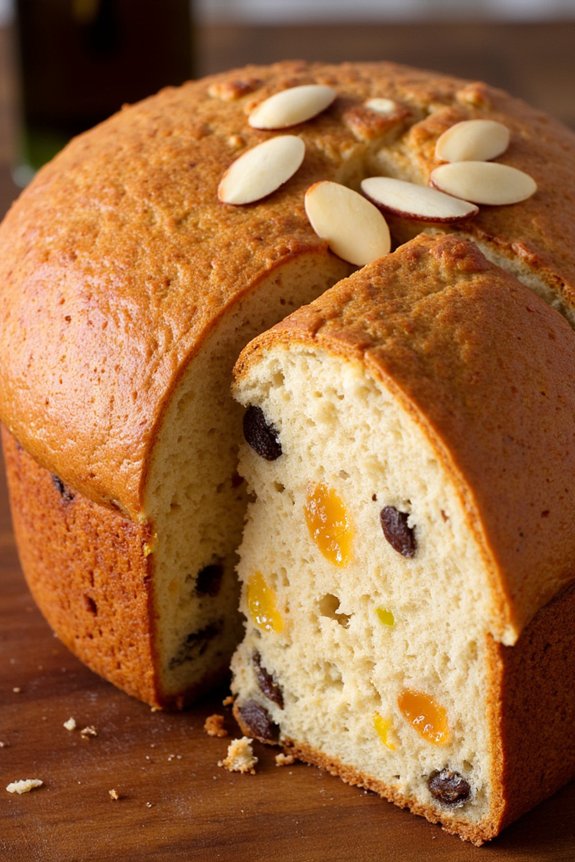
Panettone is a traditional Italian Christmas bread that has stood the test of time and become a beloved holiday treat worldwide. Known for its tall, domed shape and light, fluffy texture, this sweet bread is typically flavored with a mixture of dried fruits, such as raisins and candied orange peel, and often a hint of vanilla. The rich, buttery flavor and the delicate, airy crumb make it a perfect dessert or breakfast accompaniment during the festive season.
Originating from Milan, panettone has become a symbol of Italian culinary prowess and is a labor of love, requiring patience and care to achieve its signature texture and flavor.
Creating the perfect panettone involves several steps, starting with a well-prepared dough that’s allowed to rise slowly, guaranteeing the characteristic lightness of the bread. Although it may seem intimidating, with the right ingredients and attention to detail, anyone can bake their own panettone at home. This recipe is designed to serve 4-6 people, making it an ideal centerpiece for your holiday table.
Follow these steps to delight your family and friends with a homemade panettone that captures the essence of Italian Christmas traditions.
Ingredients for 4-6 servings:
- 1/2 cup warm water
- 2 1/4 teaspoons active dry yeast
- 1/4 cup granulated sugar
- 4 large eggs, at room temperature
- 1 teaspoon vanilla extract
- 1 teaspoon salt
- 1/2 cup unsalted butter, softened
- 3 1/2 cups all-purpose flour
- 1/2 cup raisins
- 1/4 cup candied orange peel
- Zest of 1 lemon
- Zest of 1 orange
- 1/4 cup almond slivers (optional)
Cooking Instructions:
- Activate the Yeast: In a small bowl, combine warm water and active dry yeast. Stir gently and let it sit for about 10 minutes until it becomes frothy, indicating that the yeast is active.
- Prepare the Dough: In a large mixing bowl, beat together the sugar, eggs, vanilla extract, and salt until well combined. Gradually mix in the softened butter until the mixture is smooth.
- Incorporate Flour and Yeast: Slowly add the flour to the egg mixture, mixing on low speed until just combined. Pour in the activated yeast mixture and continue mixing until a soft dough forms. If using a stand mixer, switch to a dough hook and knead on medium speed for about 5-7 minutes, or until the dough is smooth and elastic.
- First Rise: Transfer the dough to a lightly greased bowl, cover it with plastic wrap, and let it rise in a warm, draft-free location for about 2 hours, or until it doubles in size.
- Add Fruits and Zests: Once the dough has risen, gently deflate it and incorporate the raisins, candied orange peel, lemon zest, and orange zest. Knead by hand until the fruits and zests are evenly distributed throughout the dough.
- Second Rise: Shape the dough into a ball and place it in a prepared panettone mold or a parchment-lined deep baking mold. Cover it again with plastic wrap and let it rise for another 1-2 hours, or until it has doubled in size and reaches the top of the mold.
- Preheat and Bake: Preheat your oven to 350°F (175°C). Once the dough has risen sufficiently, sprinkle almond slivers on top if desired, and bake for 35-45 minutes, or until the panettone is golden brown and a skewer inserted into the center comes out clean.
- Cool: Allow the panettone to cool completely in the mold on a wire rack before slicing and serving.
Extra Tips:
To achieve the perfect rise, verify your ingredients are at room temperature and your kitchen is warm enough. If your home is cool, you can place the rising dough in an oven that’s turned off but with the oven light on to provide a warm environment.
Additionally, be patient with the rising time as this is key to getting the light, airy texture that panettone is known for. If you’re using a stand mixer, be attentive to the dough’s consistency; it should be smooth and elastic but not sticky.
Finally, panettone is best consumed fresh but can be stored in an airtight container for several days or frozen for longer storage.
Traditional Lasagna Alla Bolognese
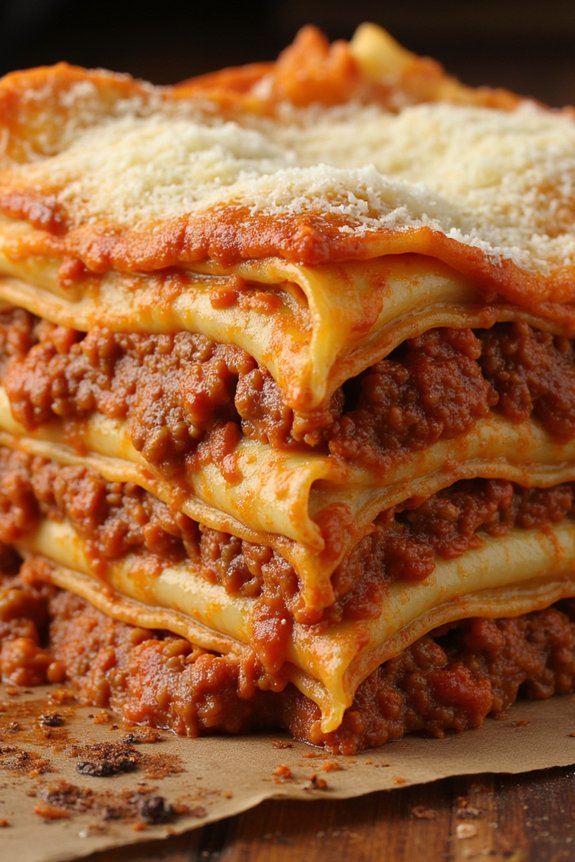
Lasagna Alla Bolognese is a classic Italian dish that embodies the rich and comforting flavors of traditional Bolognese sauce layered with creamy béchamel and tender pasta. This dish is a staple in Italian cuisine, especially during the festive Christmas season when families come together to enjoy hearty meals.
Originating from the Bologna region in Italy, this lasagna is known for its depth of flavor and the perfect balance between meat, cheese, and pasta. It’s a dish that requires time and attention to detail, but the end result is a deliciously satisfying meal that’s sure to impress.
Preparing Traditional Lasagna Alla Bolognese involves making a rich meat sauce, a smooth béchamel, and layering these components with pasta sheets. This recipe is designed to serve 4-6 people, perfect for a family gathering or festive celebration.
The key to a successful lasagna is in each layer’s quality, from the robust Bolognese sauce simmered to perfection to the silky béchamel that ties everything together. Though it requires some preparation, this dish is worth every minute spent in the kitchen, promising a feast that will delight your guests.
Ingredients for 4-6 people:
- 500g ground beef
- 250g ground pork
- 1 onion, finely chopped
- 1 carrot, finely chopped
- 1 celery stalk, finely chopped
- 2 cloves garlic, minced
- 1 cup tomato paste
- 1 cup red wine
- 2 cups beef broth
- 2 tablespoons olive oil
- 1 tablespoon butter
- Salt and pepper to taste
- 1/2 teaspoon nutmeg
- 1 cup whole milk
- 12 lasagna sheets
- 1 cup grated Parmesan cheese
- 3 cups whole milk
- 4 tablespoons unsalted butter
- 1/4 cup all-purpose flour
Cooking Instructions:
- Prepare the Bolognese Sauce: In a large skillet, heat olive oil and butter over medium heat. Add the onion, carrot, and celery, sautéing until soft. Stir in the garlic and cook for an additional minute. Add the ground beef and pork, cooking until browned. Pour in the red wine, letting it reduce by half.
- Simmer the Sauce: Add the tomato paste and beef broth to the skillet, stirring to combine. Season with salt, pepper, and nutmeg. Reduce the heat to low, cover, and let the sauce simmer for at least 1.5 hours, stirring occasionally. Add milk towards the end of cooking to add richness and balance the flavors.
- Make the Béchamel Sauce: In a separate saucepan, melt the butter over medium heat. Stir in the flour and cook for 1-2 minutes until it forms a paste. Gradually whisk in the milk, cooking until the sauce thickens. Season with salt and nutmeg.
- Assemble the Lasagna: Preheat the oven to 180°C (350°F). Start by spreading a thin layer of Bolognese sauce on the bottom of a baking dish. Place a layer of lasagna sheets over the sauce. Spread a portion of the béchamel over the pasta, followed by more Bolognese sauce. Repeat the layers until all ingredients are used, finishing with a layer of béchamel and a generous sprinkle of Parmesan cheese on top.
- Bake the Lasagna: Cover the dish with aluminum foil and bake for 25 minutes. Remove the foil and bake for an additional 15 minutes until the top is golden and bubbly. Let the lasagna cool slightly before serving.
Extra Tips:
For the best results, allow the Bolognese sauce to simmer slowly to develop its rich, deep flavors. When preparing the béchamel, make sure to whisk constantly to prevent lumps.
If time permits, consider making the lasagna a day in advance; it often tastes even better the next day as the flavors meld together. Finally, use high-quality Parmesan cheese for the topping to give your lasagna an authentic Italian finish.
Struffoli: Sweet Honey Balls
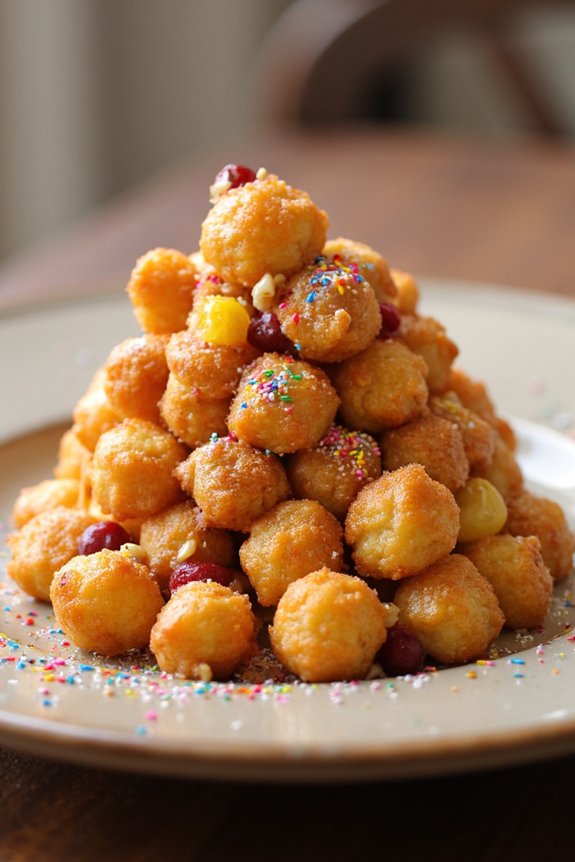
Struffoli, also known as Sweet Honey Balls, is a delightful traditional Italian dessert often enjoyed during the festive Christmas season. Originating from the southern regions of Italy, particularly Naples, this treat comprises small deep-fried dough balls that are bathed in warm honey and typically garnished with colorful sprinkles and candied fruits.
The dish isn’t only a feast for the taste buds but also a visual delight, often served as a centerpiece on the holiday table. Its sweet, crunchy texture combined with the aromatic honey makes Struffoli a beloved holiday favorite.
The preparation of Struffoli is a wonderful tradition that many Italian families look forward to each year. The process begins with making a simple dough that’s cut into small pieces, each piece rolled into a ball, and then fried to a golden brown perfection.
Once the dough balls are fried, they’re coated with honey and decorated, resulting in a dessert that’s both delicious and festive. Whether you’re making it for a family gathering or a holiday party, Struffoli is sure to be a hit with your guests.
Ingredients (Serves 4-6 people)
- 2 cups all-purpose flour
- 3 large eggs
- 2 tablespoons granulated sugar
- 2 tablespoons unsalted butter, softened
- 1 tablespoon anise liqueur or vanilla extract
- Zest of 1 lemon
- Pinch of salt
- Vegetable oil, for frying
- 1 cup honey
- 1/4 cup sugar
- Colorful sprinkles for decoration
- Candied fruits or nuts (optional)
Cooking Instructions
- Prepare the Dough: In a large mixing bowl, combine the flour, sugar, softened butter, eggs, anise liqueur or vanilla extract, lemon zest, and a pinch of salt. Mix the ingredients together until a smooth dough forms. If the dough is too sticky, add a little more flour.
- Shape the Dough Balls: On a floured surface, divide the dough into small portions. Roll each portion into a long, thin rope, about 1/2 inch thick. Cut the rope into small pieces (about the size of a marble) and roll each piece into a ball.
- Fry the Dough Balls: Heat the vegetable oil in a deep fryer or a large saucepan to 350°F (175°C). Carefully drop the dough balls into the hot oil in batches, making sure not to overcrowd the pan. Fry until they’re golden brown, about 2-3 minutes per batch. Remove the fried balls using a slotted spoon and drain on paper towels.
- Coat with Honey: In a separate saucepan, heat the honey and 1/4 cup of sugar over low heat until the sugar dissolves. Add the fried dough balls to the honey mixture and gently stir until they’re well coated.
- Assemble the Struffoli: Arrange the honey-coated balls on a serving platter. Form them into a mound or a ring shape, pressing them gently together. Sprinkle generously with colorful sprinkles and add candied fruits or nuts if desired.
- Cool and Serve: Allow the Struffoli to cool and set for about 30 minutes before serving. This will help the honey to firm up slightly, making it easier to serve.
Extra Tips
When making Struffoli, verify the oil temperature is consistent to achieve an even golden color and crunchy texture. If the oil is too hot, the dough balls will brown too quickly on the outside while remaining undercooked on the inside.
Additionally, experiment with different flavors by adding orange zest or a splash of limoncello to the dough. For a non-alcoholic version, simply omit the liqueur.
Struffoli can also be made ahead of time, as they retain their flavor and texture for several days, making them a perfect make-ahead treat for the busy holiday season.
Baccalà Alla Vicentina
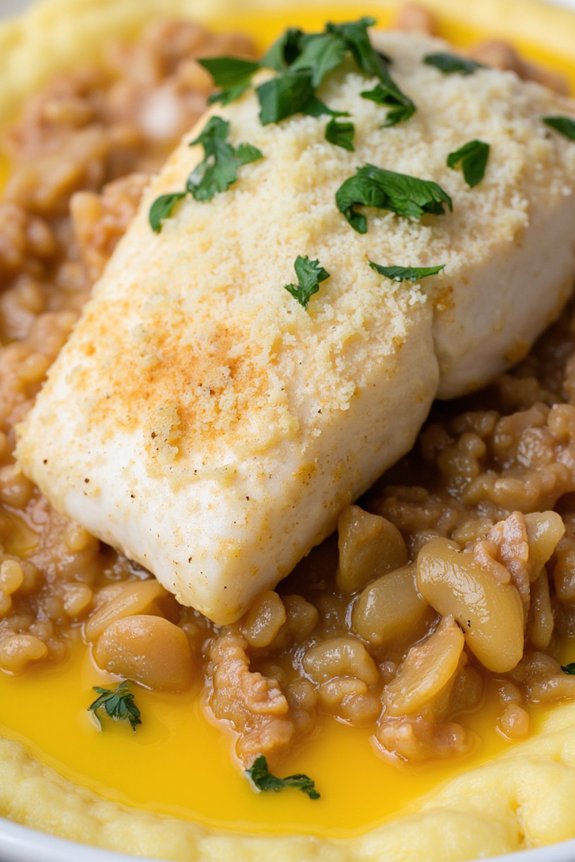
Baccalà Alla Vicentina is a traditional Italian dish from the Veneto region, renowned for its rich flavors and creamy texture. This dish is typically prepared using salted cod, which is rehydrated and cooked slowly with onions, milk, and anchovies to create a delectable main course. The origins of Baccalà Alla Vicentina date back to the 15th century, when the city of Vicenza began importing dried cod from the North Atlantic. Over time, the locals developed this unique recipe, which has since become a staple during the festive Christmas season.
The key to a perfect Baccalà Alla Vicentina lies in its slow-cooking process, allowing the flavors to meld beautifully. The dish is traditionally served with polenta, which complements the creamy textures of the Baccalà. While preparing this dish may require a bit of patience, the result is a comforting, hearty meal that embodies the spirit of Italian holiday traditions. Whether you’re preparing for a family gathering or simply want to indulge in authentic Italian cuisine, Baccalà Alla Vicentina is a wonderful choice that will surely impress.
Ingredients for 4-6 servings:
- 2 pounds salted cod (baccalà), soaked and desalted
- 2 large onions, thinly sliced
- 2 cups whole milk
- 1 cup extra virgin olive oil
- 4 anchovy fillets, chopped
- 1/4 cup all-purpose flour
- 1/4 cup grated Parmesan cheese
- 2 tablespoons chopped fresh parsley
- Salt and pepper, to taste
- Polenta, for serving
Cooking Instructions:
- Prepare the Cod: Begin by soaking the salted cod in cold water for 48 hours, changing the water every 8 hours to remove excess salt. After soaking, drain the cod and pat dry with paper towels.
- Flour the Cod: Cut the cod into serving-sized pieces. Dredge each piece lightly in flour, making sure they’re evenly coated.
- Cook the Onions and Anchovies: In a large skillet, heat half of the olive oil over medium heat. Add the sliced onions and cook until they become translucent. Stir in the chopped anchovies and cook for an additional 2-3 minutes until the anchovies dissolve.
- Simmer the Cod: Arrange the floured cod pieces in the skillet over the onion mixture. Pour the remaining olive oil and milk over the fish, making sure the liquid covers the pieces well. Season with salt and pepper, but be cautious with the salt due to the residual saltiness of the cod.
- Slow Cook: Cover the skillet and let the mixture simmer on low heat for about 2 hours. Occasionally shake the skillet gently to prevent the fish from sticking, but avoid stirring to maintain the integrity of the cod pieces.
- Finish with Cheese and Parsley: Once the cod is tender and the sauce has thickened, sprinkle the grated Parmesan cheese and chopped parsley over the top. Allow it to cook for an additional 5 minutes to meld the flavors.
- Serve: Serve hot with creamy polenta on the side, garnished with additional parsley if desired.
Extra Tips:
When preparing Baccalà Alla Vicentina, it’s crucial to plan ahead due to the soaking process required for the salted cod. The quality of the cod greatly impacts the dish, so try to source the best available.
If the cod is still too salty after soaking, extend the soaking period or increase the frequency of water changes. Additionally, using a heavy-bottomed skillet helps guarantee even cooking and prevents burning.
Zuppa Di Pesce: Italian Fish Soup
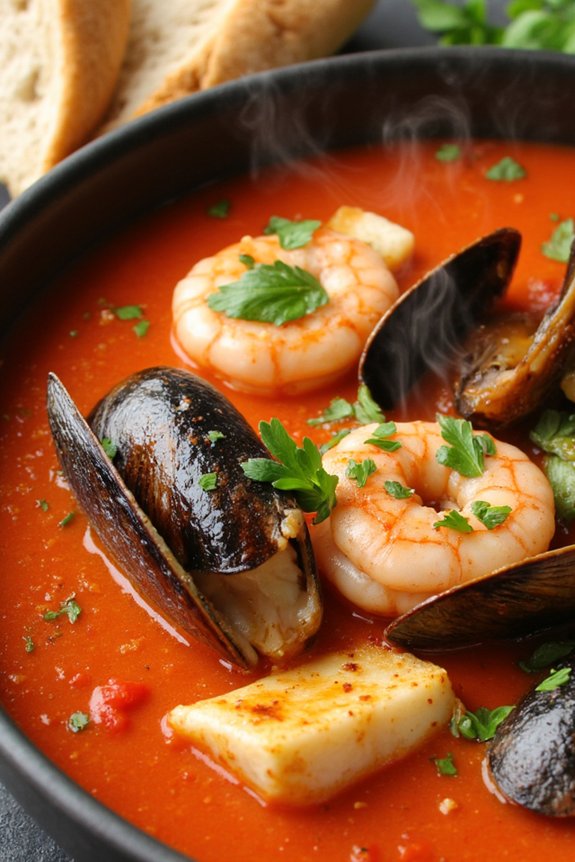
Zuppa Di Pesce, or Italian Fish Soup, is a traditional dish often enjoyed during the festive Christmas season in Italy. This hearty and flavorful soup brings together a delightful mix of fresh seafood simmered in a rich tomato broth, creating a comforting and warming meal perfect for winter gatherings.
Originating from coastal regions, Zuppa Di Pesce showcases the bounty of the sea, offering a taste of the Mediterranean and a nod to Italy’s deep maritime heritage.
This dish isn’t only delicious but also relatively easy to prepare, making it an ideal choice for those who wish to impress their guests with a true Italian experience. The key to a perfect Zuppa Di Pesce lies in the quality and freshness of the seafood used, as well as the balance of flavors in the broth.
The combination of garlic, tomatoes, and herbs creates a fragrant base that enhances the natural sweetness of the fish, making every spoonful a delight.
Ingredients (Serves 4-6)
- 2 tablespoons olive oil
- 1 onion, finely chopped
- 3 cloves garlic, minced
- 1 can (28 ounces) crushed tomatoes
- 4 cups fish stock or clam juice
- 1/2 cup dry white wine
- 1 teaspoon dried oregano
- 1 teaspoon dried basil
- Salt and pepper to taste
- 1 pound mussels, cleaned and debearded
- 1 pound clams, cleaned
- 1/2 pound shrimp, peeled and deveined
- 1/2 pound white fish fillets (such as cod or halibut), cut into bite-sized pieces
- 1/4 cup chopped fresh parsley
- Crusty bread, for serving
Instructions
- Prepare the Base: Heat olive oil in a large pot over medium heat. Add the chopped onion and sauté until it becomes translucent, about 5 minutes. Add the minced garlic and cook for another minute, making sure it doesn’t burn.
- Build the Broth: Pour in the crushed tomatoes, fish stock or clam juice, and white wine. Stir in the oregano, basil, salt, and pepper. Bring the mixture to a simmer and let it cook for about 15 minutes to allow the flavors to meld together.
- Cook the Seafood: Add the mussels and clams to the pot, cover, and cook until they begin to open, about 5 minutes. Next, add the shrimp and fish pieces. Cover the pot again and cook for an additional 5-7 minutes, until the shrimp are pink and the fish is cooked through. Discard any mussels or clams that don’t open.
- Finish and Serve: Stir in the fresh parsley just before serving. Ladle the soup into bowls and serve hot with crusty bread on the side, perfect for soaking up the flavorful broth.
Extra Tips
To guarantee the best results, always select the freshest seafood available, and make sure it’s properly cleaned before cooking.
If fresh fish stock or clam juice is unavailable, you can use a good-quality seafood bouillon as a substitute. Adjust the seasoning as necessary, and feel free to add a pinch of red pepper flakes if you prefer a hint of heat in your soup.
This dish is highly versatile, so you can adapt it with your favorite seafood or add more herbs to suit your taste preferences. Enjoy the process, and savor the rich flavors of this classic Italian Christmas recipe!
Cotechino Con Lenticchie
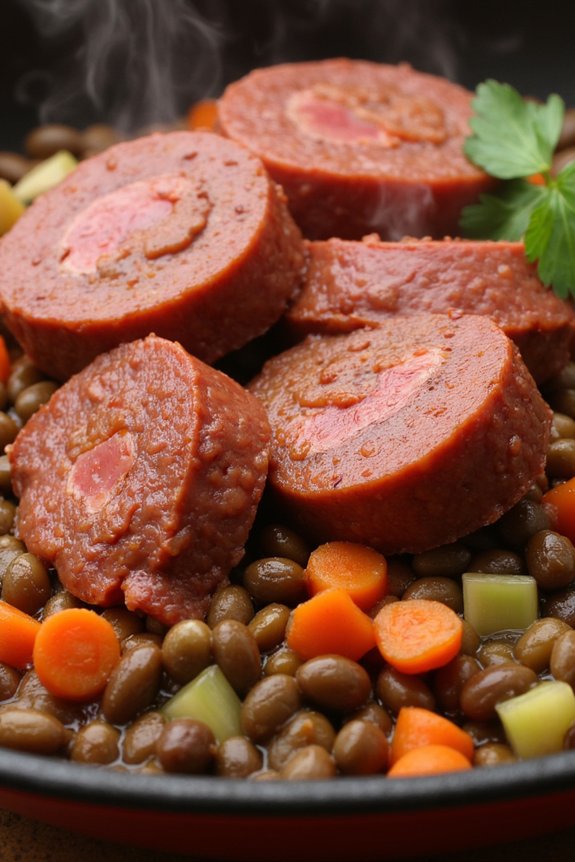
Cotechino Con Lenticchie is a classic Italian dish often enjoyed during the festive Christmas season. This traditional recipe combines the rich, savory flavors of Cotechino, a type of Italian pork sausage, with the earthy taste of lentils. The combination isn’t only delicious but is also thought to bring good luck and prosperity in the New Year.
The hearty nature of this dish makes it perfect for the cold winter months, providing warmth and comfort to those who partake in its enjoyment. Originating from Northern Italy, Cotechino Con Lenticchie is a staple in many households during holiday celebrations.
The Cotechino sausage is known for its unique texture and flavor, achieved by mixing pork with a blend of spices and curing it for a specific period. When paired with lentils, which symbolize coins, the dish isn’t only a treat for the taste buds but also a symbol of abundance.
This recipe will walk you through the process of creating this delectable dish, serving 4-6 people, guaranteeing your holiday meal is both meaningful and memorable.
Ingredients for 4-6 servings:
- 1 Cotechino sausage (about 500g)
- 300g dried lentils
- 1 onion, finely chopped
- 2 carrots, diced
- 2 celery stalks, diced
- 2 cloves garlic, minced
- 2 tablespoons olive oil
- 1 bay leaf
- 1 sprig fresh rosemary
- Salt and pepper to taste
- Water or chicken broth (as needed)
Cooking Instructions:
- Prepare the Lentils: Start by rinsing the lentils under cold water to remove any dirt or debris. Set them aside to drain.
- Cook the Cotechino: Place the Cotechino sausage in a large pot, cover it with cold water, and bring it to a boil. Once boiling, lower the heat and let it simmer for about 2 hours. This slow cooking allows the flavors to develop and makes sure the sausage remains tender.
- Sauté the Vegetables: While the sausage is cooking, heat olive oil in a separate large pan over medium heat. Add the chopped onion, carrots, celery, and garlic. Sauté them until the vegetables are soft and fragrant, which should take about 10 minutes.
- Cook the Lentils: Add the drained lentils to the pan with the vegetables. Stir in the bay leaf and rosemary sprig. Pour in enough water or chicken broth to cover the lentils by about an inch. Bring the mixture to a boil, then reduce the heat and let it simmer for 30-40 minutes or until the lentils are tender. Add more water or broth as necessary to keep the lentils submerged.
- Season and Combine: Once the lentils are cooked, season them with salt and pepper to taste. Remove the bay leaf and rosemary sprig. When the Cotechino is ready, carefully remove it from the pot, slice it into thick rounds, and lay it over the lentils.
- Serve: Arrange the lentils on a serving platter, place the sliced Cotechino on top, and serve immediately while hot.
Extra Tips:
When cooking Cotechino, it’s important to start with cold water and gradually heat it; this helps prevent the casing from bursting during the cooking process.
For additional flavor, consider adding a splash of red wine to the lentils while they simmer. If you’re unable to find Cotechino, a similar sausage, such as Zampone, can be used as an alternative.
Always taste and adjust the seasoning of the lentils before serving to guarantee a well-balanced flavor. Enjoy this traditional dish with a side of crusty bread to soak up the savory lentil broth.
Tiramisu: A Timeless Dessert
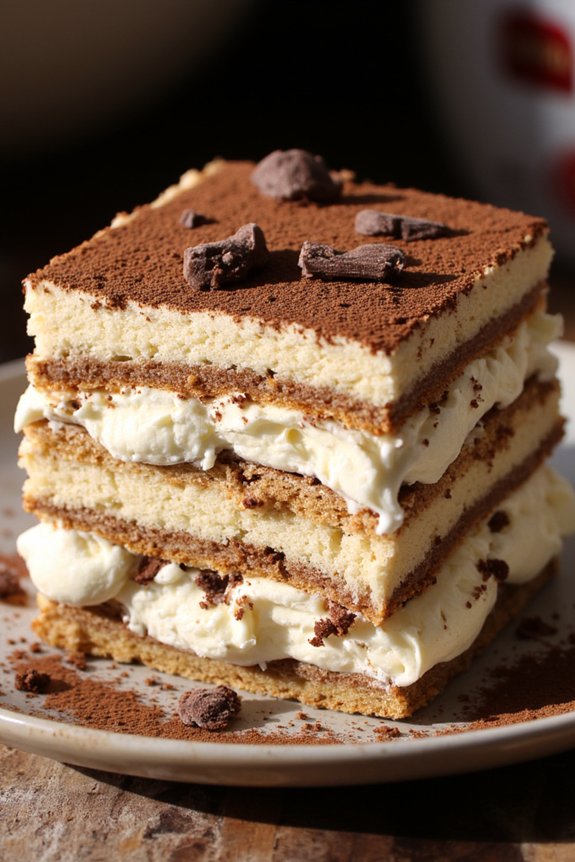
Tiramisu is a beloved Italian dessert that has captured the hearts of many dessert lovers around the world. Known for its creamy texture and coffee-infused flavor, tiramisu is a perfect indulgence during the Christmas season. This classic dessert combines layers of coffee-soaked ladyfingers, creamy mascarpone cheese, and a dusting of cocoa powder, creating a delightful balance of flavors and textures. Traditionally served chilled, tiramisu makes for a rejuvenating and elegant end to any holiday meal.
The origins of tiramisu are somewhat debated, but it’s widely believed to have originated in the region of Veneto, Italy, in the 1960s. Over the years, it has become a staple in Italian cuisine, celebrated not just during Christmas but throughout the year. The name “tiramisu” translates to “pick me up” in Italian, a nod to its invigorating ingredients like espresso and cocoa. This timeless dessert isn’t only delicious but also surprisingly simple to prepare, making it an excellent choice for both novice and seasoned cooks.
Ingredients for 4-6 Servings:
- 6 egg yolks
- 3/4 cup granulated sugar
- 2/3 cup milk
- 1 1/4 cups heavy cream
- 1/2 teaspoon pure vanilla extract
- 8 ounces mascarpone cheese
- 1 cup strong brewed coffee, cooled
- 1/4 cup coffee liqueur (optional)
- 24 ladyfingers
- 2 tablespoons unsweetened cocoa powder
- Dark chocolate shavings or cocoa powder for garnish (optional)
Cooking Instructions:
- Prepare the Custard Base: In a medium saucepan, whisk together the egg yolks and sugar until well combined and pale in color. Gradually whisk in the milk. Place the saucepan over medium heat and cook, stirring constantly, until the mixture thickens and coats the back of a spoon. Don’t let it boil. Remove from heat and let it cool to room temperature.
- Whip the Cream: In a large mixing bowl, beat the heavy cream with the vanilla extract until stiff peaks form. Be careful not to overwhip the cream to avoid a grainy texture.
- Combine with Mascarpone: Once the custard base has cooled, gently fold it into the mascarpone cheese in a large bowl. Verify the mixture is smooth and creamy. Then, carefully fold in the whipped cream until fully incorporated.
- Prepare the Coffee Mixture: In a shallow dish, combine the cooled coffee with the coffee liqueur if using. Quickly dip each ladyfinger into the coffee mixture, making sure they’re soaked but not soggy.
- Assemble the Tiramisu: In a 9×9 inch dish, arrange a layer of soaked ladyfingers at the bottom. Spread half of the mascarpone mixture over the ladyfingers, smoothing it out with a spatula. Repeat with another layer of soaked ladyfingers and the remaining mascarpone mixture.
- Chill and Set: Cover the dish with plastic wrap and refrigerate for at least 4 hours or overnight to allow the flavors to meld and the dessert to set.
- Garnish and Serve: Before serving, dust the top of the tiramisu with unsweetened cocoa powder. For an extra touch, add chocolate shavings or an additional sprinkle of cocoa powder. Slice and serve chilled.
Extra Tips:
When making tiramisu, it’s essential to use high-quality ingredients, especially when it comes to the espresso and mascarpone cheese, as they’re the stars of the dish. If possible, use freshly brewed espresso for the most authentic flavor.
Also, allow the tiramisu to chill thoroughly before serving; this not only enhances the flavors but also guarantees the dessert holds its shape when cut. For those who prefer a less boozy dessert, the coffee liqueur can be omitted without sacrificing taste. Enjoy your tiramisu with a cup of espresso or dessert wine for an authentic Italian experience.
Risotto Alla Milanese

Risotto Alla Milanese is a classic Italian dish renowned for its rich, creamy texture and the golden hue imparted by saffron. Traditionally served during the festive Christmas season in Italy, this dish combines the simplicity of risotto with the luxurious flavors of beef broth, aromatic spices, and a generous touch of Parmesan cheese.
The preparation of Risotto Alla Milanese involves patiently stirring Arborio rice in a flavorful broth until it reaches the perfect creamy consistency, making it a comforting and elegant addition to any holiday table.
The key to a perfect Risotto Alla Milanese lies in the quality of the ingredients and the care taken during the cooking process. The saffron not only provides a distinctive color but also infuses the dish with a delicate flavor that sets it apart from other risottos.
Using a good quality beef broth and freshly grated Parmesan cheese will elevate the taste, guaranteeing a memorable dining experience. With this recipe, you’ll be able to create a delightful and authentic Italian dish that can serve 4-6 people, perfect for sharing with family and friends during the festive season.
Ingredients:
- 2 cups Arborio rice
- 1 small onion, finely chopped
- 4 tablespoons unsalted butter
- 1/2 cup dry white wine
- 5 cups beef broth, kept warm
- 1/4 teaspoon saffron threads
- 1 cup freshly grated Parmesan cheese
- Salt and pepper to taste
- Optional: 2 tablespoons chopped fresh parsley for garnish
Cooking Instructions:
- Prepare the Saffron: Begin by soaking the saffron threads in a small amount of warm water or broth to release their color and aroma. Set aside for later use.
- Sauté the Onion: In a large, heavy-bottomed pan, melt 2 tablespoons of butter over medium heat. Add the finely chopped onion and sauté until it becomes translucent, about 5 minutes.
- Toast the Rice: Add the Arborio rice to the pan with the onion and stir well to coat the rice with the butter. Cook for about 2-3 minutes, allowing the rice to toast slightly without browning.
- Deglaze with Wine: Pour in the dry white wine and stir continuously until the wine has evaporated, which will enhance the flavor of the rice.
- Add Broth Gradually: Begin adding the warm beef broth, one ladleful at a time, stirring constantly. Allow each addition of broth to be absorbed by the rice before adding the next ladle. This gradual cooking process should take about 18-20 minutes.
- Incorporate Saffron: Halfway through the cooking time, add the saffron and its soaking liquid to the rice, stirring to evenly distribute the color and flavor.
- Finish with Cheese and Butter: Once the rice is al dente and has absorbed almost all the broth, remove the pan from heat. Stir in the remaining butter and the grated Parmesan cheese until the risotto is creamy. Season with salt and pepper to taste.
- Serve: Serve immediately, garnished with chopped fresh parsley if desired.
Extra Tips:
For the best Risotto Alla Milanese, use a wide, shallow pan to guarantee even cooking and easy stirring.
It’s essential to maintain a consistent stirring motion during the cooking process to release the starches from the rice, which contributes to the creamy texture of the dish.
If the risotto becomes too thick, you can adjust the consistency by adding a little more broth or water towards the end of the cooking process.
Torrone: Italian Nougat

Torrone, a classic Italian nougat, is a delightful treat that graces the tables during the festive Christmas season. Known for its sweet and chewy texture, torrone combines the richness of honey, sugar, and egg whites with the crunchiness of roasted nuts like almonds or hazelnuts.
Originating from the Lombardy region and popular throughout Italy, this confection is a beloved holiday tradition that can be enjoyed on its own or as a sweet accompaniment to other desserts.
Making torrone at home is an exciting way to bring a taste of Italian culinary heritage to your Christmas celebration. While the process requires some patience and attention to detail, the end result is a rewarding, mouth-watering treat that your family and friends will relish.
This recipe will guide you through creating a classic torrone that serves 4-6 people, perfect for sharing during your festive gatherings.
Ingredients:
- 2 cups almonds, blanched and toasted
- 1 cup granulated sugar
- 1 cup honey
- 2 large egg whites
- 1 teaspoon vanilla extract
- Zest of 1 lemon
- Edible wafer paper (optional, for lining)
- Pinch of salt
Instructions:
- Prepare the Baking Pan: Line a rectangular baking dish with edible wafer paper, if using, or lightly grease the pan to prevent sticking. Set aside.
- Toast the Almonds: Preheat your oven to 350°F (175°C). Spread the almonds on a baking sheet and toast them in the oven for about 8-10 minutes, stirring occasionally, until they’re golden and fragrant. Remove from the oven and let them cool.
- Make the Syrup: In a heavy-bottomed saucepan, combine the sugar and honey. Cook over medium heat, stirring often, until the mixture reaches 250°F (121°C) on a candy thermometer. This will take about 10-15 minutes. Be cautious not to overcook, as this will affect the texture of the torrone.
- Whisk the Egg Whites: While the syrup is cooking, beat the egg whites and a pinch of salt in a stand mixer until they form stiff peaks. Once the syrup has reached the desired temperature, slowly pour it into the egg whites while continuing to whisk on low speed. This will cook the egg whites and create a meringue.
- Combine Ingredients: Once the syrup is fully incorporated, increase the mixer speed to medium-high and beat until the mixture becomes thick and glossy, about 5-7 minutes. Add the vanilla extract and lemon zest, then gently fold in the toasted almonds with a spatula.
- Shape the Torrone: Quickly transfer the mixture to the prepared baking dish, smoothing the top with a spatula. If using wafer paper, press another sheet on top of the torrone. Let it cool at room temperature for at least 3 hours or until firm.
- Cut and Serve: Once the torrone is set, use a sharp knife to cut it into small squares or rectangles. Serve as a sweet treat during your holiday festivities.
Extra Tips: When making torrone, confirm that you have all your ingredients and equipment ready before you begin, as the process moves quickly once the syrup is ready.
It’s essential to monitor the temperature of the syrup closely, as this will determine the final texture of the nougat. If you prefer a softer torrone, you can slightly reduce the syrup’s cooking temperature.
Additionally, if you don’t have access to edible wafer paper, parchment paper can be used, but confirm it’s well-greased to prevent sticking. Enjoy this traditional Italian confection as part of your Christmas celebrations!
Caponata: Sicilian Eggplant Relish
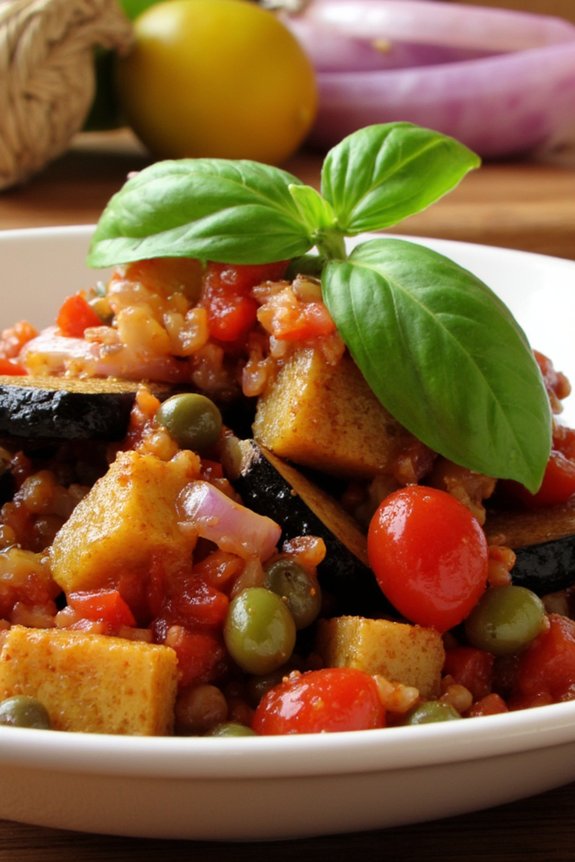
Caponata: Sicilian Eggplant Relish is a delightful and traditional Italian dish that combines the robust flavors of eggplant with the sweet and tangy notes of vinegar and sugar. A staple in Sicilian cuisine, caponata is often enjoyed as an appetizer, side dish, or even a main course.
This flavorful relish features a harmonious blend of vegetables, herbs, and seasonings, creating a versatile dish that can complement a variety of meals. Whether served cold or at room temperature, caponata’s complex flavors are sure to captivate the palate.
Caponata is known for its rich medley of ingredients, which typically includes eggplant, tomatoes, celery, onions, capers, and olives. These components are simmered together until they meld into a thick, aromatic stew. The balance of sweet and sour is achieved by adding a touch of sugar and vinegar, elevating the dish to new heights.
For a serving size of 4-6 people, this recipe will guide you through the process of making an authentic caponata that will transport you straight to the sun-drenched island of Sicily.
Ingredients:
- 2 medium eggplants
- 1 large onion
- 2 stalks of celery
- 2 cups of diced tomatoes (canned or fresh)
- 1/2 cup green olives, pitted and sliced
- 2 tablespoons capers, rinsed
- 1/4 cup red wine vinegar
- 2 tablespoons sugar
- 1/4 cup extra virgin olive oil
- Salt and pepper to taste
- Fresh basil leaves for garnish
Instructions:
- Prepare the Eggplants: Begin by cutting the eggplants into 1-inch cubes. Place them in a colander, sprinkle generously with salt, and let them sit for about 30 minutes. This process helps to draw out any bitter juices. After 30 minutes, rinse the eggplant cubes under cold water and pat them dry with a clean kitchen towel.
- Cook the Eggplants: Heat half of the olive oil in a large skillet over medium heat. Add the eggplant cubes and sauté them until they’re golden brown and tender, about 8-10 minutes. Remove the eggplants from the skillet and set them aside.
- Sauté the Vegetables: In the same skillet, add the remaining olive oil. Add the chopped onion and celery, cooking until they’re softened and translucent, about 5 minutes. Stir in the diced tomatoes, olives, and capers, and continue cooking for another 5 minutes.
- Combine Ingredients: Return the cooked eggplant to the skillet and mix well with the sautéed vegetables. Add the red wine vinegar and sugar, stirring to combine. Season with salt and pepper to taste. Allow the mixture to simmer over low heat for about 15-20 minutes, stirring occasionally. The caponata should become thick and the flavors well integrated.
- Finish and Serve: Once the caponata is ready, remove it from the heat and let it cool to room temperature. Garnish with fresh basil leaves before serving. Caponata can be enjoyed immediately or stored in the refrigerator for up to a week, allowing the flavors to deepen over time.
Extra Tips:
When preparing caponata, consider making it a day ahead of serving. Allowing the flavors to meld overnight can intensify the taste, making it even more delicious.
Additionally, feel free to adjust the sweetness and acidity to your liking by varying the amounts of sugar and vinegar. Caponata can also be customized with additional ingredients such as pine nuts or raisins for added texture and flavor.
Finally, serve with crusty bread or as a topping for grilled meats or fish for a truly authentic Italian experience.
Pandoro: Golden Christmas Cake
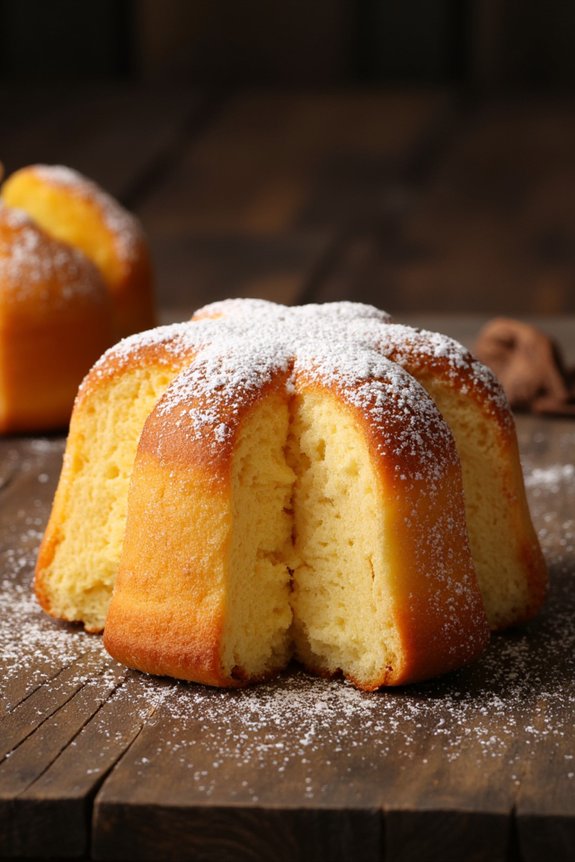
Pandoro is a classic Italian Christmas cake known for its tall, star-shaped form and golden yellow color. It originates from Verona and is traditionally enjoyed during the festive season, often dusted with a generous layer of powdered sugar to resemble the snowy peaks of the Italian Alps.
This rich, buttery cake is a delightful addition to any holiday table, offering a sweet, tender crumb that melts in your mouth. While it can seem intimidating to make from scratch due to its intricate preparation process, the end result is a beautifully aromatic and visually stunning treat that’s sure to impress your family and friends.
The key to an authentic Pandoro lies in its slow fermentation process, which involves multiple rises to develop its distinct flavor and texture. The dough is enriched with butter and eggs, contributing to its characteristic richness.
Serving 4 to 6 people, this recipe will guide you through each step of creating this traditional Italian masterpiece, from preparing the dough to baking and finishing with a dusting of sugar.
Ingredients for 4-6 Servings:
- 500g all-purpose flour
- 200g unsalted butter, softened
- 150g granulated sugar
- 4 large eggs
- 20g fresh yeast or 10g active dry yeast
- 100ml warm milk
- 1 vanilla bean or 1 teaspoon vanilla extract
- Zest of 1 lemon
- 1 pinch of salt
- Powdered sugar for dusting
Cooking Instructions:
- Prepare the Yeast Mixture: Dissolve the fresh yeast in warm milk and let it sit for about 10 minutes until it becomes frothy. If using active dry yeast, sprinkle it over the warm milk, stir, and wait for it to activate.
- Make the Dough: In a large mixing bowl, combine the flour, sugar, and salt. Create a well in the center and add the yeast mixture, eggs, vanilla, and lemon zest. Mix until a sticky dough forms.
- Incorporate the Butter: Gradually add the softened butter to the dough, kneading by hand or using a stand mixer with a dough hook attachment, until the butter is fully incorporated and the dough becomes smooth and elastic. This may take about 10-15 minutes.
- First Rise: Transfer the dough to a lightly greased bowl, cover it with a clean cloth, and let it rise in a warm place for about 2 hours or until it has doubled in size.
- Second Rise: Punch down the dough to release any air bubbles, then reshape it into a ball. Place it in a Pandoro mold that has been greased and lightly floured. Cover and let it rise again until it reaches the top of the mold, which may take another 2 hours.
- Bake the Pandoro: Preheat your oven to 180°C (350°F). Bake the Pandoro for 40-45 minutes or until it’s golden brown and a skewer inserted into the center comes out clean. If the top browns too quickly, cover it with aluminum foil.
- Cool and Dust: Allow the Pandoro to cool in the mold for about 15 minutes, then carefully remove it and let it cool completely on a wire rack. Dust generously with powdered sugar before serving.
Extra Tips:
When making Pandoro, patience is key. Confirm each rise is completed thoroughly to achieve the perfect texture.
Using fresh yeast will give you a more authentic flavor, though active dry yeast is a convenient alternative. If you don’t have a Pandoro mold, a star-shaped or bundt mold can be used, but the traditional tall, star-shaped mold is ideal for presentation.
Finally, letting the Pandoro cool completely before dusting with powdered sugar prevents the sugar from melting, guaranteeing a beautiful snowy finish.
Cannoli Siciliani

Cannoli Siciliani is a timeless and beloved Italian dessert that hails from the island of Sicily. Known for their crispy, fried pastry shells and creamy, sweet ricotta filling, cannoli are a festive treat often enjoyed during Christmas celebrations. The delicate balance of textures and flavors in Cannoli Siciliani makes them a standout dessert, with the creamy filling contrasting beautifully against the crunchy shell. Traditionally, they’re adorned with a dusting of powdered sugar and sometimes garnished with candied fruit or chocolate chips.
To make Cannoli Siciliani at home, patience and attention to detail are vital, as each component requires precision to achieve the perfect dessert. The process involves making the pastry dough, shaping and frying the shells, and preparing the ricotta filling. Once assembled, the cannoli are best served immediately to guarantee the shells remain crisp. This recipe serves 4-6 people, providing a delightful end to any holiday meal or festive gathering.
Ingredients:
- 2 cups all-purpose flour
- 2 tablespoons granulated sugar
- 1 teaspoon unsweetened cocoa powder
- 1/4 teaspoon ground cinnamon
- 1/4 teaspoon salt
- 3 tablespoons unsalted butter, cut into small pieces
- 1 large egg yolk
- 1/2 cup sweet Marsala wine
- Vegetable oil, for frying
- 2 cups ricotta cheese, drained
- 1 cup powdered sugar
- 1/2 teaspoon vanilla extract
- 1/2 cup mini chocolate chips (optional)
- Candied orange peel or cherries, for garnish (optional)
- Powdered sugar, for dusting
Cooking Instructions:
- Prepare the Dough: In a large mixing bowl, combine the flour, sugar, cocoa powder, cinnamon, and salt. Add the butter and rub it into the dry ingredients using your fingertips until the mixture resembles coarse crumbs.
- Mix the Dough: Add the egg yolk and Marsala wine to the flour mixture. Mix until the dough starts to come together. Knead the dough on a lightly floured surface for 5-7 minutes until it becomes smooth and elastic. Wrap in plastic wrap and let it rest at room temperature for at least 1 hour.
- Shape the Shells: Roll out the dough on a floured surface to a thickness of about 1/8 inch. Cut into 4-inch circles using a cookie cutter. Wrap each circle around a cannoli form, sealing the edges with water.
- Fry the Shells: Heat the vegetable oil in a deep fryer or large pot to 350°F (175°C). Fry the dough-wrapped forms in batches until golden brown and crisp, about 2-3 minutes per batch. Remove and drain on paper towels. Carefully slide the shells off the forms once cool enough to handle.
- Prepare the Filling: In a medium bowl, mix the drained ricotta cheese, powdered sugar, and vanilla extract until smooth. Stir in the mini chocolate chips if using.
- Fill the Shells: Just before serving, use a pastry bag to pipe the filling into both ends of each cannoli shell, making sure they’re filled completely.
- Garnish and Serve: Dust the filled cannoli with powdered sugar. Optionally, garnish each end with candied orange peel or cherries.
Extra Tips:
To guarantee your cannoli shells are perfectly crisp, it’s important to drain them well after frying and not to fill them until just before serving. Additionally, draining the ricotta overnight in the refrigerator will help achieve a thicker, creamier texture in the filling.
If you don’t have Marsala wine, white wine or vinegar can be substituted, though the flavor profile will differ slightly. Finally, if you don’t have cannoli forms, you can make makeshift forms using aluminum foil rolled into tubes.
Frittelle Di Mele: Apple Fritters

Frittelle Di Mele, or Italian apple fritters, are a delightful treat often enjoyed during the Christmas season. These fritters are a perfect blend of sweet and tangy flavors, with a crispy exterior and a soft, apple-filled interior.
Originating from Northern Italy, Frittelle Di Mele are a festive favorite, bringing warmth and joy to the holiday table. The dish isn’t only delicious but also relatively simple to prepare, making it a great option for those looking to add a traditional Italian touch to their Christmas celebrations.
The key to perfect Frittelle Di Mele lies in selecting the right type of apples, guaranteeing they’re firm and slightly tart. This recipe will guide you through creating these delightful fritters for 4-6 people. The process involves basic ingredients that you likely have in your pantry, allowing you to whip up this treat with ease.
Whether enjoyed as a dessert or a snack, these apple fritters are sure to become a beloved holiday tradition in your home.
Ingredients:
- 4 medium-sized apples (preferably Granny Smith or Fuji)
- 2 cups all-purpose flour
- 1/4 cup granulated sugar
- 1 teaspoon baking powder
- 1/2 teaspoon salt
- 1 cup milk
- 2 large eggs
- 1 teaspoon vanilla extract
- Zest of 1 lemon
- Vegetable oil for frying
- Powdered sugar for dusting
Instructions:
- Prepare the Apples: Peel the apples and core them. Slice each apple into 1/4-inch thick rings. Set aside.
- Make the Batter: In a large bowl, combine the flour, granulated sugar, baking powder, and salt. In a separate bowl, blend the milk, eggs, and vanilla extract. Gradually add the wet mixture into the dry ingredients, stirring until you achieve a smooth batter. Add the lemon zest and mix well.
- Heat the Oil: Pour vegetable oil into a deep frying pan, filling it to about 2 inches deep. Heat the oil over medium-high heat until it reaches a temperature of 350°F (175°C).
- Coat the Apples: Dip each apple slice into the batter, guaranteeing it’s fully coated. Allow any excess batter to drip off.
- Fry the Fritters: Carefully place the coated apple slices into the hot oil. Fry them in batches, ensuring not to overcrowd the pan. Cook each side for about 2-3 minutes, or until golden brown. Use a slotted spoon to remove the fritters from the oil and transfer them to a paper towel-lined plate to drain any excess oil.
- Serve: Once all fritters are cooked, dust them generously with powdered sugar. Serve warm for the best flavor and texture.
Extra Tips:
For an added layer of flavor, consider adding a pinch of cinnamon or nutmeg to the batter. Make sure to maintain the oil temperature during frying to guarantee the fritters cook evenly and absorb minimal oil.
If the batter seems too thick, you can add a bit more milk to achieve the right consistency. Frittelle Di Mele are best enjoyed fresh but can be reheated in an oven to regain their crispness if needed.
Polenta With Sausage and Mushrooms
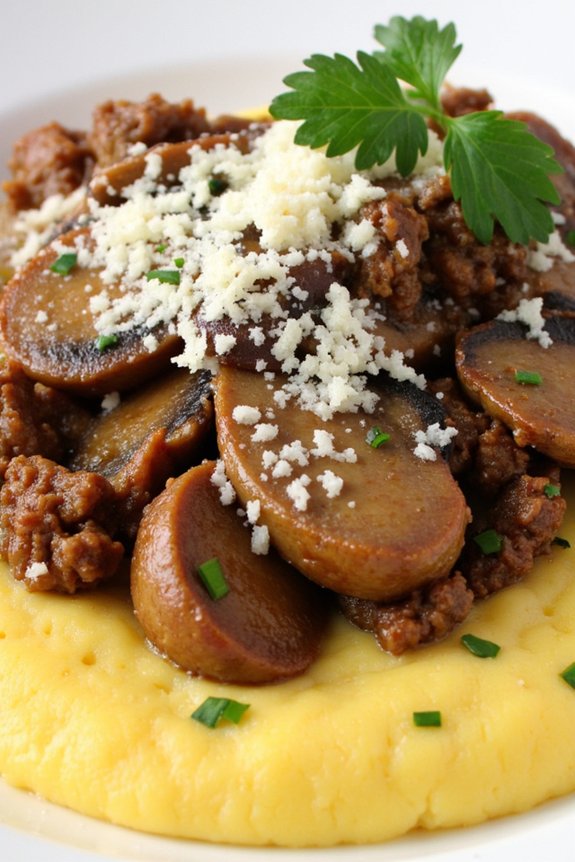
Polenta with Sausage and Mushrooms is a classic Italian dish that brings warmth and comfort during the festive season. This dish pairs creamy polenta with a rich and savory sauce made from Italian sausages and earthy mushrooms, creating a harmonious blend of flavors and textures.
It’s a perfect dish to enjoy with family and friends at Christmas, bringing a touch of rustic Italian charm to your holiday table.
The preparation of this dish involves making the polenta, which is a simple cornmeal porridge, and a robust topping of sausage and mushroom sauce. The combination isn’t only hearty but also quite versatile, as you can tweak the ingredients to suit personal preferences.
The polenta acts as a comforting base, absorbing the flavors of the meaty and umami-rich sauce, making every bite delightful and satisfying.
Ingredients for 4-6 servings:
- 2 cups of polenta (coarse cornmeal)
- 8 cups of water
- 1 tablespoon of salt
- 2 tablespoons of unsalted butter
- 2 tablespoons of olive oil
- 1 pound of Italian sausage, casings removed
- 1 pound of mixed mushrooms, sliced
- 1 onion, finely chopped
- 3 cloves of garlic, minced
- 1 cup of chicken or vegetable broth
- 1/2 cup of dry white wine
- Salt and pepper to taste
- 1/2 cup of grated Parmesan cheese
- Fresh parsley, chopped for garnish
Cooking Instructions:
- Prepare the Polenta: In a large pot, bring the 8 cups of water to a boil. Add 1 tablespoon of salt. Gradually whisk in the polenta to prevent lumps. Reduce the heat to low, and cook the polenta, stirring frequently, for about 30-40 minutes until thick and creamy. Stir in the butter and adjust seasoning if necessary.
- Cook the Sausage: In a large skillet, heat the olive oil over medium heat. Add the Italian sausage and cook, breaking it up with a spoon, until browned and cooked through, about 8-10 minutes. Remove the sausage from the skillet and set aside.
- Sauté the Vegetables: In the same skillet, add the onions and cook until translucent, about 5 minutes. Add the garlic and cook for another minute until fragrant. Add the mushrooms and cook until they release their moisture and become tender, about 8-10 minutes.
- Create the Sauce: Return the sausage to the skillet with the mushroom mixture. Pour in the wine and let it simmer until reduced by half. Add the chicken or vegetable broth and let the mixture simmer for another 5-10 minutes to meld the flavors. Season with salt and pepper to taste.
- Serve the Dish: Spoon the creamy polenta onto a serving platter or individual plates. Top with the sausage and mushroom mixture. Sprinkle grated Parmesan cheese over the top and garnish with fresh parsley.
Extra Tips:
When cooking polenta, it’s crucial to stir frequently to prevent sticking and guarantee a smooth texture. For a richer flavor, you can substitute some of the water with milk or use a mix of milk and water.
If you prefer a creamier texture, you can also stir in a bit of heavy cream or additional butter at the end. Additionally, if you find the sauce too thick, simply add a bit more broth to reach your desired consistency.
Enjoy the dish hot, as the polenta tends to firm up as it cools.
