


Spring is in the air, and with it comes the delightful tradition of Italian Easter breads. These sweet, festive treats are perfect for adding a touch of Italian charm to your holiday table. From the colorful Sicilian Easter Bread with its vibrant dyed eggs to the aromatic Colomba Pasquale, each recipe offers a taste of Italy’s joyful celebrations. Whether you’re familiar with these breads or discovering them for the first time, they’re sure to bring a special warmth to your spring festivities. Let’s explore these beloved Italian recipes together!
Sicilian Easter Bread With Dyed Eggs

Sicilian Easter Bread with Dyed Eggs is a festive and vibrant bread traditionally prepared during the Easter season in Sicily. This delightful bread isn’t only visually stunning with its colorful dyed eggs nestled on top, but it also offers a sweet, rich flavor that makes it a perfect treat for the holiday. The dough is slightly sweetened and enriched with ingredients like eggs and butter, giving it a soft and tender crumb that pairs beautifully with the hard-boiled eggs that are baked into the top.
Whether you’re sharing it with family or presenting it as part of an Easter feast, this bread is sure to be a crowd-pleaser.
In Sicilian culture, the inclusion of dyed eggs is symbolic of rebirth and renewal, which echoes the themes of Easter. Traditionally, the eggs are dyed in vibrant hues and incorporated into the bread prior to baking, allowing them to become a beautiful part of the loaf. The process of making Sicilian Easter Bread with Dyed Eggs is a joyous activity that can involve the whole family, from dyeing the eggs to kneading the dough.
It’s a wonderful way to celebrate Easter while embracing a piece of Sicilian heritage.
Ingredients (Serves 4-6)
- 4 1/2 cups all-purpose flour
- 1/2 cup granulated sugar
- 2 1/4 teaspoons active dry yeast
- 1/2 teaspoon salt
- 1/2 cup milk, warmed
- 1/4 cup unsalted butter, melted
- 3 large eggs, beaten
- 1 teaspoon vanilla extract
- 4 hard-boiled eggs, preferably dyed
- Vegetable oil for greasing
- Optional: sprinkles for decoration
Cooking Instructions
- Prepare the Yeast: In a small bowl, mix the warm milk and sugar, then sprinkle the active dry yeast on top. Let it sit for about 5-10 minutes until it becomes frothy, indicating that the yeast is active.
- Mix the Dough: In a large mixing bowl, combine the flour and salt. Make a well in the center and add the yeast mixture, melted butter, beaten eggs, and vanilla extract. Mix until the dough begins to come together.
- Knead the Dough: Turn the dough out onto a lightly floured surface and knead it for about 8-10 minutes until it becomes smooth and elastic. If the dough is sticky, add a little more flour as needed.
- First Rise: Lightly grease a large bowl with vegetable oil, place the dough inside, and cover it with a damp cloth or plastic wrap. Let it rise in a warm, draft-free area for about 1-2 hours, or until it has doubled in size.
- Shape the Bread: Once risen, punch down the dough to release the air. Divide the dough into 3 equal pieces and roll each piece into a long rope. Braid the ropes together, then form the braid into a circle, pinching the ends to seal.
- Add the Dyed Eggs: Gently tuck the dyed hard-boiled eggs into the braid, spacing them evenly around the circle. Press them slightly into the dough to guarantee they stay in place during baking.
- Second Rise: Place the shaped bread on a parchment-lined baking sheet, cover it loosely, and let it rise for another 30-45 minutes until slightly puffy.
- Preheat and Bake: Preheat your oven to 350°F (175°C). Optionally, brush the loaf with a beaten egg for a shiny finish and sprinkle with decorative sprinkles. Bake the bread for 25-30 minutes, or until golden brown and cooked through.
- Cool: Remove from the oven and let the bread cool on a wire rack before serving.
Extra Tips
When dyeing the eggs, make sure they’re completely dry before placing them on the dough to avoid any unwanted bleeding of colors. If you prefer a more pronounced sweetness, consider adding a bit more sugar or incorporating raisins into the dough.
Keep an eye on the bread during baking; if it browns too quickly, cover it loosely with aluminum foil. This bread is best enjoyed on the day it’s baked but can be stored in an airtight container for a couple of days.
Colomba Pasquale: The Dove-Shaped Delight

Colomba Pasquale, or Italian Easter Dove Bread, is a traditional Italian Easter bread that’s cherished for both its delightful taste and symbolic shape. The bread is named “Colomba,” meaning dove in Italian, as it’s traditionally molded into the form of a dove, symbolizing peace and resurrection.
This sweet, yeasty bread is similar to the more widely known Panettone but is specifically enjoyed during the Easter season. It’s characterized by its light, fluffy texture, and rich flavor, enhanced with candied orange peel, almonds, and sometimes chocolate chips.
The preparation of Colomba Pasquale is a labor of love, as it involves a two-stage fermentation process to achieve its characteristic airy texture. The dough is enriched with butter, eggs, and sugar, contributing to its rich flavor profile. The final product is topped with a crunchy almond glaze and sprinkled with pearl sugar and whole almonds, adding a delightful contrast to the soft interior.
For those looking to bring a touch of Italian tradition to their Easter celebrations, this recipe is a must-try.
Ingredients (Serving Size: 4-6 people):
- 500g all-purpose flour
- 150g granulated sugar
- 150g unsalted butter, softened
- 4 large eggs
- 1 egg yolk
- 180ml lukewarm milk
- 15g active dry yeast
- 150g candied orange peel
- 100g almonds, whole
- 50g pearl sugar
- Zest of 1 orange
- 1 tsp vanilla extract
- 1/2 tsp salt
Cooking Instructions:
- Activate the Yeast: In a small bowl, dissolve the active dry yeast in the lukewarm milk and let it sit for about 10 minutes until it becomes frothy. This step guarantees that the yeast is active and will help the dough rise properly.
- Prepare the Dough: In a large mixing bowl, combine the flour, sugar, and salt. Add the activated yeast mixture, vanilla extract, orange zest, and eggs. Mix the ingredients until a sticky dough forms.
- Knead the Dough: Gradually add the softened butter while kneading the dough. Continue to knead for about 10-15 minutes until the dough is smooth and elastic.
- First Rise: Place the dough in a greased bowl, cover it with a damp cloth, and let it rise in a warm place for about 2 hours or until it doubles in size.
- Incorporate Fillings: Gently deflate the dough and knead in the candied orange peel. Shape the dough into a dove shape or divide it into two equal parts to form doves, using a dove-shaped mold if available.
- Second Rise: Place the shaped dough on a baking sheet lined with parchment paper, cover it again, and let it rise for another hour.
- Prepare the Almond Glaze: In a small bowl, combine the egg yolk with a tablespoon of water. Brush the mixture over the top of the risen dough. Sprinkle whole almonds and pearl sugar generously over the top.
- Bake the Bread: Preheat the oven to 180°C (350°F). Bake the Colomba Pasquale for 30-35 minutes or until golden brown and a toothpick inserted into the center comes out clean.
- Cool and Serve: Allow the bread to cool on a wire rack before slicing. Serve the Colomba Pasquale as a delightful addition to your Easter feast.
Extra Tips:
For the best results, use a stand mixer with a dough hook to knead the dough, as this will save time and guarantee even consistency.
If a dove-shaped mold is unavailable, you can shape the dough into a rough dove form by hand. Be patient during the rising process; the dough’s airy texture depends on proper fermentation.
If you prefer a variation, you can add chocolate chips to the dough for a sweeter touch. Finally, always verify the bread is fully cooled before slicing to maintain its structure and prevent it from collapsing.
Pane Di Pasqua: the Traditional Italian Easter Bread

Pane Di Pasqua, or Italian Easter Bread, is a delightful and festive bread traditionally prepared to celebrate Easter. This sweet, braided bread is often adorned with colorful sprinkles and sometimes decorated with dyed eggs, making it not only a delicious treat but also a beautiful centerpiece for your Easter table.
The bread is lightly sweetened and has a soft, fluffy texture, reminiscent of brioche, thanks to the addition of butter and eggs in the dough. Aromas of vanilla and citrus zest give it a unique and pleasing flavor, making it a cherished part of Italian Easter traditions.
Preparing Pane Di Pasqua is a rewarding experience that involves making a yeast dough, allowing it to rise, and then braiding it into a wreath or loaf shape. Once baked, the bread can be glazed and decorated, creating an inviting and colorful addition to your holiday feast.
While the process requires some time for the dough to rise, the steps are straightforward, making it accessible for home bakers of all levels. Serving 4-6 people, this recipe will provide a generous portion for everyone to enjoy.
Ingredients (Serves 4-6):
- 4 cups all-purpose flour
- 1/2 cup granulated sugar
- 1/2 cup unsalted butter, melted
- 1/2 cup warm milk (about 110°F/43°C)
- 3 large eggs
- 1 packet (2 1/4 teaspoons) active dry yeast
- 1 teaspoon vanilla extract
- Zest of 1 orange
- 1/4 teaspoon salt
- 2-3 dyed eggs (optional, for decoration)
- 1/4 cup colored sprinkles
- 1 tablespoon milk (for egg wash)
- 1 tablespoon sugar (for egg wash)
Cooking Instructions:
1. Activate the Yeast:
In a small bowl, combine the warm milk with the active dry yeast and 1 tablespoon of sugar. Stir gently and let it sit for about 5-10 minutes, until it becomes frothy, indicating the yeast is activated.
2. Prepare the Dough:
In a large mixing bowl, whisk together the remaining sugar, salt, and orange zest. Add the frothy yeast mixture, melted butter, vanilla extract, and two of the eggs. Stir until well combined.
3. Combine and Knead:
Gradually add the flour to the wet ingredients, mixing until a dough forms. Transfer the dough to a floured surface and knead for about 8-10 minutes, until it becomes smooth and elastic.
4. First Rise:
Place the dough in a lightly greased bowl, cover it with a clean kitchen towel, and let it rise in a warm, draft-free area for about 1-2 hours, or until it has doubled in size.
5. Shape the Dough:
Punch down the risen dough and divide it into three equal parts. Roll each part into a long rope, about 16 inches in length. Braid the ropes together, then form the braid into a circle or wreath shape on a parchment-lined baking sheet.
6. Second Rise:
Cover the braided dough with a towel and let it rise for another 30-45 minutes, until it has puffed up.
7. Decorate and Bake:
Preheat the oven to 350°F (175°C). If using, gently place the dyed eggs in the braid. Brush the dough with an egg wash made from 1 tablespoon of milk and 1 tablespoon of sugar. Sprinkle the colored sprinkles over the top.
8. Bake:
Bake in the preheated oven for 25-30 minutes, or until golden brown and cooked through. Allow it to cool on a wire rack before serving.
Extra Tips:
When making Pane Di Pasqua, verify that all your ingredients are at room temperature, particularly the eggs and butter, which will help the dough to rise more effectively.
If you choose to decorate with dyed eggs, make sure they’re hard-boiled beforehand. Additionally, to avoid the bread becoming too dry, keep an eye on it towards the end of baking, as ovens can vary. If the bread is browning too quickly, cover it loosely with foil.
Enjoy this bread fresh for the best taste and texture, but it can also be stored in an airtight container for a couple of days.
Fiadoni Abruzzesi: Sweet Cheese-Filled Pastries

Fiadoni Abruzzesi are delightful sweet cheese-filled pastries that originate from the Abruzzo region of Italy. Traditionally prepared during the Easter festivities, these pastries are a unique blend of sweet and savory flavors, thanks to their combination of cheese, sugar, and a hint of lemon zest.
The outer crust is made from a simple dough, which enfolds a rich, cheesy filling that’s both fluffy and creamy. When baked to golden perfection, the Fiadoni are both crispy and soft, making them an irresistible treat for the holiday season.
The preparation of Fiadoni Abruzzesi requires a bit of patience and precision to guarantee the dough is just right and the filling is well-balanced. The dough should be rolled out thin to achieve a delicate crust, and the filling should be light and airy.
This recipe serves 4-6 people, making it perfect for a small family gathering or a festive celebration. With a few simple ingredients and a bit of time, you can recreate this traditional Italian pastry in your own kitchen and enjoy a taste of Abruzzo’s culinary heritage.
Ingredients:
- 2 cups all-purpose flour
- 3 large eggs
- 1/4 cup olive oil
- 1/4 cup sugar
- 1 teaspoon baking powder
- 1/2 teaspoon salt
- 1 cup ricotta cheese
- 1/2 cup grated Pecorino Romano cheese
- Zest of 1 lemon
- 1 egg yolk (for egg wash)
Instructions:
- Prepare the Dough: In a large bowl, combine the flour, baking powder, salt, and sugar. Mix well to guarantee even distribution of the ingredients. Create a well in the center and add the eggs and olive oil. Gradually mix the wet and dry ingredients together until a dough forms.
- Knead the Dough: Transfer the dough to a lightly floured surface. Knead it for about 8-10 minutes until it becomes smooth and elastic. If the dough is sticky, add a little more flour as needed. Once kneaded, wrap the dough in plastic wrap and let it rest for at least 30 minutes.
- Prepare the Filling: In a separate bowl, mix together the ricotta cheese, grated Pecorino Romano cheese, and lemon zest until well combined. The filling should be smooth and slightly thick.
- Roll Out the Dough: Preheat your oven to 350°F (175°C). After the dough has rested, divide it into small portions. Roll each portion out on a floured surface until it’s about 1/8 inch thick.
- Fill the Pastries: Cut the rolled-out dough into 4-inch squares. Place a spoonful of cheese filling in the center of each square. Fold the dough over the filling to form a triangle or rectangle, and press the edges to seal. Use a fork to crimp the edges for a decorative touch.
- Bake the Fiadoni: Place the filled pastries on a baking sheet lined with parchment paper. Beat the egg yolk with a little water and brush it over the tops of the pastries for a golden finish. Bake in the preheated oven for 20-25 minutes, or until they’re golden brown.
- Cool and Serve: Allow the Fiadoni to cool on a wire rack before serving. They can be enjoyed warm or at room temperature.
Extra Tips:
When making Fiadoni Abruzzesi, it’s important to guarantee that the dough isn’t too thick, as this will prevent the pastries from cooking evenly and can result in a tough crust.
Additionally, be sure not to overfill the pastries, as this can cause the filling to spill out during baking. If you prefer a sweeter pastry, you can increase the amount of sugar in the filling to suit your taste.
These pastries can be made a day in advance and stored in an airtight container to preserve their freshness. Enjoy them with a cup of coffee or tea for a delightful Easter treat.
Casatiello Dolce: A Neapolitan Easter Treat
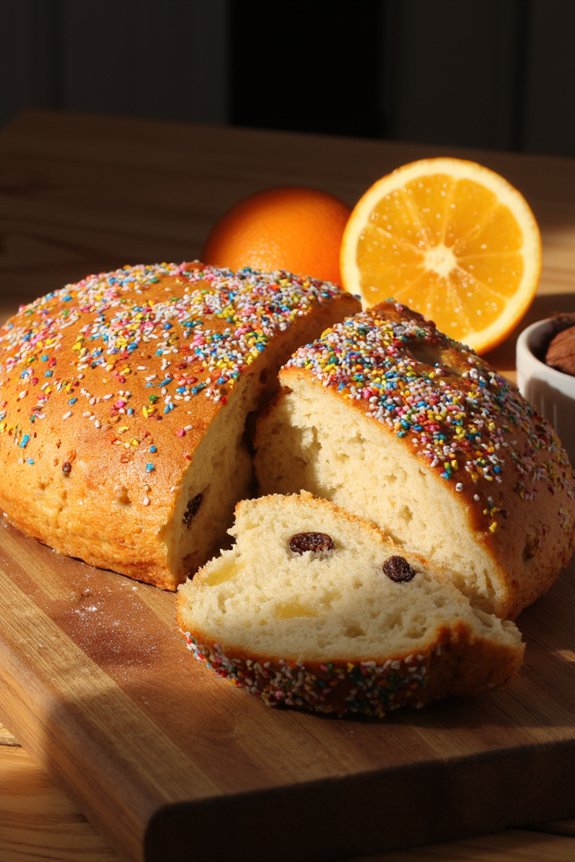
Casatiello Dolce is a traditional Neapolitan Easter bread that’s both sweet and savory, known for its rich, buttery texture and delightful aroma. This festive bread is typically enjoyed during Easter celebrations in Italy and is characterized by its unique combination of sweet dough with a hint of citrus and vanilla. The addition of colorful sprinkles on top adds a festive touch, making Casatiello Dolce a vibrant centerpiece for your Easter table.
The preparation of this bread is a labor of love, requiring patience and care as the dough rises to perfection. The origins of Casatiello Dolce date back to Naples, where it has been a cherished part of Easter festivities for generations. The bread is more than just a delicious treat; it carries cultural significance and represents the end of Lent and the celebration of rebirth and renewal.
Making Casatiello Dolce at home is a wonderful way to bring a piece of Italian tradition into your kitchen and share it with family and friends. Whether you’re familiar with Italian cuisine or trying your hand at it for the first time, this recipe will guide you to create a beautiful and delicious Casatiello Dolce that will delight your taste buds.
Ingredients for 4-6 servings:
- 500g all-purpose flour
- 120g sugar
- 100g unsalted butter, softened
- 4 large eggs
- 1 packet (7g) active dry yeast
- 1/2 cup warm milk
- Zest of 1 lemon
- Zest of 1 orange
- 1 teaspoon vanilla extract
- 1/2 teaspoon salt
- 1/4 cup candied citrus peel
- 1/4 cup raisins
- 1/4 teaspoon ground cinnamon
- 1 tablespoon anise seeds (optional)
- Colored sugar sprinkles for decoration
Instructions:
- Prepare the Yeast Mixture: In a small bowl, dissolve the active dry yeast in warm milk. Stir gently and let it sit for about 10 minutes until it becomes frothy.
- Mix the Dry Ingredients: In a large mixing bowl, combine the flour, sugar, salt, and ground cinnamon. Mix well to guarantee the ingredients are evenly distributed.
- Combine Wet Ingredients: In another bowl, beat the eggs and add the softened butter, vanilla extract, lemon zest, and orange zest. Mix until smooth and well combined.
- Form the Dough: Create a well in the center of the dry ingredients and pour in the yeast mixture and the egg mixture. Stir together until a soft dough forms. If the dough seems too sticky, add a little more flour, one tablespoon at a time.
- Add Fillings: Incorporate the candied citrus peel, raisins, and anise seeds (if using) into the dough. Knead the dough for about 8-10 minutes until it’s smooth and elastic.
- First Rise: Place the dough in a greased bowl, cover it with a damp cloth, and let it rise in a warm place for about 2 hours or until it has doubled in size.
- Shape the Dough: Once risen, punch down the dough to release the air. Shape it into a round loaf or place it in a greased circular baking mold.
- Second Rise: Cover the shaped dough and let it rise for another hour until it has doubled in size again.
- Preheat the Oven: Preheat your oven to 180°C (350°F).
- Bake: Brush the top of the dough with a beaten egg and sprinkle generously with colored sugar sprinkles. Bake in the preheated oven for 30-35 minutes or until the bread is golden brown and sounds hollow when tapped on the bottom.
- Cool and Serve: Allow the Casatiello Dolce to cool on a wire rack before slicing and serving.
Extra Tips:
When making Casatiello Dolce, verify all ingredients are at room temperature for the best results. This will help the dough to rise properly and give the bread a light, airy texture.
The dough may be slightly sticky due to the eggs and butter, but resist the urge to add too much flour during kneading, as this could make the bread dense. If you’re short on time, you can prepare the dough the night before and let it rise slowly in the refrigerator. This will enhance the flavors and make your Easter morning preparations easier.
Enjoy your homemade Casatiello Dolce, and savor the rich flavors of Neapolitan tradition!
Torta Pasqualina: Savory Easter Pie

Torta Pasqualina is a traditional Italian Easter pie that hails from the Liguria region. This savory pie is renowned for its flaky pastry crust and rich filling of ricotta, spinach, and whole eggs. The dish is typically enjoyed during the Easter festivities, embodying springtime flavors and the joy of the holiday.
The pie’s origins date back to the 16th century, where it was often prepared with 33 layers of dough to symbolize the years of Christ’s life. Today, it remains a beloved Easter staple, cherished for its delightful blend of textures and flavors.
Preparing Torta Pasqualina requires a bit of patience and precision but rewards you with a beautiful and delicious centerpiece for your Easter table. The process involves crafting a delicate crust and a flavorful filling that captures the essence of Italian cuisine. The pie’s signature feature is the whole eggs nestled within the spinach and ricotta mixture, which cook to a soft, tender consistency as the pie bakes.
This recipe serves 4-6 people, making it perfect for a family gathering or small celebration.
Ingredients:
- 500g all-purpose flour
- 250ml water
- 100ml olive oil
- 1kg fresh spinach
- 500g ricotta cheese
- 100g grated Parmigiano-Reggiano cheese
- 6 large eggs
- 1 onion, finely chopped
- 2 cloves garlic, minced
- Salt and pepper to taste
- Nutmeg, to taste
Cooking Instructions:
- Prepare the Dough: In a large mixing bowl, combine the flour, water, and olive oil. Mix until a dough forms, then knead on a floured surface for about 10 minutes until smooth and elastic.
- Divide the dough into four equal parts, cover with a damp cloth, and let rest for 30 minutes.
- Cook the Spinach: In a large skillet, heat a tablespoon of olive oil over medium heat. Add the chopped onion and minced garlic, sautéing until translucent.
- Add the spinach and cook until wilted. Remove from heat, drain excess liquid, and let cool.
- Prepare the Filling: In a large bowl, mix the cooled spinach, ricotta, grated Parmigiano-Reggiano, salt, pepper, and a pinch of nutmeg. Stir in two beaten eggs until the mixture is well combined.
- Assemble the Pie: Preheat your oven to 180°C (350°F). Roll out one portion of the dough into a thin circle and place it in a greased pie dish, allowing the excess to hang over the edges.
- Repeat with a second piece of dough, layering it over the first.
- Fill the Pie: Spread the spinach and ricotta mixture evenly over the dough. Use a spoon to make four small wells in the filling and crack a whole egg into each well.
- Top and Bake the Pie: Roll out the remaining dough pieces into thin circles. Place one over the filling, then fold the excess edges from the bottom layers over the top layer to seal.
- Brush with a beaten egg for a golden finish. Bake for 45-50 minutes until the crust is golden and crisp.
Extra Tips:
When making Torta Pasqualina, confirm that the dough is rolled out as thinly as possible for an authentic, flaky crust.
If fresh spinach isn’t available, frozen spinach can be used as a substitute, but make sure to drain any excess moisture thoroughly before adding it to the filling.
Additionally, allow the pie to cool slightly before cutting to let the filling set; this makes slicing easier and helps maintain the pie’s structure. Enjoy Torta Pasqualina warm or at room temperature for the best flavor experience.
Pupa Cu L’uovo: Calabrian Easter Bread

Pupa Cu L’uovo, also known as Calabrian Easter Bread, is a traditional Italian bread enjoyed during the Easter celebrations. This festive bread is a symbol of rebirth and resurrection, fitting for the season it represents. Its defining feature is the boiled eggs that are embedded into the dough, which are often dyed in vibrant colors to add a lively and celebratory touch. The bread is lightly sweetened and flavored with hints of vanilla and citrus, making it a perfect accompaniment to your Easter feast.
The tradition of making Pupa Cu L’uovo varies across different regions of Italy, but the Calabrian version is particularly cherished. Each family often has its unique take on the recipe, handed down through generations. This bread not only serves as a delicious treat but also as a cherished family activity, where everyone from children to grandparents can participate in the preparation.
Whether you’re looking to explore Italian culinary traditions or add a unique twist to your Easter menu, this recipe for Pupa Cu L’uovo is sure to delight.
Ingredients (Serves 4-6):
- 4 cups all-purpose flour
- 1/2 cup granulated sugar
- 1 teaspoon salt
- 1 packet (2 1/4 teaspoons) active dry yeast
- 1 cup warm milk (about 110°F)
- 1/4 cup unsalted butter, melted
- 2 large eggs, at room temperature
- 1 teaspoon vanilla extract
- Zest of 1 lemon
- 4-6 whole eggs, hard-boiled and dyed if desired
- 1 egg, beaten (for egg wash)
- Colored sprinkles (optional)
Instructions:
- Prepare the Yeast Mixture: In a small bowl, combine the warm milk and yeast. Let it sit for about 5 minutes until the mixture becomes frothy, indicating that the yeast is active.
- Make the Dough: In a large mixing bowl, combine the flour, sugar, and salt. Make a well in the center and add the yeast mixture, melted butter, eggs, vanilla extract, and lemon zest. Mix until a dough begins to form.
- Knead the Dough: Transfer the dough onto a lightly floured surface and knead it for about 8-10 minutes until it’s smooth and elastic. If the dough is too sticky, add a little more flour as needed.
- First Rise: Place the dough in a greased bowl, cover it with a damp cloth, and let it rise in a warm place for about 1-2 hours or until it doubles in size.
- Shape the Bread: Punch down the risen dough and divide it into two equal portions. Roll each portion into long ropes. Twist the ropes together to form a braid, and shape it into a ring, connecting the ends.
- Add the Eggs: Gently press the dyed boiled eggs into the dough, spacing them evenly around the ring. Make sure they’re secure but not buried.
- Second Rise: Cover the bread lightly with a cloth and let it rise for another 30 minutes.
- Preheat the Oven: Preheat your oven to 350°F (175°C).
- Egg Wash and Decorate: Brush the beaten egg over the dough to give it a shiny finish during baking. Add sprinkles if desired, for a festive look.
- Bake: Place the bread on a baking sheet lined with parchment paper and bake for 25-30 minutes or until golden brown. The bread should sound hollow when tapped.
- Cool and Serve: Allow the bread to cool on a wire rack before serving. Enjoy it as a centerpiece of your Easter meal.
Extra Tips:
For the best results, verify that all your ingredients are at room temperature before starting. This helps the dough rise more effectively.
If you’re coloring the eggs, do it a day ahead to allow them to dry completely.
When kneading, resist the urge to add too much extra flour, as this can make the bread dense. If you find the dough too sticky, work with it patiently, adding small amounts of flour only as necessary.
Enjoy the process and involve family members in the preparation for a fun and meaningful Easter tradition.
Gubana: a Sweet Bread From Friuli Venezia Giulia

Gubana is a traditional sweet bread from the Friuli Venezia Giulia region of Italy, often prepared during Easter celebrations. This delightful bread features a rich, aromatic filling that combines dried fruits, nuts, and spices, all wrapped in a soft, yeasty dough. Its spiral shape and intricate flavors make it a show-stopping centerpiece for any festive table.
The origins of Gubana can be traced back to the Slavic influence in northeastern Italy, and it remains a beloved part of the region’s culinary heritage.
Preparing Gubana at home is a rewarding task, allowing you to infuse the bread with your personal touch. The process involves kneading the dough, letting it rise, and carefully assembling the filling before baking it to golden perfection. While it may seem challenging at first, with patience and attention to detail, you can recreate this traditional Italian Easter bread and share it with family and friends. The following recipe serves 4-6 people, perfect for a small gathering.
Ingredients:
- 500g all-purpose flour
- 25g fresh yeast or 7g dry yeast
- 100g granulated sugar
- 200ml warm milk
- 3 eggs
- 100g unsalted butter, melted
- Zest of 1 lemon
- 1 teaspoon vanilla extract
- 200g mixed nuts (walnuts, almonds, hazelnuts)
- 150g mixed dried fruits (raisins, apricots, figs)
- 50g candied orange peel
- 50ml rum
- 1 teaspoon ground cinnamon
- 1/2 teaspoon ground cloves
- Pinch of salt
- Powdered sugar for dusting
Instructions:
- Prepare the Yeast Mixture: Dissolve the yeast in the warm milk with a teaspoon of sugar. Let it sit for about 10-15 minutes until frothy and activated.
- Make the Dough: In a large mixing bowl, combine the flour, sugar, and salt. Create a well in the center and pour in the yeast mixture, 2 beaten eggs, melted butter, lemon zest, and vanilla extract. Mix until a dough forms.
- Knead the Dough: Transfer the dough onto a floured surface and knead for about 10 minutes until smooth and elastic. Place the dough in a greased bowl, cover it with a damp cloth, and let it rise in a warm place for 1-2 hours or until doubled in size.
- Prepare the Filling: While the dough is rising, chop the mixed nuts and dried fruits. In a bowl, combine the nuts, dried fruits, candied orange peel, rum, cinnamon, and cloves. Mix well to evenly distribute the flavors.
- Roll Out the Dough: Once the dough has risen, punch it down and roll it out on a floured surface into a large rectangle, about 1 cm thick.
- Assemble the Gubana: Spread the filling evenly over the dough, leaving a small border around the edges. Carefully roll the dough into a log, starting from the longer side. Coil the log into a spiral shape, tucking the end underneath.
- Final Rise: Place the shaped dough onto a greased baking sheet. Cover it again with a damp cloth and let it rise for another 30-45 minutes.
- Bake the Gubana: Preheat the oven to 180°C (350°F). Brush the top of the dough with the remaining beaten egg and bake for 35-40 minutes or until golden brown.
- Cool and Serve: Allow the Gubana to cool on a wire rack. Dust with powdered sugar before serving.
Extra Tips:
For an extra moist filling, soak the dried fruits in rum overnight before using them in the filling. If you prefer a lighter texture, consider using cake flour instead of all-purpose flour.
Monitor the baking time closely, as ovens can vary; covering the Gubana with foil for the last 10 minutes can prevent excessive browning. Enjoy this bread slightly warm or at room temperature for the best flavor experience.
Pinza Triestina: Easter Bread From Trieste

Pinza Triestina is a traditional sweet bread originating from the Italian city of Trieste, typically prepared during the Easter season. This delightful bread is characterized by its rich, buttery texture and subtle hints of lemon and vanilla, resulting in a fragrant and tender loaf that’s perfect for celebrating the holiday.
The bread is often enjoyed at breakfast or as a sweet treat throughout the day, and its soft, golden crust and airy crumb make it a favorite among those who love homemade baked goods.
The preparation of Pinza Triestina involves making a yeasted dough enriched with eggs and butter, which gives it its characteristic softness and richness. The dough is flavored with a blend of lemon zest and vanilla, lending it a bright and aromatic quality.
After a gentle kneading and rising process, the dough is shaped into round loaves, slashed on top to create a traditional cross pattern, and baked until golden brown. The following recipe serves 4-6 people, making it an ideal addition to your Easter table or a delightful gift for friends and family.
Ingredients:
- 500g all-purpose flour
- 100g sugar
- 100g unsalted butter, softened
- 3 eggs
- 25g fresh yeast or 7g active dry yeast
- 200ml warm milk
- Zest of 1 lemon
- 1 teaspoon vanilla extract
- Pinch of salt
- 1 egg yolk (for egg wash)
- 1 tablespoon milk (for egg wash)
Cooking Instructions:
- Prepare the yeast: In a small bowl, dissolve the fresh yeast in the warm milk. If using active dry yeast, sprinkle it over the warm milk and let it sit for about 5-10 minutes until it becomes frothy.
- Mix the dough: In a large mixing bowl, combine the flour, sugar, and a pinch of salt. Create a well in the center and add the yeast mixture, eggs, softened butter, lemon zest, and vanilla extract. Mix the ingredients together until a rough dough forms.
- Knead the dough: Transfer the dough to a lightly floured surface and knead it for about 10 minutes until it becomes smooth and elastic. If the dough is too sticky, add a little more flour, a tablespoon at a time.
- First rise: Place the dough in a lightly greased bowl, cover it with a clean kitchen towel or plastic wrap, and let it rise in a warm place for about 2 hours, or until it has doubled in size.
- Shape the loaves: Once the dough has risen, punch it down gently to release the air. Divide it into two equal portions and shape each into a round loaf. Place the loaves onto a baking sheet lined with parchment paper.
- Second rise: Cover the shaped loaves with a kitchen towel and let them rise again for about 30-45 minutes until they’re slightly puffy.
- Preheat the oven: While the loaves are rising for the second time, preheat your oven to 180°C (350°F).
- Prepare the egg wash: In a small bowl, mix the egg yolk with a tablespoon of milk. Brush the top of each loaf with the egg wash to give them a glossy finish.
- Slash and bake: Using a sharp knife, make a cross cut on the top of each loaf. This traditional pattern not only adds to the bread’s appearance but also helps it rise evenly in the oven. Bake the loaves for about 25-30 minutes, or until they’re golden brown and sound hollow when tapped on the bottom.
- Cool and serve: Allow the loaves to cool on a wire rack before slicing and serving. Pinza Triestina can be enjoyed warm or at room temperature.
Extra Tips:
When preparing Pinza Triestina, verify all your ingredients are at room temperature, particularly the eggs and butter, as this will help them incorporate more smoothly into the dough.
If you find that your dough is rising slowly, placing it in a slightly warm oven (turned off) can help speed up the process. Additionally, while kneading, avoid adding too much extra flour as this can make the bread dense; the dough should be soft and slightly tacky to the touch.
Finally, feel free to experiment with additional flavors, such as a splash of rum or anise, to customize the bread to your taste preferences.
Schiacciata Di Pasqua: Tuscan Easter Cake

Schiacciata Di Pasqua, a traditional Tuscan Easter cake, is a delightful treat enjoyed by many during the festive season. This cake is known for its soft, sweet, and aromatic flavor, thanks to the unique blend of spices and liqueurs used in its preparation.
Originating from the Tuscany region of Italy, Schiacciata Di Pasqua is more than just a cake; it’s a symbol of celebration and togetherness, often shared among family and friends during Easter gatherings.
The cake’s distinct taste comes from the use of aniseed, which imparts a subtle licorice flavor, as well as the addition of Vin Santo, a sweet Italian dessert wine that enhances the richness of the cake. The preparation of Schiacciata Di Pasqua is a labor of love, requiring patience and attention to detail to achieve the perfect texture and taste.
Whether you’re enjoying it with a cup of coffee or as a dessert after a hearty Easter meal, this cake is sure to leave a lasting impression on your taste buds.
Ingredients (Serving Size: 4-6 people)
- 500g all-purpose flour
- 150g sugar
- 120g butter, softened
- 3 large eggs
- 30g fresh yeast or 10g active dry yeast
- 150ml milk, lukewarm
- 50ml Vin Santo (or sweet dessert wine)
- Zest of 1 lemon
- 1 teaspoon aniseed
- 1/2 teaspoon salt
- 1 tablespoon olive oil
- Powdered sugar for dusting
Cooking Instructions
- Prepare the Yeast Mixture: Dissolve the fresh yeast or active dry yeast in lukewarm milk. Let it sit for about 10 minutes until it becomes frothy, indicating that the yeast is active.
- Mix the Dry Ingredients: In a large mixing bowl, combine the flour, sugar, aniseed, and salt. Mix well to ascertain the ingredients are evenly distributed.
- Combine Wet Ingredients: In a separate bowl, whisk together the eggs, softened butter, Vin Santo, and lemon zest. Once well combined, add the yeast mixture to this bowl.
- Form the Dough: Gradually add the wet ingredients to the dry ingredients, mixing continuously until a dough starts to form. Knead the dough on a floured surface for about 10 minutes until it’s smooth and elastic.
- First Rise: Place the dough in an oiled bowl, cover with a clean kitchen towel, and let it rise in a warm place for about 2 hours or until it has doubled in size.
- Shape the Dough: Once the dough has risen, punch it down to release the air. Shape it into a round cake and place it on a baking sheet lined with parchment paper.
- Second Rise: Cover the dough once again and let it rise for an additional hour.
- Preheat the Oven: While the dough is rising, preheat the oven to 180°C (350°F).
- Bake the Cake: Once the dough has completed its second rise, bake the cake in the preheated oven for 30-35 minutes, or until it’s golden brown and a skewer inserted into the center comes out clean.
- Cool and Serve: Allow the cake to cool on a wire rack. Once cooled, dust with powdered sugar before serving.
Extra Tips
When making Schiacciata Di Pasqua, verify that the butter is at room temperature to mix well with other ingredients. If you don’t have Vin Santo, you can substitute it with another sweet dessert wine or a mixture of white grape juice with a splash of brandy for a non-alcoholic version.
For an even more aromatic cake, consider adding a teaspoon of vanilla extract or a pinch of cinnamon to the dough. Finally, patience is key with this recipe, especially during the rising periods, so give the dough ample time to develop its flavors and achieve the best texture.
