

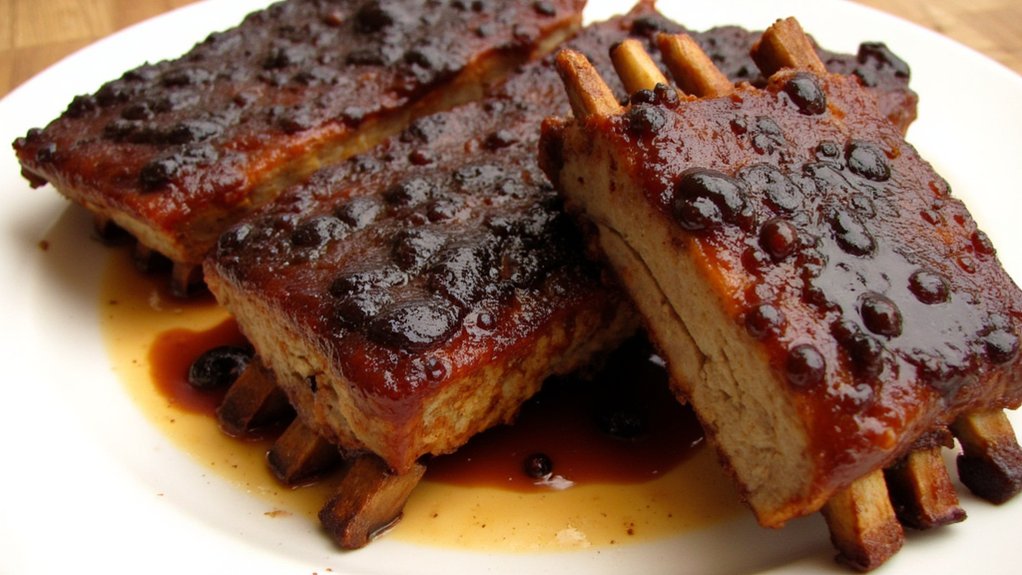
There’s something truly special about bringing Italian flavors into our kitchens with savory meat recipes. The delightful scent of a slow-cooked Osso Buco or the crispiness of a perfectly roasted Porchetta can transform any meal into a comforting experience. These recipes have a way of making every dinner feel like a warm gathering with loved ones. Curious about how these dishes can leave you wanting more? Let’s start this culinary adventure together.
Classic Osso Buco
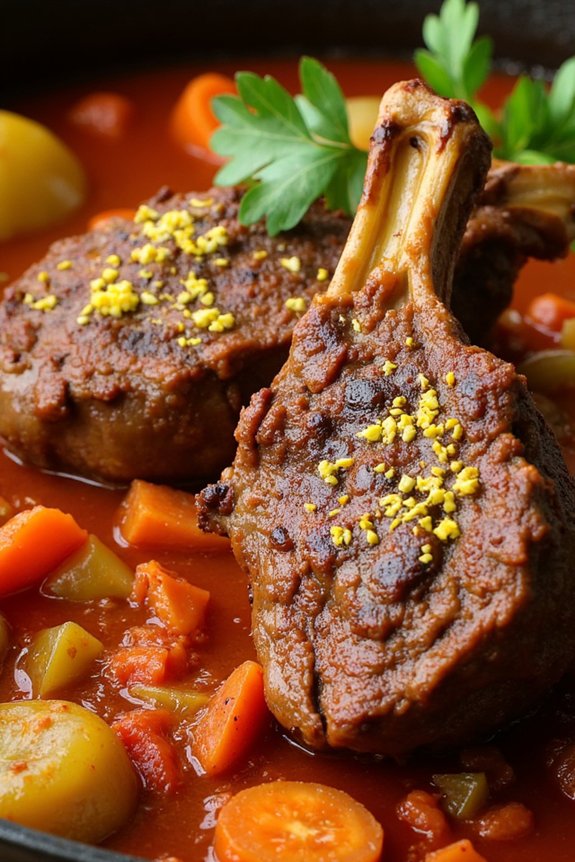
Osso Buco is a classic Italian dish that showcases the culinary tradition of the Lombardy region. This hearty and flavorful meal features braised veal shanks cooked slowly with vegetables, white wine, and broth until the meat becomes tender and falls off the bone. The marrow from the center of the veal shank adds a rich depth of flavor to the dish, making it a favorite among meat lovers.
Traditionally, Osso Buco is served with a side of risotto or polenta, making it a perfect choice for a comforting meal on a chilly evening. The name “Osso Buco” literally translates to “bone with a hole,” referring to the marrow-filled bone that’s a key component of this dish.
Cooking Osso Buco requires patience, as the slow braising process allows the flavors to meld together beautifully, resulting in a succulent and aromatic meal. This recipe will serve 4-6 people, making it a great option for a family dinner or a gathering with friends. By following these steps, you can create an authentic Italian dining experience right in your own kitchen.
Ingredients (serves 4-6):
- 4-6 pieces of veal shank, each about 1 1/2 inches thick
- Salt and freshly ground black pepper
- 1/2 cup all-purpose flour
- 1/4 cup olive oil
- 1 onion, finely chopped
- 2 carrots, diced
- 2 celery stalks, diced
- 4 cloves of garlic, minced
- 1 cup dry white wine
- 1 cup beef or chicken stock
- 1 can (14 oz) of diced tomatoes
- 2 tablespoons tomato paste
- 1 teaspoon dried thyme
- 1 teaspoon dried rosemary
- 2 bay leaves
- Zest of 1 lemon
- 1/4 cup fresh parsley, chopped
Cooking Instructions:
- Prepare the Veal Shanks: Season the veal shanks with salt and pepper. Dredge each piece in flour, shaking off any excess. This will help to create a nice crust and thicken the sauce.
- Brown the Meat: Heat the olive oil in a large Dutch oven or heavy pot over medium-high heat. Add the veal shanks and brown them on all sides, about 4-5 minutes per side. Remove the shanks from the pot and set aside.
- Cook the Vegetables: In the same pot, add the onion, carrots, and celery. Sauté the vegetables until they’re soft and starting to brown, about 8-10 minutes. Add the garlic and cook for another 2 minutes, stirring often.
- Deglaze the Pot: Pour in the white wine and scrape up any browned bits from the bottom of the pot. Let the wine simmer until reduced by half, about 5 minutes.
- Combine Ingredients: Stir in the tomato paste, diced tomatoes, thyme, rosemary, bay leaves, and stock. Return the veal shanks to the pot, guaranteeing they’re submerged in the liquid.
- Braise the Meat: Bring the mixture to a simmer, then cover the pot with a tight-fitting lid. Reduce the heat to low and let the dish braise for about 1.5 to 2 hours, or until the meat is tender and easily pulls away from the bone.
- Finish with Gremolata: Mix the lemon zest and parsley together in a small bowl. Sprinkle this gremolata over the Osso Buco just before serving to add a fresh, zesty contrast to the rich sauce.
Extra Tips:
For best results, use a good quality, heavy-bottomed pot that retains heat well for the braising process. If you don’t have veal, beef shanks can be used as an alternative, though the flavor will be slightly different.
When browning the meat, confirm the oil is hot before adding the shanks to achieve a good sear. Serve Osso Buco with a side of risotto Milanese or creamy polenta for a truly authentic Italian meal.
Leftovers, if any, can be stored in the refrigerator for up to three days and often taste even better after the flavors have melded overnight.
Chicken Parmesan
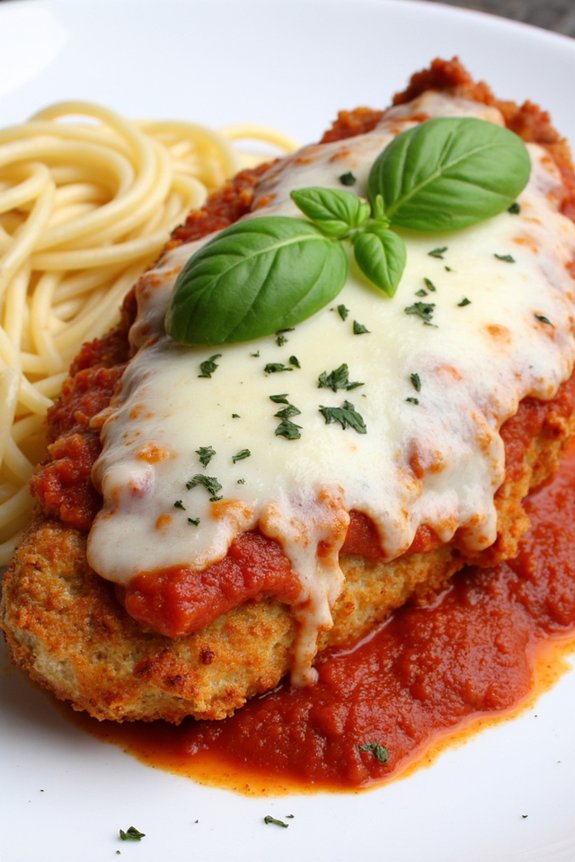
Chicken Parmesan is a classic Italian-American dish that combines crispy breaded chicken cutlets with savory marinara sauce and melted cheese. This comforting meal is perfect for a family dinner or a special occasion, providing a delightful balance of flavors and textures that everyone will love.
The key to a great Chicken Parmesan is using fresh ingredients and guaranteeing the chicken is tender and juicy while the exterior is perfectly crispy. This dish is typically served over pasta, adding a starchy complement to the rich flavors of the chicken and sauce.
The preparation involves breading and frying the chicken, then baking it to meld the flavors together with the sauce and cheese. It’s a dish that may seem elaborate but is quite straightforward to prepare, and the effort is certainly worth it when you see the smiles around the dinner table.
Ingredients for 4-6 servings:
- 4 boneless, skinless chicken breasts
- Salt and pepper
- 1 cup all-purpose flour
- 2 large eggs
- 1 cup breadcrumbs
- 1 cup grated Parmesan cheese
- 1 teaspoon dried oregano
- 1 teaspoon garlic powder
- 1 teaspoon onion powder
- 2 cups marinara sauce
- 1 ½ cups shredded mozzarella cheese
- ½ cup grated Parmesan cheese (for topping)
- 2 tablespoons olive oil
- Fresh basil leaves (for garnish, optional)
- Cooked pasta (for serving, optional)
Cooking Instructions:
- Preheat the Oven: Start by preheating your oven to 375°F (190°C). This guarantees that the oven is ready when it’s time to bake the chicken.
- Prepare the Chicken: Place each chicken breast between two sheets of plastic wrap and pound them to an even thickness of about ½ inch. Season both sides with salt and pepper.
- Set Up Breading Station: In three separate shallow dishes, place flour in the first, beaten eggs in the second, and a mixture of breadcrumbs, 1 cup of grated Parmesan cheese, dried oregano, garlic powder, and onion powder in the third.
- Bread the Chicken: Dredge each chicken breast in flour, shake off the excess, then dip into the beaten eggs, and finally coat with the breadcrumb mixture, pressing the crumbs onto the chicken to adhere.
- Fry the Chicken: Heat olive oil in a large skillet over medium-high heat. Add the breaded chicken breasts and cook for 3-4 minutes on each side until golden brown and crispy. Transfer to a paper towel-lined plate to drain excess oil.
- Assemble the Dish: Spread 1 cup of marinara sauce in the bottom of a baking dish. Place the fried chicken breasts over the sauce. Top each piece with the remaining marinara sauce, then sprinkle with mozzarella cheese and the ½ cup of grated Parmesan cheese.
- Bake the Chicken: Place the baking dish in the preheated oven and bake for 20-25 minutes, or until the cheese is melted and bubbly, and the chicken is cooked through.
- Serve: Remove from the oven and let it rest for a few minutes. Garnish with fresh basil leaves if desired, and serve over cooked pasta if you wish.
Extra Tips: For the best texture, make sure the chicken breasts are evenly pounded to guarantee they cook uniformly. If you prefer a healthier version, you can bake the breaded chicken instead of frying it by placing it on a baking sheet and cooking at 400°F (200°C) for 15-20 minutes, flipping halfway through.
Additionally, using freshly grated Parmesan cheese and high-quality marinara sauce will enhance the overall flavor of the dish.
Bistecca Alla Fiorentina
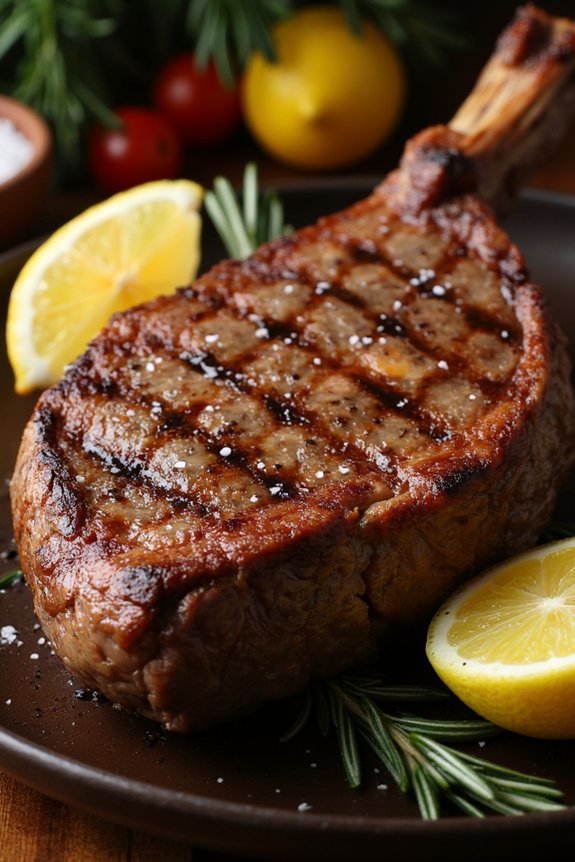
Bistecca Alla Fiorentina is a classic Tuscan dish that showcases the simple yet profound flavors of Italy. This traditional recipe centers around a thick-cut T-bone steak, typically sourced from the Chianina breed of cattle, known for its tenderness and flavor.
The beauty of Bistecca Alla Fiorentina lies in its simplicity – the steak is seasoned with just salt, pepper, and a drizzle of olive oil, allowing the quality of the meat to shine through. Traditionally cooked over a wood-fired grill, the steak is seared to perfection, creating a deliciously charred exterior while the inside remains juicy and tender.
This dish is perfect for special occasions or a family gathering, where you want to impress with minimal effort. Serving Bistecca Alla Fiorentina is as much about the experience as it’s about the taste. Often paired with a good Chianti wine, this steak is typically served rare, enhancing its natural flavors.
To accompany the steak, you can serve it with a side of cannellini beans or a fresh arugula salad. The following recipe will provide enough for 4-6 people, guaranteeing everyone gets to enjoy this delectable Tuscan delight.
Ingredients for 4-6 people:
- 1 T-bone steak, approximately 2-3 inches thick (about 1.5-2 kg)
- Coarse sea salt
- Freshly ground black pepper
- Extra virgin olive oil
- Fresh rosemary sprigs (optional)
- Lemon wedges (for serving)
Cooking Instructions:
- Prepare the Steak:
- Remove the T-bone steak from the refrigerator and let it come to room temperature for about 1 hour. This guarantees even cooking.
- Season Generously:
- Pat the steak dry with paper towels. Season both sides generously with coarse sea salt and freshly ground black pepper. You can also lightly rub with olive oil to help the seasoning adhere.
- Heat the Grill:
- Preheat your grill to high heat. If using a charcoal grill, allow the coals to become white-hot. If using a gas grill, confirm it reaches a temperature of around 450°F (230°C).
- Cook the Steak:
- Place the steak on the grill directly over the heat source. Let it sear for about 5-7 minutes on one side, without moving it, to develop a nice crust.
- Flip and Finish:
- Flip the steak using tongs and grill the other side for another 5-7 minutes for rare doneness. If you prefer it more cooked, leave it on for an additional 2-3 minutes per side. Use a meat thermometer to check the internal temperature; it should be around 125°F (52°C) for rare.
- Rest the Meat:
- Remove the steak from the grill and let it rest on a cutting board for at least 10 minutes. This allows the juices to redistribute throughout the meat, enhancing its flavor and tenderness.
- Serve:
- Slice the steak against the grain and drizzle with extra virgin olive oil. Garnish with fresh rosemary sprigs and serve with lemon wedges for an extra zing.
Extra Tips:
For the best results, use high-quality meat, ideally from a local butcher who can guarantee the steak is cut to the right thickness.
If a wood-fired grill is unavailable, a cast-iron skillet can be used to sear the steak indoors, finishing it in a hot oven if necessary. Always use tongs to handle the steak, as piercing it with a fork can release precious juices.
Finally, remember that the resting period is pivotal; cutting into the steak too early can result in a loss of moisture and flavor.
Italian Meatballs in Marinara Sauce
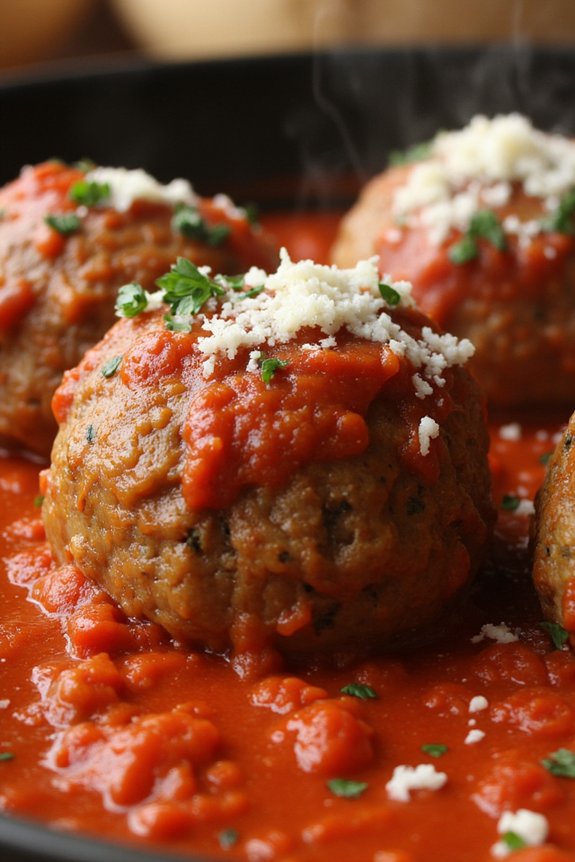
Italian Meatballs in Marinara Sauce is a classic dish that embodies the rich flavors and comforting essence of Italian cuisine. This dish is perfect for a family dinner or a gathering with friends, offering a delicious combination of tender meatballs simmered in a robust marinara sauce. The meatballs are made with a blend of ground beef and pork, seasoned with traditional Italian herbs and spices, and enhanced with freshly grated parmesan cheese. The marinara sauce, made from ripe tomatoes, garlic, and basil, complements the meatballs perfectly, creating a harmonious balance of flavors.
The key to making the perfect Italian Meatballs in Marinara Sauce lies in the quality of the ingredients and the technique used to prepare the meatballs. By gently mixing the meat mixture and forming uniform-sized balls, you guarantee that the meatballs cook evenly and remain juicy. Simmering them in the marinara sauce allows the flavors to meld together, resulting in a rich and savory dish. Serve this dish with a side of pasta or crusty bread to soak up the delicious sauce, and you have a meal that’s sure to impress.
Ingredients (Serves 4-6)
- 1 pound ground beef
- 1/2 pound ground pork
- 1/2 cup breadcrumbs
- 1/4 cup grated Parmesan cheese
- 1/4 cup chopped fresh parsley
- 2 cloves garlic, minced
- 1 egg
- Salt and pepper to taste
- 2 tablespoons olive oil
- 1 medium onion, finely chopped
- 2 cloves garlic, minced
- 1 (28-ounce) can crushed tomatoes
- 1/2 teaspoon dried oregano
- 1/4 teaspoon red pepper flakes
- 1/4 cup fresh basil leaves, chopped
- Salt and pepper to taste
Instructions
- Prepare the Meatball Mixture: In a large bowl, combine the ground beef, ground pork, breadcrumbs, Parmesan cheese, parsley, minced garlic, egg, salt, and pepper. Mix gently with your hands until all ingredients are well incorporated. Don’t overmix, as this can make the meatballs tough.
- Form the Meatballs: Using your hands, form the mixture into 1.5-inch meatballs. Place them on a baking sheet or plate, ensuring they don’t touch each other.
- Brown the Meatballs: In a large skillet, heat the olive oil over medium heat. Add the meatballs in batches, making sure not to overcrowd the pan. Brown them on all sides, about 5 minutes per batch. Remove the meatballs from the skillet and set aside.
- Prepare the Marinara Sauce: In the same skillet, add the chopped onion and cook until translucent, about 5 minutes. Add the minced garlic and sauté for an additional 1-2 minutes until fragrant.
- Simmer the Sauce: Stir in the crushed tomatoes, dried oregano, red pepper flakes, and salt and pepper. Bring the sauce to a simmer and let it cook for about 10 minutes, allowing the flavors to meld.
- Add the Meatballs to the Sauce: Gently place the browned meatballs into the simmering marinara sauce. Cover the skillet and let the meatballs cook in the sauce for an additional 20-25 minutes, turning them occasionally to guarantee even cooking.
- Finish with Fresh Basil: Once the meatballs are cooked through, stir in the fresh basil. Taste the sauce and adjust seasoning if necessary.
- Serve: Serve the Italian meatballs over cooked pasta or with crusty bread. Sprinkle with extra Parmesan cheese and fresh basil, if desired.
Extra Tips
For extra flavor, consider adding a splash of red wine to the marinara sauce during simmering. Make sure to use fresh herbs whenever possible, as they provide a more vibrant taste compared to dried ones. If you prefer a spicier dish, increase the amount of red pepper flakes.
To guarantee even cooking, make sure the meatballs are of uniform size, and avoid overcrowding them during the browning process. This dish can also be prepared in advance and reheated, as the flavors tend to deepen when allowed to sit.
Porchetta Roast
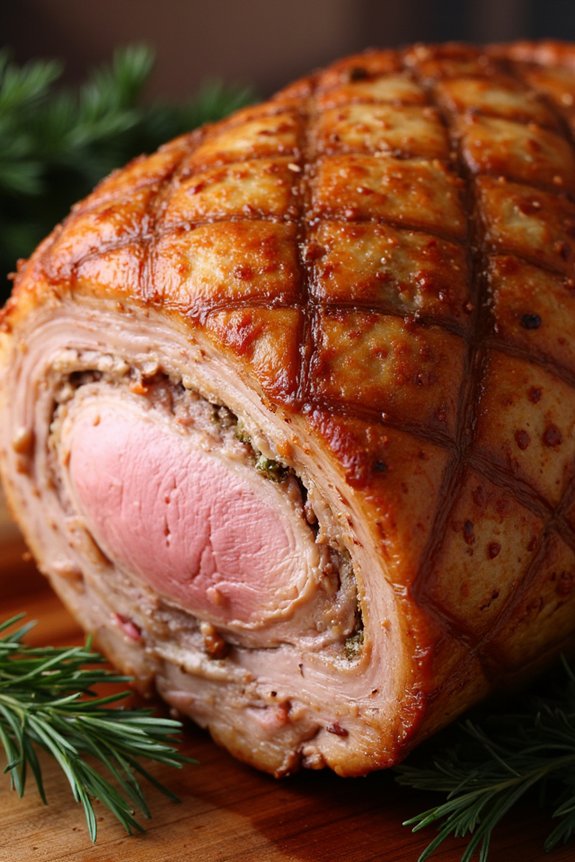
Porchetta is a savory and aromatic Italian dish, known for its crispy skin and flavorful, juicy meat. Traditionally, this dish is prepared by roasting a whole deboned pig, seasoned with an array of fragrant herbs and spices. However, for home cooking, a pork belly or a pork loin is commonly used, making it more accessible yet equally delicious.
The preparation involves marinating the meat with a blend of garlic, rosemary, fennel, and other aromatic herbs, then rolling it and roasting until the skin turns a perfect golden brown. This hearty dish is perfect for family gatherings or special occasions and is designed to serve 4 to 6 people.
The luscious aroma that fills your kitchen while it cooks is sure to whet the appetite of anyone in its vicinity. The end result is a mouth-watering roast with a tender interior and a delectably crispy exterior that pairs beautifully with a variety of side dishes, from roasted vegetables to a simple green salad.
Ingredients (serves 4-6):
- 3-4 pounds pork belly (or pork loin)
- 1 tablespoon fennel seeds
- 1 tablespoon dried rosemary
- 1 tablespoon dried sage
- 5 cloves garlic, minced
- Zest of 1 lemon
- 1 teaspoon red pepper flakes
- Salt and black pepper to taste
- Olive oil
- Butcher’s twine
Instructions:
- Prepare the Pork: Lay the pork belly skin-side down on a clean surface. Using a sharp knife, score the meat side of the pork belly in a crosshatch pattern. This will allow the seasoning to penetrate deeply into the meat.
- Make the Seasoning Mix: In a small bowl, combine the fennel seeds, rosemary, sage, minced garlic, lemon zest, red pepper flakes, salt, and black pepper. Mix well.
- Season the Meat: Generously rub the seasoning mixture over the scored side of the pork belly, guaranteeing it gets into all the cuts and crevices. Drizzle with olive oil and rub it in to help the spices adhere.
- Roll and Tie: Carefully roll the pork belly into a tight cylinder. Using butcher’s twine, tie the roll at 1-inch intervals to make sure it holds its shape during roasting.
- Preheat the Oven: Set your oven to 325°F (165°C).
- Roast the Porchetta: Place the rolled pork on a roasting rack set inside a baking dish. Roast in the preheated oven for about 2.5 to 3 hours, or until the internal temperature reaches 160°F (71°C).
- Crisp the Skin: Increase the oven temperature to 450°F (230°C) for the last 20-30 minutes of cooking to achieve a crispy skin. Keep a close watch to prevent burning.
- Rest Before Serving: Remove the porchetta from the oven and let it rest for at least 15 minutes. This allows the juices to redistribute throughout the meat.
Tips:
When choosing between pork belly and pork loin, consider your preference for fat content. Pork belly will give you a richer, more succulent roast due to its higher fat content, while pork loin offers a leaner option.
For an extra boost of flavor, marinate the pork overnight, allowing the spices to penetrate deeply. Additionally, confirm your oven is calibrated correctly, as the high temperature needed for crisping the skin is essential. Finally, don’t skip the resting period after roasting, as this step is fundamental for achieving tender, juicy meat.
Braised Lamb Shanks
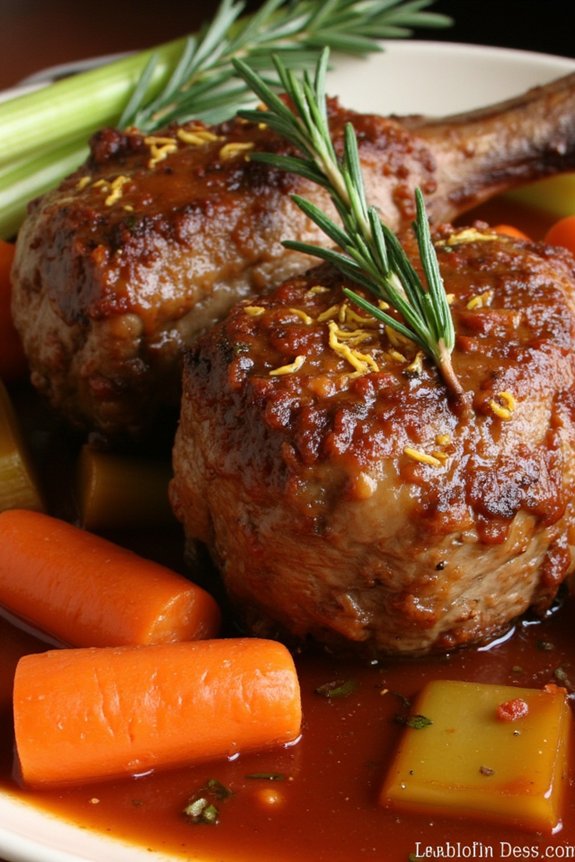
Braised Lamb Shanks is a classic Italian dish that combines the rich, savory flavors of slowly cooked lamb with an aromatic blend of herbs and vegetables. The lamb shanks are simmered gently in a robust sauce, allowing them to absorb the flavors and become tender enough to fall off the bone. This dish is perfect for special occasions or a comforting meal on a chilly evening, and its preparation allows you to infuse the meat with deep, satisfying flavors.
The key to a successful Braised Lamb Shanks recipe lies in the slow-cooking process, which guarantees that the meat becomes exceptionally tender and flavorful. This dish is best served with creamy polenta or mashed potatoes, which complement the rich sauce beautifully. When cooking for 4-6 people, it’s important to maintain the balance of flavors, so confirm that the quality of ingredients is high, with fresh herbs and vegetables enhancing the dish’s natural richness.
Ingredients for 4-6 People
- 4 lamb shanks
- 2 tablespoons olive oil
- Salt and pepper to taste
- 1 onion, chopped
- 2 carrots, chopped
- 2 stalks celery, chopped
- 4 cloves garlic, minced
- 1 cup red wine
- 2 cups beef or chicken stock
- 1 can (14 oz) crushed tomatoes
- 2 tablespoons tomato paste
- 1 tablespoon fresh rosemary, chopped
- 1 tablespoon fresh thyme, chopped
- 2 bay leaves
- Zest of 1 lemon
Cooking Instructions
- Prepare the Lamb Shanks: Season the lamb shanks generously with salt and pepper. In a large Dutch oven or heavy-bottomed pot, heat olive oil over medium-high heat. Add the lamb shanks to the pot and brown them on all sides, about 8-10 minutes. This step is vital for building flavor. Once browned, remove the lamb shanks from the pot and set them aside.
- Sauté the Vegetables: Lower the heat to medium. In the same pot, add the chopped onion, carrots, and celery. Sauté for 5-7 minutes until the vegetables begin to soften. Add the minced garlic and cook for an additional 1 minute, stirring frequently to prevent burning.
- Deglaze and Simmer: Pour the red wine into the pot to deglaze, scraping up any browned bits from the bottom of the pot. Let the wine simmer for about 3-4 minutes until slightly reduced. Add the beef or chicken stock, crushed tomatoes, tomato paste, rosemary, thyme, bay leaves, and lemon zest. Stir the mixture well to combine all ingredients.
- Braise the Lamb Shanks: Return the lamb shanks to the pot, nestling them into the sauce. Confirm the shanks are mostly submerged in the liquid. Bring the mixture to a gentle simmer, then cover the pot with a tight-fitting lid. Reduce the heat to low and let the lamb shanks braise for 2 ½ to 3 hours, or until the meat is tender and falling off the bone.
- Final Adjustments: After braising, remove the lamb shanks from the pot and keep them warm. If the sauce is too thin, increase the heat and let it reduce until slightly thickened. Adjust seasoning with salt and pepper as needed. Discard the bay leaves before serving.
Extra Tips
For the best results, select lamb shanks that are uniform in size, guaranteeing even cooking. Use a robust red wine, like a Chianti or Merlot, to deepen the flavor of the sauce. If you have the time, marinate the lamb shanks in the herbs and wine overnight before cooking to enhance the flavor even more.
Additionally, letting the dish rest for a few minutes after cooking allows the flavors to meld together beautifully, providing a more harmonious taste experience.
Veal Saltimbocca
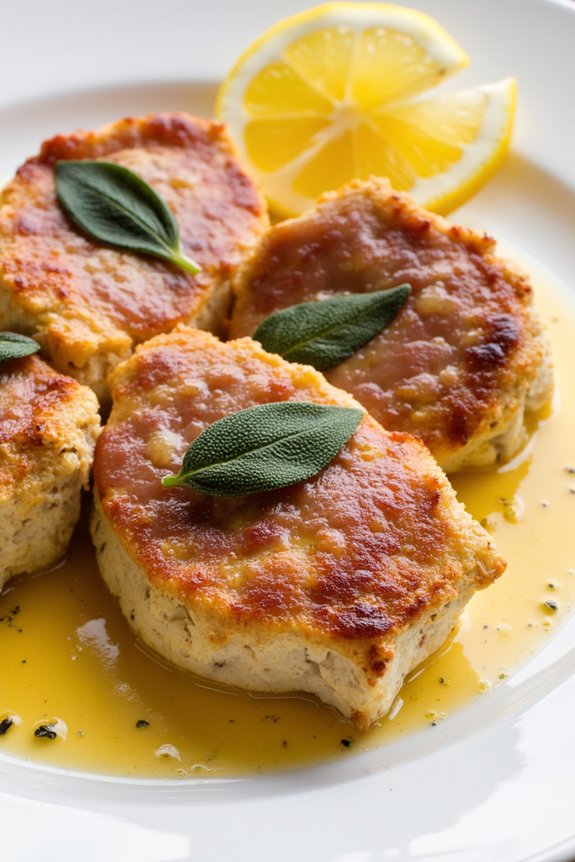
Veal Saltimbocca is a classic Italian dish that effortlessly combines tender veal with the rich flavors of prosciutto and sage, creating a mouthwatering experience. The name “saltimbocca” translates to “jump in the mouth,” aptly describing how the flavors of this dish burst with every bite.
Traditionally hailing from Rome, this dish is a staple in Italian cuisine, celebrated for its simplicity and elegance. Perfect for a special dinner or a delightful family meal, Veal Saltimbocca is a demonstration of the beauty of using high-quality ingredients and traditional cooking techniques.
This dish is characterized by its thin, tender veal cutlets topped with prosciutto and fresh sage leaves, all wrapped together and cooked in a fragrant butter and white wine sauce. The combination of the savory prosciutto and the earthy sage, paired with the delicate veal, creates a harmonious blend that tantalizes the taste buds.
Ideal for serving 4-6 people, this recipe brings a touch of Italian culinary flair to your dining table. With its simple preparation and robust flavors, Veal Saltimbocca is a dish that’s sure to impress your guests and become a favorite in your household.
Ingredients for 4-6 servings:
- 6 veal cutlets, about 1/4-inch thick
- 6 slices of prosciutto
- 12 fresh sage leaves
- Salt and black pepper to taste
- 1/2 cup all-purpose flour
- 4 tablespoons unsalted butter
- 1/2 cup dry white wine
- 1/4 cup chicken broth
- Toothpicks or kitchen twine
- Lemon wedges for serving
Cooking Instructions:
- Prepare the Veal: Lightly season the veal cutlets with salt and black pepper on both sides. Place a slice of prosciutto and two sage leaves on top of each cutlet. Secure the layers with a toothpick or kitchen twine to keep everything in place during cooking.
- Flour the Cutlets: Spread the flour on a plate. Dredge each prepared veal cutlet in the flour, shaking off the excess. This will help create a light crust and thicken the sauce later.
- Sear the Veal: In a large skillet, melt 2 tablespoons of butter over medium-high heat. Once the butter is bubbling, add the veal cutlets, sage side down. Cook for about 2-3 minutes on each side, until the cutlets are golden brown and the prosciutto is slightly crisp. Remove the cutlets from the skillet and set them aside.
- Make the Sauce: In the same skillet, add the remaining 2 tablespoons of butter. Once melted, pour in the white wine to deglaze the pan, scraping up any brown bits from the bottom. Allow the wine to reduce by half, then add the chicken broth. Bring the mixture to a gentle simmer.
- Finish Cooking: Return the veal cutlets to the skillet, spooning the sauce over them. Let them cook for an additional 2-3 minutes, allowing the flavors to meld together and the sauce to thicken slightly.
- Serve: Remove the toothpicks or kitchen twine from the cutlets before serving. Plate the veal saltimbocca and drizzle with the pan sauce. Serve with lemon wedges on the side for a fresh zing.
Extra Tips:
When cooking Veal Saltimbocca, it’s essential to use fresh, high-quality ingredients for the best taste. If veal is unavailable, you can substitute with thinly sliced chicken breast, though the flavor will be slightly different.
The dish is best enjoyed immediately after cooking, as the prosciutto can lose its crispness when reheated. Pair the dish with a light salad or roasted vegetables to complement the rich flavors.
Additionally, make certain your skillet isn’t overcrowded while cooking, as this will help achieve an even sear on the veal cutlets. Enjoy your culinary journey into the heart of Italian flavors!
Sicilian Sausage and Peppers
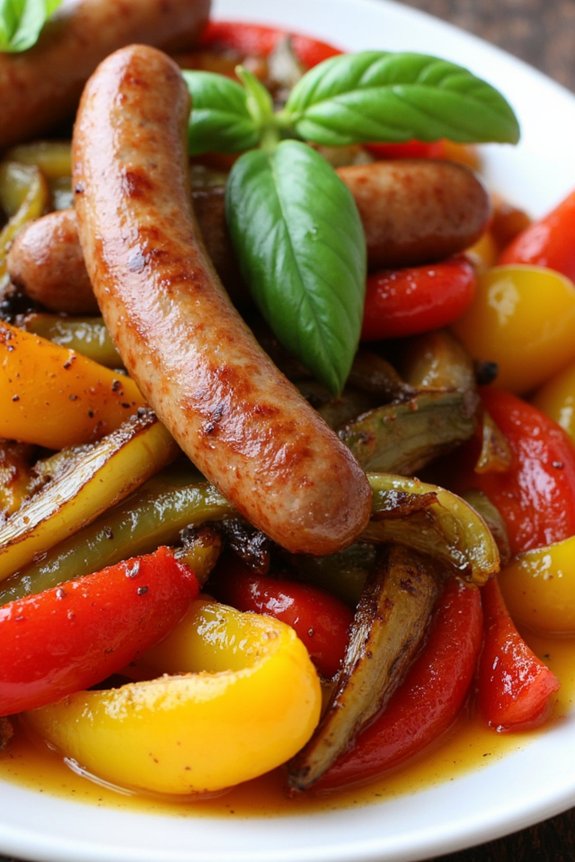
Sicilian Sausage and Peppers is a classic Italian dish known for its vibrant colors and robust flavors. Originating from Sicily, this dish combines juicy Italian sausages with sweet bell peppers and onions, all cooked together to create a delicious symphony of taste and aroma.
Perfect for a family gathering or a casual dinner, this recipe is easy to prepare and can be served as a main course or in a sandwich for a more casual meal. The combination of savory sausages with the sweetness of caramelized peppers and onions makes it a crowd-pleaser that everyone will enjoy.
Traditionally, this dish is cooked using Italian pork sausage, but you can easily substitute it with chicken or turkey sausages if you prefer a leaner option. The key to achieving the authentic flavor lies in the quality of the sausages and the freshness of the vegetables.
The dish is often seasoned with a hint of garlic, fennel seeds, and a splash of white wine, which adds a depth of flavor and enhances the overall taste. Whether you’re an experienced chef or a novice cook, this recipe is straightforward and promises a delightful meal that captures the essence of Sicilian cuisine.
Ingredients (serves 4-6):
- 2 pounds Italian sausage (pork, chicken, or turkey)
- 2 tablespoons olive oil
- 1 large yellow onion, sliced
- 3 bell peppers (red, yellow, green), sliced
- 3 cloves garlic, minced
- 1 teaspoon fennel seeds
- 1/2 cup white wine (optional)
- Salt and pepper to taste
- Fresh basil or parsley for garnish
Cooking Instructions:
- Prepare the Sausages: Begin by heating 1 tablespoon of olive oil in a large skillet over medium heat. Add the sausages and cook them for about 8-10 minutes, turning occasionally until they’re browned on all sides. Remove the sausages from the skillet and set them aside.
- Sauté the Vegetables: In the same skillet, add the remaining tablespoon of olive oil. Add the sliced onions and bell peppers, and sauté them over medium heat for about 5-7 minutes, until they start to soften.
- Add Garlic and Fennel: Stir in the minced garlic and fennel seeds, cooking for an additional 1-2 minutes until the garlic becomes fragrant.
- Combine Ingredients: Return the sausages to the skillet. Stir in the white wine, and season with salt and pepper to taste. Cover the skillet and let the mixture simmer for 10-15 minutes, allowing the flavors to meld together and the sausages to cook through completely.
- Serve: Once the sausages are fully cooked, transfer the dish to a serving platter. Garnish with fresh basil or parsley, and serve immediately, either on its own or alongside a crusty loaf of Italian bread.
Extra Tips:
For an added depth of flavor, consider using homemade Italian sausages if possible. If you prefer a spicier dish, opt for hot Italian sausages or add a pinch of red pepper flakes to the vegetable mixture.
When selecting your bell peppers, mix different colors to create a visually appealing dish. If you wish to make this dish ahead of time, you can prepare the sausages and vegetables separately, then combine and heat them together just before serving.
This meal pairs wonderfully with a side of pasta or polenta to soak up the rich juices. Enjoy your Sicilian Sausage and Peppers with a glass of your favorite Italian wine for an authentic dining experience.
Beef Braciole
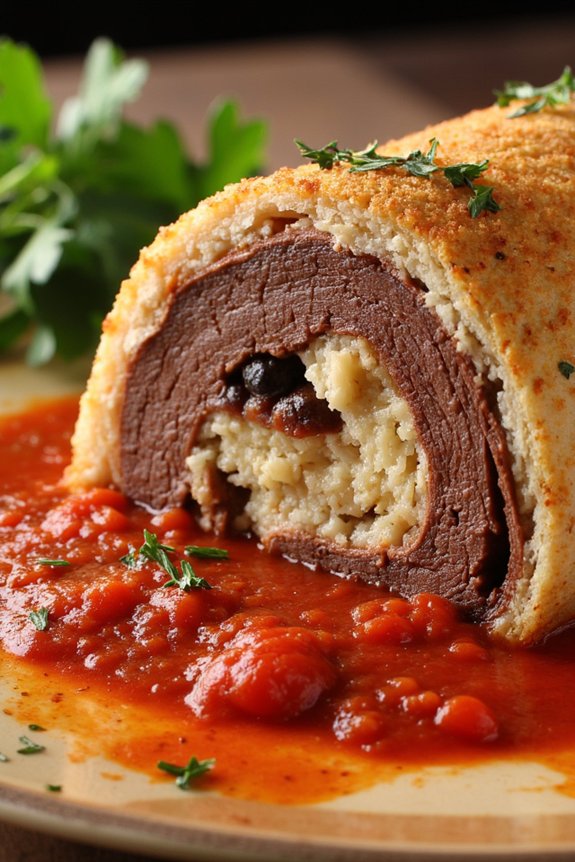
Beef Braciole is a classic Italian dish that’s both hearty and flavorful, perfect for a family meal or special occasion. This dish traditionally involves thin slices of beef wrapped around a savory filling, then simmered in a rich tomato sauce until tender. The combination of tender meat, aromatic herbs, and rich sauce makes Beef Braciole an irresistible delight.
Originating from Southern Italy, this dish has various regional variations and is a cherished part of Italian cuisine.
To make Beef Braciole, you’ll start by preparing the filling, which typically includes breadcrumbs, cheese, and herbs. The beef is then rolled tightly with this filling, seared until browned, and then slowly cooked in a tomato-based sauce. The long cooking time allows the flavors to meld together beautifully, resulting in succulent, flavorful beef rolls. This recipe serves 4-6 people, making it perfect for a family gathering or dinner party.
Ingredients
- 6 thin slices of beef round (about 1/4 inch thick)
- 1 cup breadcrumbs
- 1/2 cup grated Parmesan cheese
- 1/4 cup pine nuts
- 1/4 cup raisins
- 2 cloves garlic, minced
- 1/4 cup fresh parsley, chopped
- Salt and pepper to taste
- 2 tablespoons olive oil
- 2 cups marinara sauce
- 1 cup beef broth
- Kitchen twine or toothpicks
Cooking Instructions
- Prepare the Filling: In a mixing bowl, combine breadcrumbs, Parmesan cheese, pine nuts, raisins, minced garlic, and chopped parsley. Season the mixture with salt and pepper to taste. This will be the flavorful filling for your beef braciole.
- Prepare the Beef: Lay out the beef slices on a clean surface. If necessary, use a meat mallet to pound them to an even thickness. Spread a generous amount of the prepared filling onto each slice of beef.
- Roll the Beef: Starting from one end, carefully roll each slice of beef into a tight cylinder, enclosing the filling. Secure each roll with kitchen twine or toothpicks to guarantee the rolls hold their shape during cooking.
- Sear the Rolls: Heat olive oil in a large skillet over medium-high heat. Add the beef rolls and sear them on all sides until browned. This step is essential for locking in the flavors and assuring a nice crust on the outside.
- Simmer in Sauce: Once the rolls are browned, add the marinara sauce and beef broth to the skillet. Bring the mixture to a simmer, then reduce the heat to low. Cover the skillet and let the braciole simmer gently for about 1.5 to 2 hours, or until the beef is tender and the flavors have melded.
- Serve: Remove the braciole from the sauce and discard the twine or toothpicks. Slice the rolls into pinwheels, if desired, and serve them with the rich tomato sauce spooned over the top.
Extra Tips
For the best results, make sure to use thin slices of beef to guarantee they cook through properly and remain tender. If you don’t have kitchen twine, toothpicks can be a suitable alternative to secure the rolls.
Feel free to customize the filling with your favorite herbs or cheeses to suit your taste. Pair the Beef Braciole with a side of pasta or a fresh green salad to complete the meal.
Remember that the longer the braciole simmers, the more tender and flavorful it will become, so don’t rush the cooking process.
Trippa Alla Romana
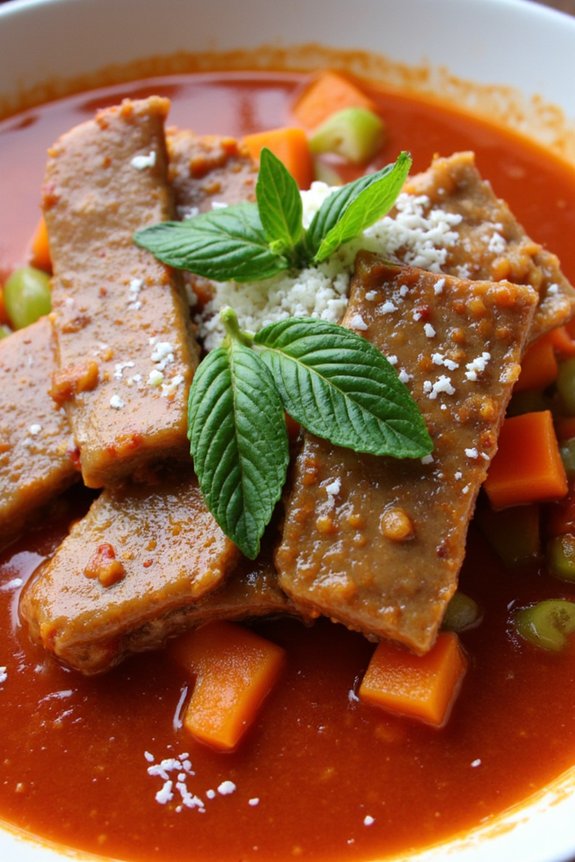
Trippa Alla Romana is a traditional Italian dish hailing from the heart of Rome. This rustic recipe showcases the Italian love for utilizing every part of the animal, transforming tripe, which is the lining of the cow’s stomach, into a delectable and hearty meal.
The dish is cooked slowly with a rich tomato sauce, flavored with classic Roman ingredients such as pecorino cheese and fresh mint, creating a unique blend of flavors that are both comforting and robust. This dish is perfect for a family gathering, allowing the vibrant and aromatic scents to fill your kitchen.
The preparation of Trippa Alla Romana involves first thoroughly cleaning the tripe and then simmering it gently until it becomes tender. This process allows the tripe to absorb the delicious flavors of the sauce, resulting in a dish that’s both satisfying and full of depth.
Typically served with crusty bread or polenta, Trippa Alla Romana is a demonstration of Italian culinary ingenuity, turning humble ingredients into a truly memorable meal.
Ingredients for 4-6 people:
- 1.5 kg fresh tripe
- 2 tablespoons olive oil
- 1 large onion, finely chopped
- 2 cloves garlic, minced
- 2 carrots, finely chopped
- 2 celery stalks, finely chopped
- 400g canned crushed tomatoes
- 1 tablespoon tomato paste
- 1 cup white wine
- 1 cup beef stock
- Salt and pepper to taste
- 1/2 teaspoon red pepper flakes
- 1/2 cup freshly grated pecorino Romano cheese
- Fresh mint leaves for garnish
Cooking Instructions:
- Prepare the Tripe: Begin by thoroughly rinsing the tripe under cold running water. Bring a large pot of salted water to a boil, add the tripe, and simmer for about 15 minutes. Drain and let cool slightly, then cut the tripe into strips about 1 inch wide.
- Sauté the Vegetables: Heat the olive oil in a large pot or Dutch oven over medium heat. Add the chopped onion, garlic, carrots, and celery. Cook, stirring occasionally, until the vegetables are soft and the onion is translucent, about 8-10 minutes.
- Add Liquid Ingredients: Stir in the tomato paste, then add the white wine. Let it simmer for a few minutes until the wine has reduced slightly. Add the crushed tomatoes and beef stock, stirring to combine.
- Simmer the Tripe: Add the tripe strips to the pot, along with salt, pepper, and red pepper flakes. Bring the mixture to a boil, then reduce the heat to low and cover. Let it simmer gently for about 2-3 hours, or until the tripe is very tender.
- Finish and Serve: Once the tripe is tender, adjust seasoning with additional salt and pepper if needed. Stir in the grated pecorino Romano cheese. Serve hot, garnished with fresh mint leaves. Pair with crusty bread or polenta to soak up the rich sauce.
Extra Tips:
When preparing Trippa Alla Romana, patience is key. The slow cooking process guarantees that the tripe becomes tender and absorbs all the rich flavors of the sauce.
If you find tripe with a strong odor, soaking it in water with a bit of vinegar before cooking can help neutralize the smell. Additionally, using fresh mint leaves as a garnish adds a revitalizing contrast to the savory dish.
If pecorino Romano cheese is unavailable, Parmesan can be used as a substitute, although it will slightly alter the traditional flavor profile.
Italian-Style Stuffed Peppers
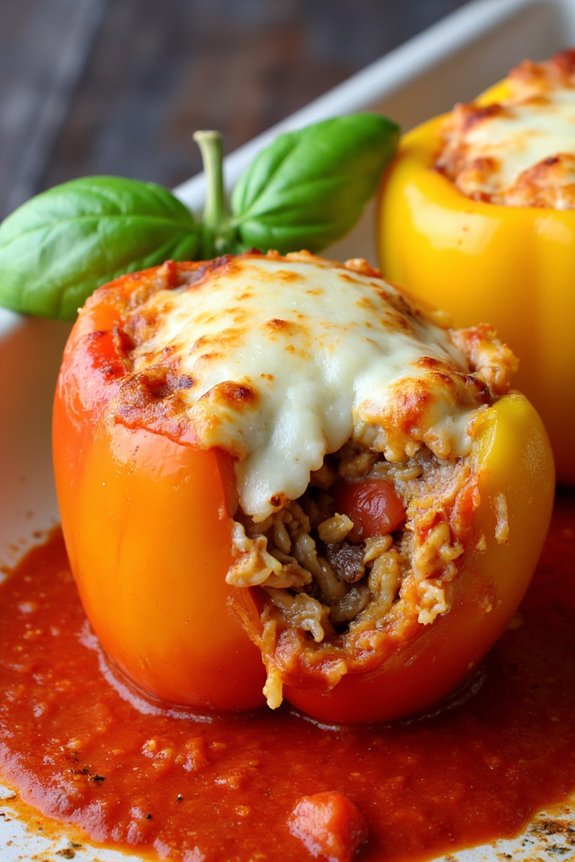
Italian-Style Stuffed Peppers are a delicious and hearty dish that combines the flavors of Italy with a classic comfort food. These bell peppers are filled with a savory mixture of ground meat, rice, and aromatic herbs, then baked until perfectly tender. This dish isn’t only visually appealing, with vibrant colors from the peppers, but also incredibly satisfying and full of rich flavors.
It’s perfect for a family dinner or a gathering with friends, offering a taste of Italy that everyone will love. Stuffed peppers have been a staple in various cuisines around the world, but the Italian version often uses a blend of ground beef or pork, Italian seasoning, and cheese to create a filling that’s both flavorful and moist.
This recipe for Italian-Style Stuffed Peppers serves 4-6 people and is sure to be a hit at your dining table. The combination of melted cheese and the rich tomato sauce pairs wonderfully with the tender peppers, creating a dish that’s both wholesome and indulgent.
Ingredients (serves 4-6):
- 6 large bell peppers (any color)
- 1 pound ground beef or pork
- 1 cup cooked rice
- 1 medium onion, chopped
- 2 cloves garlic, minced
- 1 can (14 ounces) diced tomatoes, drained
- 1 cup marinara sauce
- 1 teaspoon Italian seasoning
- 1/2 teaspoon salt
- 1/4 teaspoon black pepper
- 1 cup shredded mozzarella cheese
- 1/4 cup grated Parmesan cheese
- 2 tablespoons olive oil
- Fresh basil leaves for garnish (optional)
Instructions:
- Prepare the Peppers: Preheat your oven to 375°F (190°C). Cut the tops off the bell peppers and remove the seeds and membranes. Lightly brush the outside of the peppers with olive oil and place them in a baking dish.
- Cook the Filling: In a large skillet over medium heat, add the remaining olive oil and sauté the chopped onion until translucent. Add the minced garlic and cook for another minute. Add the ground meat to the skillet, breaking it apart with a spoon, and cook until browned. Drain any excess fat.
- Combine Ingredients: In the skillet, mix in the cooked rice, drained diced tomatoes, Italian seasoning, salt, and black pepper. Stir well to combine. Allow the mixture to cook for about 5 minutes, letting the flavors meld together.
- Stuff the Peppers: Fill each prepared bell pepper with the meat and rice mixture. Pour the marinara sauce over the stuffed peppers and sprinkle with shredded mozzarella and Parmesan cheese.
- Bake the Peppers: Cover the baking dish with foil and bake in the preheated oven for 30 minutes. Remove the foil and continue to bake for another 10-15 minutes, or until the peppers are tender and the cheese is golden and bubbly.
- Serve: Remove the stuffed peppers from the oven and let them cool slightly. Garnish with fresh basil leaves, if desired, and serve hot.
Extra Tips:
When selecting bell peppers, choose ones that have a flat bottom to help them stand upright in the baking dish. If you prefer a spicier version, you can add red pepper flakes to the filling mixture.
For a vegetarian option, substitute the ground meat with sautéed mushrooms and zucchini. Finally, if you’re in a hurry, you can cook the peppers in the microwave for a few minutes before stuffing them to speed up the baking process. Enjoy your Italian-Style Stuffed Peppers with a side of crusty bread or a fresh green salad.
Pork Spareribs With Balsamic Glaze
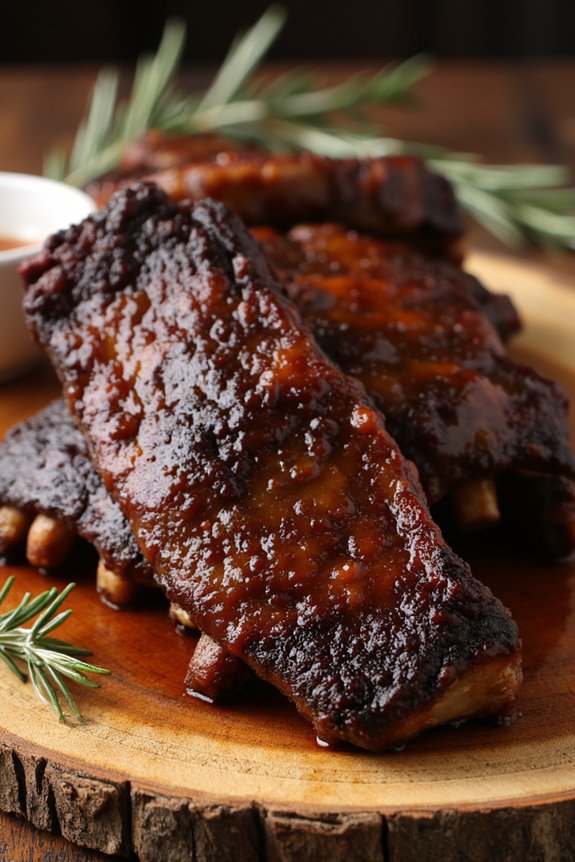
Pork Spareribs With Balsamic Glaze is a savory Italian dish that combines the rich, tangy flavor of balsamic vinegar with tender, juicy pork spareribs. This recipe offers a perfect balance of sweet and savory notes, with the balsamic glaze adding a caramelized finish to the ribs.
Ideal for a family dinner or a gathering with friends, this dish is both satisfying and impressive, showcasing the depth of Italian culinary tradition.
The preparation involves marinating the ribs to guarantee they’re infused with flavor and then slow-cooking them to achieve a melt-in-your-mouth texture. The balsamic glaze is applied towards the end of cooking, allowing it to thicken and coat the ribs in a glossy sheen.
Whether you’re a seasoned cook or a beginner, this recipe is straightforward and rewarding, promising a delicious outcome that will have everyone coming back for seconds.
Ingredients (Serves 4-6)
- 3 lbs pork spareribs
- 1 cup balsamic vinegar
- 1/2 cup honey
- 1/2 cup brown sugar
- 1/4 cup soy sauce
- 3 cloves garlic, minced
- 1 tablespoon Dijon mustard
- 1 teaspoon salt
- 1 teaspoon black pepper
- 1 tablespoon olive oil
Instructions
- Prepare the Marinade: In a bowl, combine the balsamic vinegar, honey, brown sugar, soy sauce, minced garlic, Dijon mustard, salt, and pepper. Mix until all ingredients are well incorporated.
- Marinate the Ribs: Place the pork spareribs in a large resealable plastic bag or a shallow dish. Pour the marinade over the ribs, guaranteeing they’re fully coated. Seal the bag or cover the dish and refrigerate for at least 4 hours, or overnight for best results.
- Preheat the Oven: Preheat your oven to 300°F (150°C). Allow the ribs to come to room temperature while the oven heats.
- Bake the Ribs: Arrange the marinated ribs on a baking sheet lined with aluminum foil, guaranteeing they aren’t overlapping. Drizzle with olive oil. Cover with another layer of foil to create a tent over the ribs. Bake in the preheated oven for 2.5 to 3 hours, until the ribs are tender.
- Prepare the Glaze: While the ribs are baking, pour the marinade into a saucepan. Bring it to a boil over medium-high heat, then reduce the heat and let it simmer until it thickens into a glaze, about 15-20 minutes.
- Glaze the Ribs: Once the ribs are cooked, remove the top layer of foil and brush the thickened glaze generously over the ribs. Increase the oven temperature to 400°F (200°C) and bake for an additional 15-20 minutes, or until the glaze is caramelized and sticky.
- Serve: Remove the ribs from the oven and let them rest for a few minutes before slicing. Serve hot with any remaining glaze on the side for dipping.
Extra Tips
For the best flavor, marinate the ribs overnight, as this allows the meat to absorb the marinade fully.
When applying the glaze, guarantee it’s thick enough to coat the ribs well without being too runny. If you prefer a smokier flavor, you can finish the ribs on a grill instead of the oven after applying the glaze. This will add an extra dimension to their taste.
Additionally, use a meat thermometer to guarantee the ribs are cooked to the right temperature, which should be around 145°F (63°C) for pork. Enjoy the ribs with a side of roasted vegetables or a fresh salad for a complete meal.
