

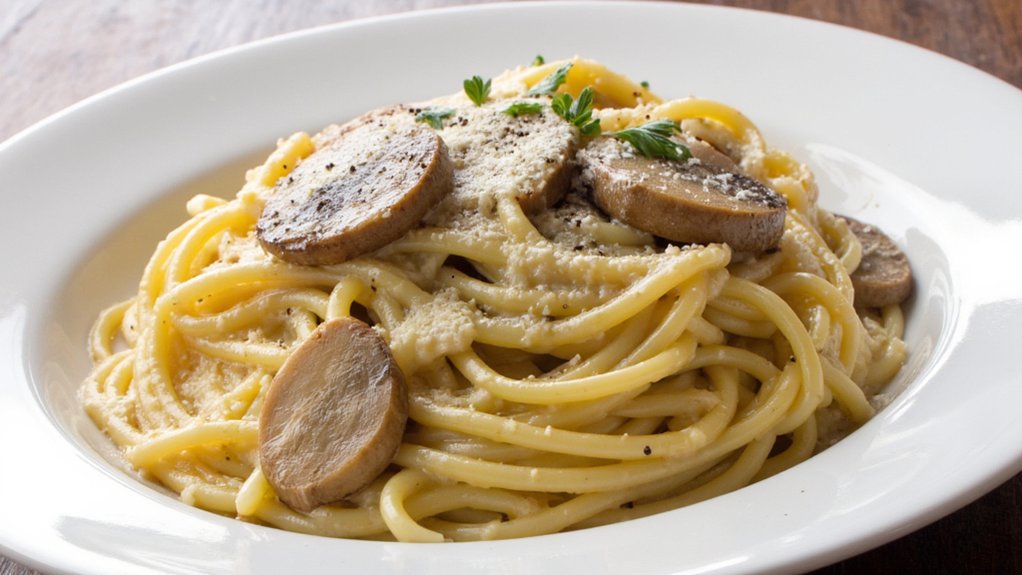
If you’re a fan of the timeless elegance of Italian cooking, these 11 peppery Cacio E Pepe pasta recipes are a must-try. Picture twirling your fork through perfectly cooked pasta, enveloped in creamy Pecorino Romano and freshly cracked black pepper. It’s comfort food at its finest. Each recipe has its own little twist, from a hint of zesty lemon to crispy pancetta. Ready to discover these simple yet delicious dishes?
Classic Roman Cacio E Pepe
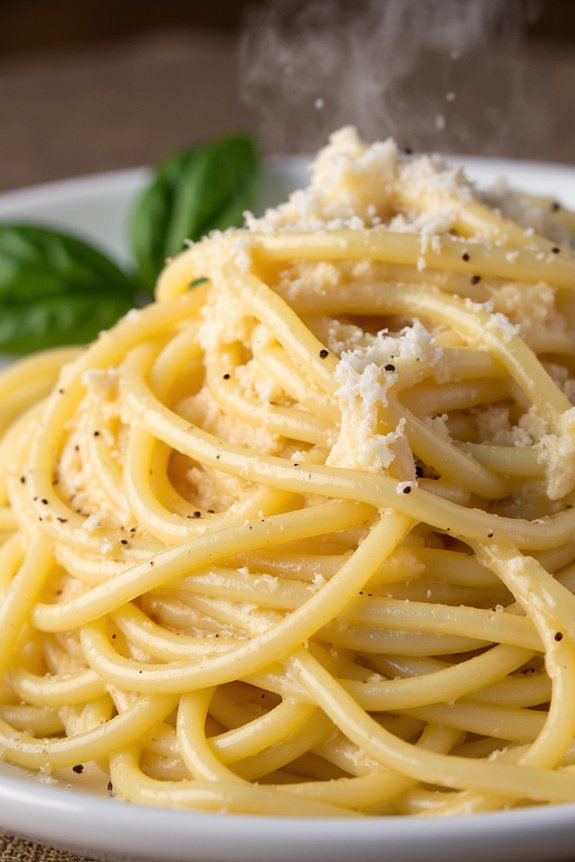
Cacio e Pepe is a classic Roman pasta dish that translates to “cheese and pepper.” This deceptively simple dish relies on the magic of its few ingredients to create a creamy, flavorful sauce that clings to every strand of pasta. Traditionally made with tonnarelli or spaghetti, Cacio e Pepe highlights the bold flavors of Pecorino Romano cheese and freshly cracked black pepper. The key to this dish is using the pasta water to emulsify the cheese into a smooth, velvety sauce that coats the pasta perfectly.
The origins of Cacio e Pepe date back to the Roman shepherds who’d carry dried pasta, Pecorino cheese, and black pepper with them as they roamed the countryside. These ingredients were both easy to transport and had a long shelf life, making them ideal for long journeys.
Today, Cacio e Pepe is beloved for its simplicity and rich taste, capturing the essence of authentic Roman cuisine in just a few steps.
Ingredients for 4-6 servings:
- 500g spaghetti or tonnarelli
- 1 ½ cups Pecorino Romano cheese, finely grated
- 2 teaspoons freshly ground black pepper
- Salt (for pasta water)
- 3 tablespoons unsalted butter (optional)
Cooking Instructions:
- Boil the Pasta: Fill a large pot with water and add a generous amount of salt. Bring the water to a boil and add the pasta. Cook until al dente, following the package instructions. Reserve about 1 ½ cups of pasta cooking water before draining the pasta.
- Prepare the Sauce Base: While the pasta is cooking, heat a large skillet over medium heat. Add the freshly ground black pepper and toast it lightly for about 1-2 minutes to release its aroma. If using butter, add it to the skillet and let it melt, which helps to enhance the flavor and texture of the sauce.
- Emulsify the Sauce: Reduce the heat to low. Add about 1 cup of the reserved pasta water to the skillet. Gradually sprinkle in the grated Pecorino Romano cheese, stirring constantly to create a smooth, creamy sauce. The cheese should melt and combine with the water to form a cohesive sauce. If the sauce seems too thick, add more pasta water, a little at a time, until the desired consistency is reached.
- Combine Pasta and Sauce: Add the drained pasta to the skillet, tossing it in the sauce to coat each strand evenly. Use tongs to mix the pasta and sauce thoroughly. Confirm that the pasta is well-coated with the cheese and pepper mixture.
- Final Adjustments: Taste the pasta and adjust the seasoning if necessary. You may add more pepper or a splash of pasta water if needed to achieve the perfect consistency.
Extra Tips:
For the best results, use freshly grated Pecorino Romano cheese rather than pre-grated varieties, as it melts more smoothly. The heat of the pasta and the reserved water is essential to emulsifying the cheese into a creamy sauce, so work quickly to combine them.
If the sauce looks too thick at any point, a little more pasta water can help loosen it up. Remember, Cacio e Pepe is all about balance, so taste and tweak as needed to achieve the perfect harmony of cheese and pepper.
Cacio E Pepe With a Lemon Zest Twist
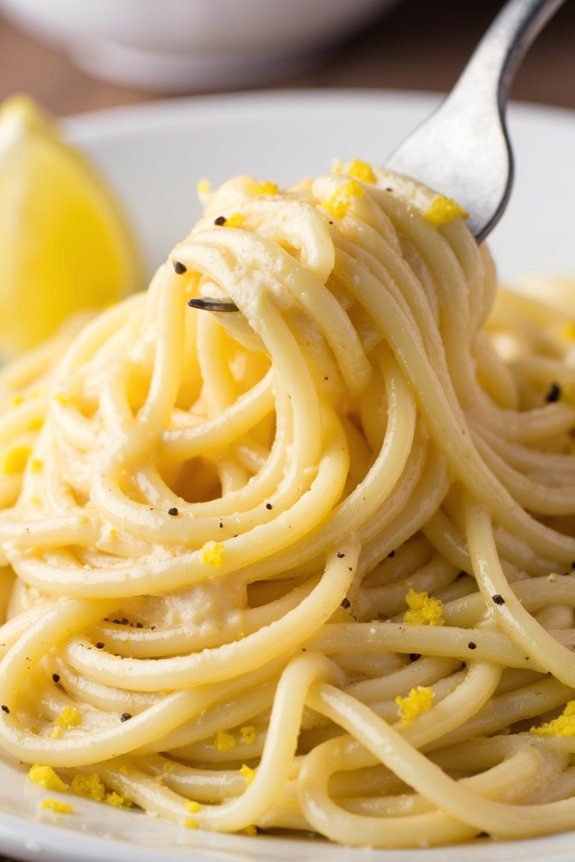
Cacio e Pepe, which translates to “cheese and pepper,” is a classic Roman pasta dish known for its simplicity and rich flavor. By incorporating a lemon zest twist, this recipe elevates the traditional dish, adding a bright, invigorating note that complements the creamy cheese and spicy pepper. This variation is perfect for those looking to add a little zing to their pasta, making it a delightful dinner option for both casual and special occasions.
The key to mastering Cacio e Pepe is in the balance of flavors and the technique of creating a creamy sauce without any cream. This recipe serves 4-6 people and requires minimal preparation, making it a perfect weeknight meal. The lemon zest not only enhances the flavor but also adds a vibrant color that makes the dish visually appealing. The combination of Pecorino Romano cheese, freshly ground black pepper, and lemon zest creates a harmonious blend that dances on the palate.
Follow these steps to create a memorable Cacio e Pepe that will impress your family and friends.
Ingredients:
- 1 lb (450g) spaghetti or bucatini
- 2 cups (200g) Pecorino Romano cheese, finely grated
- 2 teaspoons freshly ground black pepper
- Zest of 1 large lemon
- Salt, to taste
- 1 tablespoon unsalted butter (optional)
- 1 tablespoon olive oil
- 1 lemon wedge, for garnish
Instructions:
- Prepare the Pasta:
- Bring a large pot of salted water to a boil. Add the pasta and cook until just al dente according to package instructions. Reserve about 1 ½ cups of pasta water, then drain the pasta.
- Toast the Pepper:
- In a large skillet or pan, heat the olive oil over medium heat. Add the freshly ground black pepper and toast it for about 1 minute, stirring constantly, until it’s fragrant. This step enhances the pepper’s flavor.
- Create the Sauce Base:
- Add the butter to the pan (if using) and let it melt, mixing with the pepper. Pour about 1 cup of the reserved pasta water into the pan, and bring it to a simmer.
- Combine Pasta and Sauce:
- Add the drained pasta to the skillet, tossing it to coat with the pepper mixture. Gradually sprinkle in the grated Pecorino Romano cheese while continuously tossing the pasta with tongs. This helps prevent the cheese from clumping and instead creates a smooth sauce. If the sauce seems too thick, add more reserved pasta water, a little at a time, until the desired consistency is reached.
- Add Lemon Zest:
- Once the cheese has melted and the sauce is creamy, add the lemon zest and toss to combine thoroughly. The zest will infuse the dish with its invigorating aroma and taste.
- Serve:
- Remove the skillet from heat and season with additional salt if needed. Divide the pasta among serving plates and garnish with a lemon wedge for an extra citrus burst. Serve immediately for the best flavor.
Extra Tips:
To guarantee a smooth and creamy sauce, make sure to finely grate the Pecorino Romano cheese so it melts easily. It’s important to continuously toss the pasta while adding the cheese to prevent clumping. The reserved pasta water is vital for adjusting the sauce’s consistency, so don’t discard it all.
If you prefer a more intense lemon flavor, you can add a splash of fresh lemon juice just before serving. This dish is best enjoyed immediately, as the sauce can thicken as it cools.
Creamy Cacio E Pepe With Mascarpone
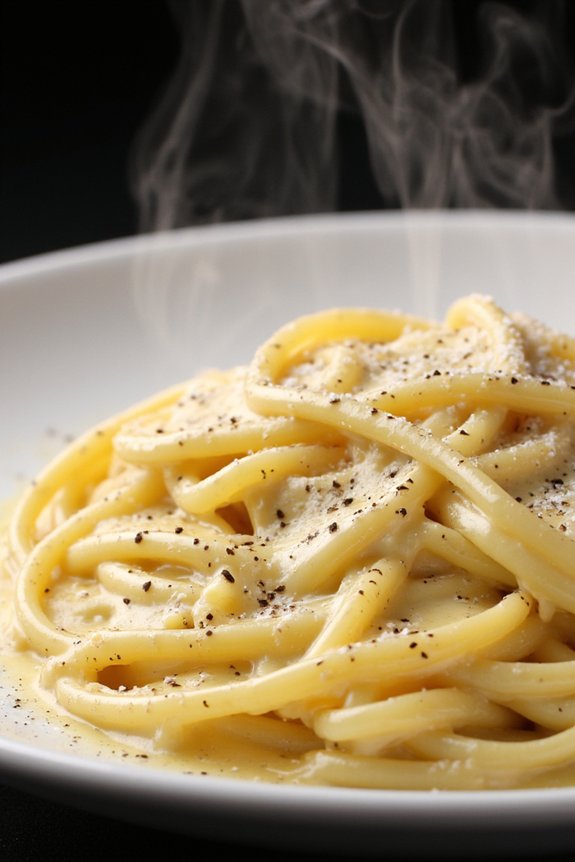
Creamy Cacio E Pepe With Mascarpone is an elevated twist on the classic Roman pasta dish that beautifully combines simplicity with indulgence. This recipe incorporates mascarpone cheese, adding a rich creaminess to the traditional flavors of Pecorino Romano and freshly cracked black pepper. The mascarpone not only enhances the texture but also mellows the sharpness of the cheese, creating a luscious sauce that clings perfectly to every strand of pasta.
Perfect for a cozy dinner or a special occasion, this dish is sure to impress with its delicate balance of flavors and luxurious creaminess. Originating from the Italian phrase “cacio e pepe,” which translates to “cheese and pepper,” this dish is all about using quality ingredients to create something spectacular.
The key to success lies in freshly grinding the black pepper to release its full aroma and using a blend of cheeses for depth of flavor. The recipe calls for spaghetti or bucatini, which are ideal for holding the creamy sauce. With just a handful of ingredients and a few simple steps, you can create a restaurant-quality meal right in your own kitchen.
Ingredients (Serves 4-6):
- 1 pound (450g) spaghetti or bucatini
- 1 cup (100g) Pecorino Romano cheese, finely grated
- 1/2 cup (125g) mascarpone cheese
- 2 tablespoons freshly cracked black pepper
- Salt, to taste
- 3 tablespoons unsalted butter
- 1 cup (240ml) pasta cooking water
Cooking Instructions:
- Cook the Pasta: Bring a large pot of salted water to a boil. Add the spaghetti or bucatini and cook until al dente, according to package instructions. Reserve 1 cup of the pasta cooking water, then drain the pasta.
- Prepare the Sauce Base: In a large skillet over medium heat, melt the butter. Add the freshly cracked black pepper and toast for about 1 minute, until fragrant. This step helps to release the essential oils and flavor of the pepper.
- Create the Cheese Mixture: Lower the heat and add the mascarpone cheese to the skillet, stirring until it’s fully melted and incorporated with the butter and pepper. This creates a smooth base for the sauce.
- Combine with Pasta Cooking Water: Gradually add the reserved pasta cooking water, about 1/4 cup at a time, stirring constantly to emulsify the sauce. The starch in the pasta water will help thicken the sauce and make it glossy.
- Toss with Pasta and Cheese: Add the cooked pasta to the skillet, tossing to coat the strands evenly. Sprinkle in the Pecorino Romano cheese, stirring continuously to guarantee it melts and integrates without clumping.
- Adjust Seasoning: Taste the pasta and adjust the seasoning with additional salt and pepper if needed. The sauce should be creamy and generously coat each strand of pasta.
- Serve Immediately: Transfer the pasta to serving plates, ensuring an even distribution of sauce. For an added touch, garnish with additional grated Pecorino Romano and a sprinkle of freshly cracked black pepper.
Extra Tips: For the best results, use freshly grated Pecorino Romano cheese, as pre-grated cheese can contain additives that prevent it from melting smoothly. Additionally, if the sauce seems too thick, add more pasta cooking water a tablespoon at a time until the desired consistency is reached. Finally, serve the pasta immediately to enjoy its creamy texture at its best.
Spaghetti Cacio E Pepe With Roasted Garlic
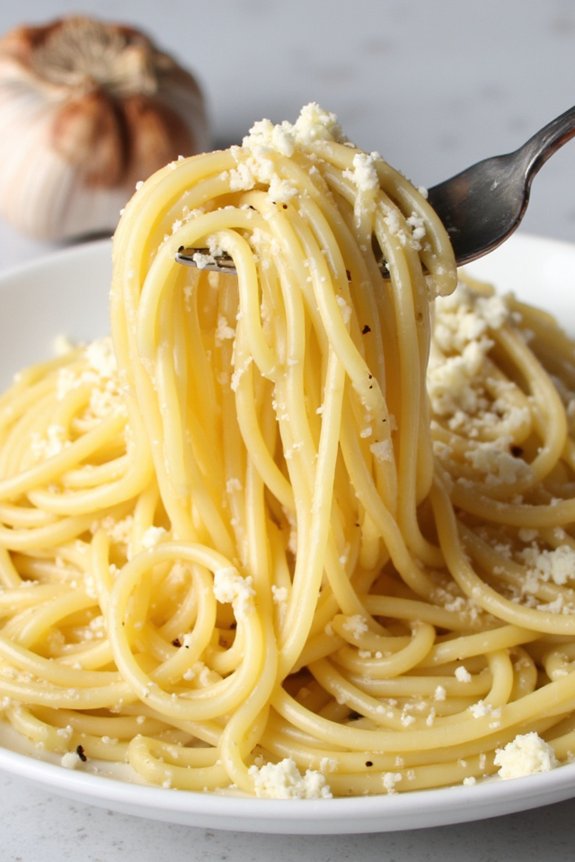
Spaghetti Cacio E Pepe With Roasted Garlic is a delightful twist on the classic Roman dish that’s beloved for its simplicity and rich flavor. This version incorporates the deep, mellow sweetness of roasted garlic, adding an extra layer of complexity to the sharp, peppery sauce.
Embodying the essence of Italian cooking, it requires minimal ingredients but relies on quality and technique to transform the humble spaghetti into a memorable meal. Whether you’re seeking comfort food or an impressive dish to share with friends and family, this recipe is sure to satisfy.
Cacio e pepe, which translates to cheese and pepper, is traditionally made with Pecorino Romano cheese and freshly cracked black pepper. In this version, slow-roasted garlic elevates the dish, providing a subtle sweetness that balances the saltiness of the cheese and the heat of the pepper.
The key to achieving the perfect Cacio E Pepe lies in the emulsification of cheese, pasta water, and fat, resulting in a creamy sauce that clings to each strand of spaghetti. This dish is perfect for serving 4-6 people, making it ideal for gatherings or a cozy night in.
Ingredients for 4-6 servings:
- 1 head of garlic
- 2 tablespoons olive oil
- 1 pound spaghetti
- 2 cups finely grated Pecorino Romano cheese
- 2 teaspoons freshly cracked black pepper, plus more to taste
- Salt, to taste
- 1 tablespoon unsalted butter
Cooking Instructions:
- Roast the Garlic: Preheat your oven to 400°F (200°C). Slice the top off the head of garlic to expose the cloves. Drizzle with 1 tablespoon of olive oil and wrap it tightly in aluminum foil. Roast in the oven for 30-35 minutes until the cloves are soft and caramelized. Let it cool, then squeeze the garlic out of the skins into a small bowl and mash it into a paste.
- Cook the Pasta: In a large pot, bring salted water to a boil. Add the spaghetti and cook until al dente according to package instructions. Reserve about 2 cups of pasta water and then drain the rest.
- Prepare the Sauce: In a large skillet over medium heat, add the remaining 1 tablespoon of olive oil and butter. Once the butter is melted, add the roasted garlic paste and freshly cracked black pepper. Cook for about 1 minute, allowing the flavors to meld.
- Combine Pasta and Sauce: Add the cooked spaghetti to the skillet, tossing to coat in the garlic-pepper mixture. Gradually sprinkle in the Pecorino Romano cheese, tossing continuously. Add reserved pasta water a little at a time until you achieve a creamy sauce that coats the pasta.
- Season and Serve: Taste and adjust with more salt and pepper if necessary. Serve immediately, garnishing with additional cheese and pepper if desired.
Extra Tips:
For the best results, use freshly grated Pecorino Romano cheese, as pre-grated cheese may contain anti-caking agents that prevent it from melting smoothly. The pasta water should be well-salted, as this is vital for seasoning the dish and aiding in the sauce’s emulsification.
Be patient when tossing the pasta with the cheese and water; this process is key to creating a creamy, cohesive sauce. If the sauce becomes too thick, simply add more pasta water until you reach the desired consistency. Enjoy this dish hot, as it’s best when freshly made.
Cacio E Pepe With Crispy Pancetta
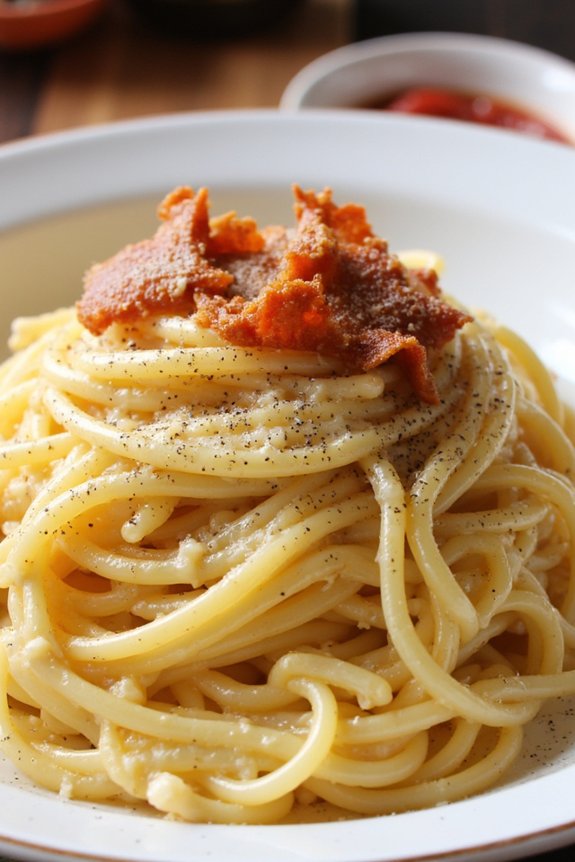
Cacio e Pepe, a classic Roman pasta dish, is a simple yet exquisite combination of cheese and black pepper. This version of Cacio E Pepe is elevated with the addition of crispy pancetta, which adds a delightful crunch and a robust, savory flavor to the dish. The creamy blend of Pecorino Romano cheese, freshly ground black pepper, and the salty pancetta creates a symphony of flavors that will transport you straight to the heart of Italy.
Perfect for a cozy dinner or a festive gathering, this dish is sure to impress your family and friends with its delicious simplicity.
To make this delicious Cacio E Pepe with Crispy Pancetta for a serving size of 4-6 people, you’ll need to start with high-quality ingredients. The key to this dish is in the balance of flavors and textures, so making certain that each component is first-rate will make all the difference.
The pasta should be cooked al dente, as it will continue to cook slightly when tossed with the hot cheese and pepper sauce. Meanwhile, the pancetta should be cooked until it’s wonderfully crispy, adding a delightful contrast to the creamy sauce and tender pasta.
Ingredients:
- 1 pound (450g) spaghetti or bucatini
- 1 cup (100g) finely grated Pecorino Romano cheese
- 1 tablespoon freshly ground black pepper
- 6 ounces (170g) pancetta, diced
- 2 tablespoons olive oil
- Salt, for pasta water
- 1 cup (240ml) reserved pasta cooking water
Instructions:
- Prepare the Pancetta: In a large skillet, heat the olive oil over medium heat. Add the diced pancetta and cook, stirring occasionally, until the pancetta is crispy and golden brown, about 5-7 minutes. Once cooked, remove the pancetta from the skillet and place it on a paper towel-lined plate to drain excess oil.
- Cook the Pasta: Bring a large pot of salted water to a boil. Add the spaghetti or bucatini and cook according to the package instructions until al dente. Reserve 1 cup of pasta cooking water, then drain the pasta.
- Make the Sauce: While the pasta is cooking, combine the grated Pecorino Romano and freshly ground black pepper in a large mixing bowl. Add a small amount of the reserved pasta water, stirring to create a thick paste.
- Combine Pasta and Sauce: Return the drained pasta to the pot over low heat. Add the cheese and pepper paste, tossing quickly to combine. Gradually add the reserved pasta water, a little at a time, until a creamy sauce forms and coats the pasta evenly.
- Add Pancetta: Stir in the crispy pancetta, making certain it’s evenly distributed throughout the pasta. Continue to toss the pasta over low heat until everything is well combined and the cheese has melted into a smooth sauce.
- Serve: Divide the pasta among plates, making sure each portion has an equal amount of crispy pancetta. If desired, garnish with additional grated Pecorino Romano and a sprinkle of black pepper.
Extra Tips:
When making Cacio E Pepe, timing is essential. Make certain that your cheese is finely grated to help it melt smoothly into the sauce.
Use the reserved pasta water sparingly; it’s easier to add more than to remove excess liquid. Also, keep the heat low when combining the pasta with the sauce to prevent the cheese from clumping.
For best results, serve the dish immediately while it’s hot, as the sauce will continue to thicken as it cools. Enjoy your Cacio E Pepe with a crisp white wine for an authentic Italian dining experience.
Black Pepper and Pecorino Gnocchi

Cacio e Pepe is a classic Roman pasta dish known for its simplicity and robust flavors, traditionally made with spaghetti or tonnarelli pasta. However, in this delightful twist, we’re using pillowy gnocchi as the base to soak up the bold flavors of black pepper and Pecorino Romano cheese.
This Black Pepper and Pecorino Gnocchi marries the comforting texture of gnocchi with the sharp, peppery, and cheesy notes of the traditional Cacio e Pepe, creating a dish that’s both hearty and sophisticated. Perfect for a cozy dinner or a special occasion, this dish requires only a handful of ingredients and is quick to prepare.
The key to success lies in the quality of the Pecorino Romano, which should be freshly grated to guarantee it melts smoothly into the sauce. With a generous amount of freshly cracked black pepper, this recipe will deliver a dish that’s both creamy and peppery, making it an irresistible treat for pasta lovers.
Ingredients for 4-6 people:
- 2 pounds of gnocchi
- 1 ½ cups of freshly grated Pecorino Romano cheese
- 2 teaspoons of freshly cracked black pepper
- Salt, to taste
- 1 cup of reserved pasta cooking water
Cooking Instructions:
- Boil the Gnocchi: Fill a large pot with salted water and bring it to a boil. Add the gnocchi and cook according to package instructions, usually until they float to the surface, about 2-3 minutes. Reserve 1 cup of the pasta cooking water before draining the gnocchi.
- Prepare the Sauce: In a large skillet over medium heat, toast the freshly cracked black pepper for about 1 minute until fragrant. This step helps release the essential oils and enhances the flavor.
- Combine Ingredients: Add the drained gnocchi to the skillet with the toasted pepper. Gradually add the grated Pecorino Romano cheese and some of the reserved pasta water, stirring constantly. The cheese will start to melt and form a creamy sauce. Add more pasta water as needed to reach your desired consistency.
- Season and Serve: Taste the gnocchi and add salt if necessary, remembering that Pecorino is naturally salty. Serve immediately, garnished with extra Pecorino and a sprinkle of black pepper for an added kick.
Extra Tips:
For the best results, use high-quality Pecorino Romano cheese and grind the black pepper fresh, as pre-ground pepper won’t provide the same depth of flavor.
When adding the pasta water, do it gradually and stir continuously to guarantee the sauce emulsifies and coats the gnocchi evenly. If the sauce becomes too thick, simply add more pasta water, a little at a time.
Enjoy your Black Pepper and Pecorino Gnocchi with a side salad or some crusty bread to soak up any leftover sauce.
Cacio E Pepe With Truffle Oil Infusion
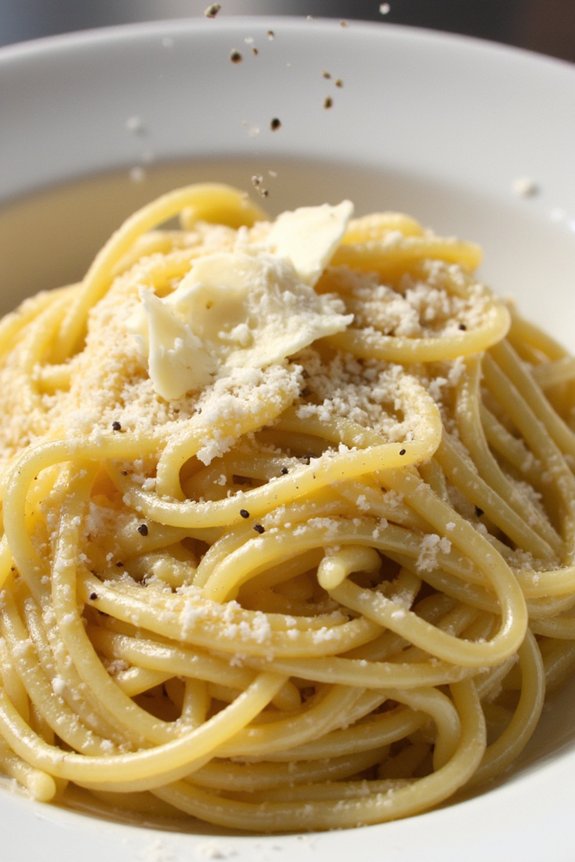
Cacio E Pepe With Truffle Oil Infusion is a delightful and luxurious twist on the classic Italian pasta dish. This version incorporates the earthy richness of truffle oil to elevate the simple yet satisfying flavors of Pecorino Romano cheese and freshly ground black pepper. The dish is perfect for a special occasion or when you want to impress your dinner guests with minimal effort.
The key to achieving the perfect Cacio E Pepe is using high-quality ingredients and mastering the art of emulsifying the cheese with the pasta water to create a creamy, luscious sauce.
To prepare this dish, you start by cooking your pasta, traditionally spaghetti or tonnarelli, until it’s just shy of al dente. Once the pasta is cooked, the magic happens by combining it with freshly cracked black pepper, a generous amount of grated Pecorino Romano, and a splash of pasta cooking water to form a silky sauce. The final touch is a drizzle of aromatic truffle oil, which adds depth and complexity to the dish.
This recipe serves 4-6 people, making it perfect for a family meal or a small dinner party.
Ingredients:
- 400g spaghetti or tonnarelli
- 150g Pecorino Romano cheese, finely grated
- 2 tablespoons freshly ground black pepper
- 2 tablespoons truffle oil
- Salt, to taste
- 1 tablespoon olive oil (optional)
- 4-5 cups of water for boiling pasta
Cooking Instructions:
- Boil the Pasta: In a large pot, bring 4-5 cups of water to a boil. Add a pinch of salt and, if desired, a tablespoon of olive oil to prevent the pasta from sticking. Add the spaghetti or tonnarelli and cook until just shy of al dente, around 8-9 minutes. Reserve 1 cup of pasta cooking water before draining the pasta.
- Prepare the Sauce: In a large skillet over medium heat, add the freshly ground black pepper. Toast the pepper lightly for about a minute to release its aroma.
- Combine Ingredients: Add the cooked pasta to the skillet with the toasted pepper. Pour half of the reserved pasta water into the skillet and add the grated Pecorino Romano cheese. Stir vigorously to combine and emulsify the cheese with the pasta water, creating a creamy sauce. Add more pasta water if necessary to achieve the desired consistency.
- Add Truffle Oil: Once the sauce is smooth and creamy, remove the skillet from the heat. Drizzle the truffle oil over the pasta and toss gently to evenly coat the noodles with the fragrant oil. Taste and adjust seasoning with salt if needed.
- Serve: Divide the pasta among serving plates, twirling the noodles into nests for an elegant presentation. Optionally, garnish with additional grated Pecorino Romano and a sprinkle of black pepper.
Extra Tips:
For best results, use freshly grated Pecorino Romano cheese to guarantee it melts smoothly into the sauce. Avoid overheating the sauce once the cheese is added, as this can cause the cheese to clump.
If you find the sauce too thick, gradually add more pasta water to loosen it. Truffle oil is potent, so start with a small amount and adjust according to your taste preference.
Finally, serving the pasta immediately after preparation will guarantee the sauce maintains its creamy texture.
Cacio E Pepe With Fresh Herbs
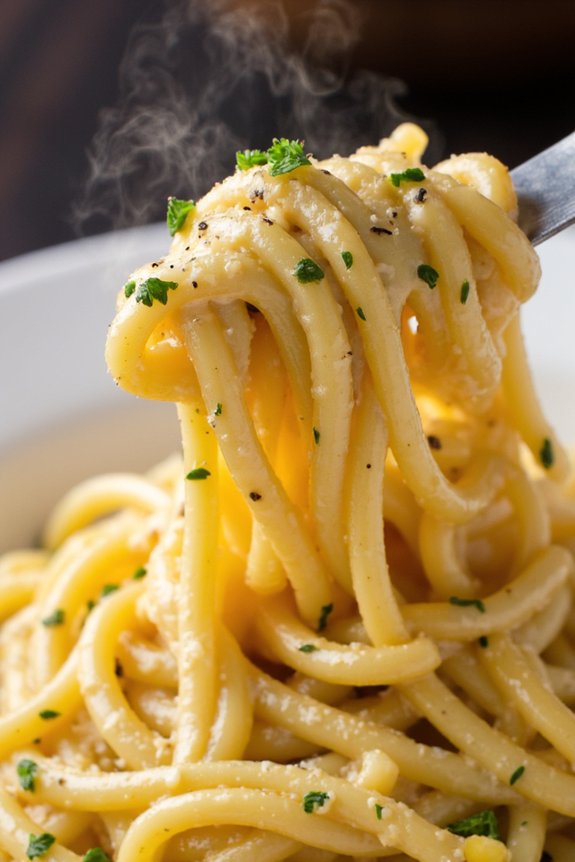
Cacio e Pepe is a classic Roman pasta dish that translates to “cheese and pepper,” and it’s known for its simplicity and rich flavor. This variation, Cacio E Pepe With Fresh Herbs, adds a revitalizing twist to the traditional recipe by incorporating aromatic herbs to enhance the dish’s complexity. The fresh herbs bring a layer of freshness and vibrancy to the creamy, cheesy sauce, making it an ideal dish for those who love a classic with a bit of a modern touch.
This recipe serves 4-6 people and captures the essence of Italian comfort food at its finest. By using high-quality ingredients like Pecorino Romano cheese and fresh herbs like parsley or basil, you can elevate the humble cacio e pepe to a gourmet experience. Whether you’re serving it as a main course or a side dish, this herb-infused version is sure to impress your family and friends.
Ingredients:
- 1 pound of spaghetti or bucatini
- 2 tablespoons of freshly cracked black pepper
- 1 ½ cups of finely grated Pecorino Romano cheese
- 1 cup of pasta cooking water
- 2 tablespoons of unsalted butter
- 1/4 cup of finely chopped fresh parsley
- 1/4 cup of finely chopped fresh basil
- Salt, to taste
Cooking Instructions:
- Cook the Pasta: Bring a large pot of salted water to a boil and cook the spaghetti or bucatini until al dente according to package instructions. Reserve 1 cup of pasta cooking water before draining the pasta.
- Toast the Pepper: In a large skillet over medium heat, melt the butter. Add the freshly cracked black pepper and toast for about 1 minute until fragrant. This step enhances the pepper’s flavor, providing a warm, nutty aroma.
- Create the Sauce: Reduce the heat to low, and add half of the reserved pasta water to the skillet. Gradually stir in the grated Pecorino Romano cheese, mixing well to create a smooth sauce. The heat should be gentle to prevent the cheese from clumping.
- Combine Pasta and Sauce: Add the drained pasta to the skillet, tossing it continuously to coat the strands in the cheese and pepper sauce. If needed, add more pasta water, a little at a time, to adjust the consistency of the sauce until it adheres perfectly to the pasta.
- Incorporate Fresh Herbs: Remove the skillet from the heat and gently fold in the chopped fresh parsley and basil, ensuring they’re evenly distributed throughout the dish. The heat of the pasta will slightly wilt the herbs, enhancing their aroma and flavor.
- Serve: Taste and adjust the seasoning with salt if necessary. Serve immediately, garnished with additional freshly cracked black pepper and more grated Pecorino Romano if desired.
Extra Tips:
For the best results, use freshly cracked black pepper and high-quality Pecorino Romano cheese. Pre-grated cheese may contain anti-caking agents that can affect the sauce’s texture.
Also, confirm the pasta is cooked al dente, as it will continue to cook slightly when combined with the hot sauce. If the sauce seems too thick, use a splash of the reserved pasta water to loosen it to your desired consistency.
Finally, feel free to experiment with different fresh herbs like chives or tarragon to suit your personal taste.
Bucatini Cacio E Pepe With Red Pepper Flakes
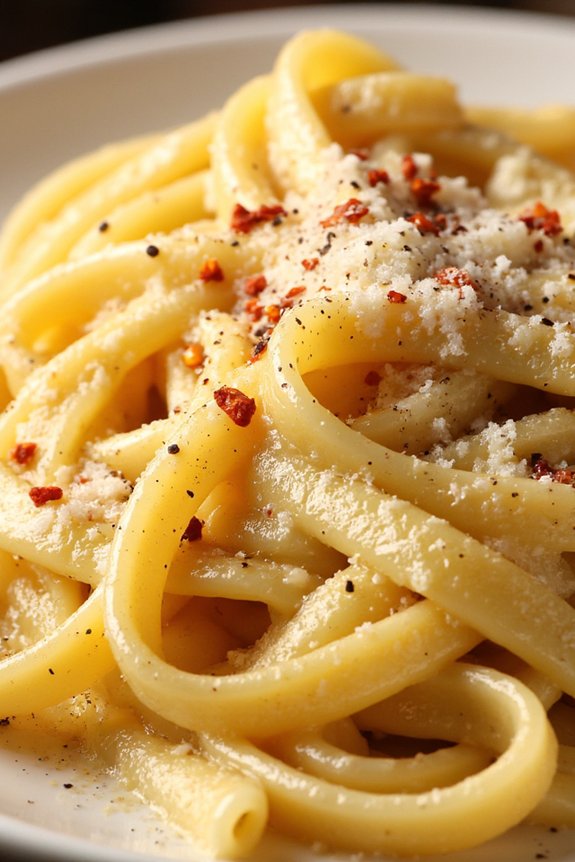
Bucatini Cacio E Pepe With Red Pepper Flakes is a delightful twist on the classic Roman dish, Cacio e Pepe. Known for its simplicity and rich flavors, this pasta dish uses bucatini, a thick spaghetti-like pasta with a hole running through the center, which perfectly absorbs the creamy, cheesy sauce. The addition of red pepper flakes introduces a subtle heat that complements the sharpness of Pecorino Romano cheese, creating a harmonious blend of flavors that’s both comforting and mildly spicy.
This recipe is perfect for a cozy dinner at home and can be prepared quickly with just a handful of ingredients. The key to mastering Bucatini Cacio E Pepe With Red Pepper Flakes lies in balancing the flavors and achieving a silky sauce that clings to each strand of pasta. Enjoy this dish as a standalone meal or paired with a fresh green salad and a glass of crisp white wine for a truly Italian dining experience.
Ingredients (Serves 4-6):
- 500g bucatini pasta
- 1 cup Pecorino Romano cheese, finely grated
- 2 teaspoons freshly ground black pepper
- 1 teaspoon red pepper flakes
- Salt, to taste
- 3 tablespoons unsalted butter
- 1 1/2 cups pasta cooking water
Cooking Instructions:
- Boil the Pasta: Bring a large pot of salted water to a boil. Add the bucatini pasta and cook according to package instructions until al dente. Reserve 1 1/2 cups of the pasta cooking water, then drain the pasta.
- Prepare the Cheese Mixture: While the pasta is cooking, in a large mixing bowl, combine the grated Pecorino Romano cheese and freshly ground black pepper. Set aside.
- Melt the Butter: In a large skillet over medium heat, melt the unsalted butter. Add the red pepper flakes and toast them gently in the butter for about 1 minute, until fragrant.
- Combine Pasta and Cheese: Add the drained pasta to the skillet with the melted butter and red pepper flakes. Mix briefly to coat the pasta.
- Create the Sauce: Gradually add the reserved pasta water, a little at a time, to the cheese mixture while stirring until a smooth, creamy sauce forms. Pour this sauce over the pasta in the skillet.
- Toss the Pasta: Toss the pasta continuously using tongs, making certain each strand is well coated with the cheese sauce. Adjust seasoning with salt if necessary.
- Serve Immediately: Once the pasta is evenly coated and the sauce is silky, transfer to serving plates. Garnish with extra Pecorino Romano and a sprinkle of black pepper if desired.
Extra Tips: To prevent the cheese from clumping, make certain to finely grate the Pecorino Romano and use freshly boiled pasta water, which contains starch that helps emulsify the sauce. If the sauce seems too thick or clumpy, add more pasta water a tablespoon at a time until the desired consistency is achieved. Be careful not to overcook the pasta; it should remain slightly firm to absorb the sauce properly. For a vegetarian version, verify that the Pecorino Romano cheese used doesn’t contain animal rennet.
Cacio E Pepe With Artichoke Hearts
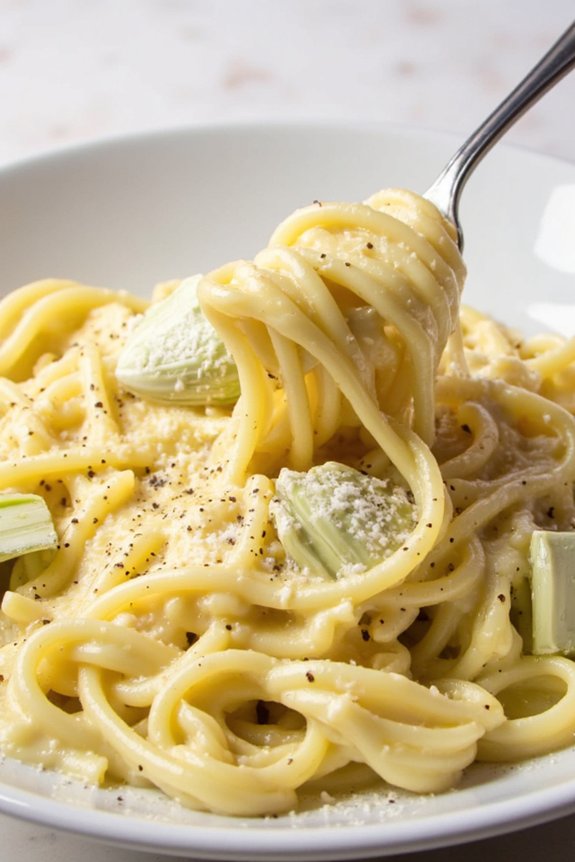
Cacio E Pepe With Artichoke Hearts is a delightful twist on the classic Roman pasta dish, combining the creamy, cheesy goodness of Cacio e Pepe with the earthy, slightly tangy flavor of artichoke hearts. This dish is perfect for those who love traditional Italian flavors but are looking for something a little different.
The simplicity of the ingredients allows the flavors to shine through, creating a rich and satisfying meal that’s perfect for a cozy dinner at home or as a special dish for guests.
The name “Cacio e Pepe” translates to “cheese and pepper,” and this version of the dish stays true to its roots while adding the unique texture and flavor of artichoke hearts. The artichokes add a lovely depth to the dish and pair beautifully with the sharpness of Pecorino Romano cheese and the heat of freshly cracked black pepper.
It’s a versatile recipe that’s easy to prepare and sure to become a favorite in your pasta repertoire.
Ingredients for 4-6 servings:
- 1 pound spaghetti or bucatini
- 1 cup grated Pecorino Romano cheese
- 4 tablespoons unsalted butter
- 1 teaspoon freshly cracked black pepper
- 1 cup canned or jarred artichoke hearts, drained and roughly chopped
- Salt, to taste
- 1 tablespoon olive oil
Cooking Instructions:
- Prepare the Pasta: Bring a large pot of salted water to a boil. Add the spaghetti or bucatini and cook until al dente, according to package instructions. Reserve about 1 cup of pasta water, then drain the pasta.
- Toast the Pepper: In a large skillet over medium heat, add the olive oil and freshly cracked black pepper. Toast the pepper for about 1-2 minutes, until fragrant, making sure not to burn it.
- Melt the Butter: Add the butter to the skillet with the pepper and allow it to melt completely. Stir occasionally.
- Add the Pasta: Add the cooked pasta to the skillet, tossing it to coat in the butter and pepper mixture. If the pasta seems dry, add a little reserved pasta water to loosen it up.
- Incorporate the Cheese: Remove the skillet from the heat and add the grated Pecorino Romano cheese gradually, tossing the pasta continuously to confirm the cheese melts and coats the pasta evenly. Add more pasta water if needed to achieve a creamy consistency.
- Add the Artichoke Hearts: Gently fold in the chopped artichoke hearts, making sure they’re evenly distributed throughout the pasta.
- Season and Serve: Taste and adjust the seasoning with salt if necessary. Serve immediately, garnished with extra Pecorino Romano cheese and a sprinkle of black pepper if desired.
Extra Tips:
To confirm the cheese melts smoothly into the pasta, it’s important to remove the skillet from the heat before adding the cheese. This prevents the cheese from clumping or becoming stringy.
Additionally, using freshly cracked black pepper enhances the flavor remarkably compared to pre-ground pepper, providing a more aromatic and robust taste. If you prefer a more intense artichoke flavor, you can use marinated artichoke hearts for added tanginess.
Enjoy this dish with a side of crusty bread or a simple green salad for a complete meal.
Vegetarian Cacio E Pepe With Mushrooms
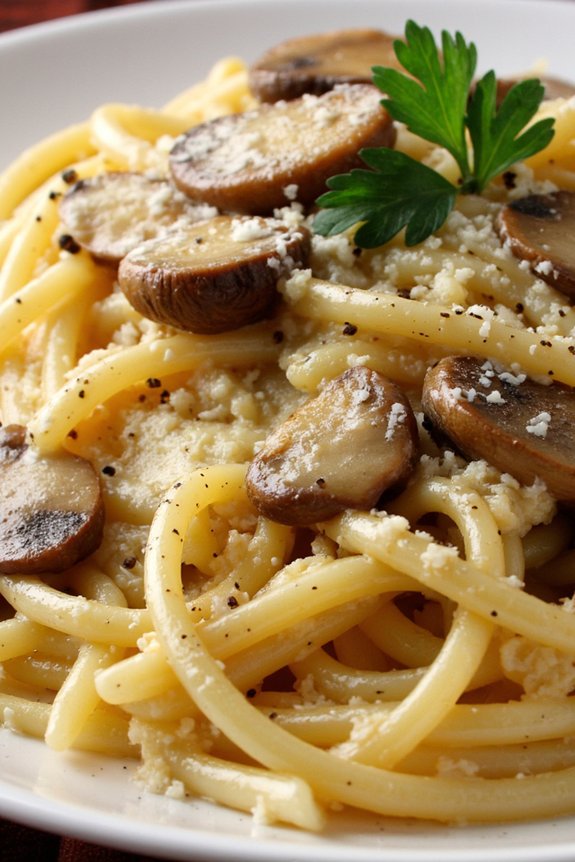
Vegetarian Cacio E Pepe with Mushrooms is a delightful twist on the classic Roman pasta dish, known for its simplicity and rich flavors. By incorporating mushrooms, this recipe adds a savory depth, creating a heartier meal while maintaining the traditional cheesy, peppery essence. Perfect for a weeknight dinner or a special gathering, this dish is both satisfying and easy to prepare, offering a comforting experience with every bite.
The key to a successful Cacio E Pepe is balancing the creamy cheese with the spicy kick of freshly cracked black pepper. The mushrooms not only bring an earthy flavor but also complement the dish’s texture, providing a satisfying chewiness. This recipe will guide you through each step to guarantee you achieve that perfect creamy consistency and harmonious blend of flavors, delighting both vegetarians and non-vegetarians alike.
Ingredients for 4-6 servings:
- 400g spaghetti or your preferred pasta
- 200g mixed mushrooms (such as cremini, shiitake, or button), sliced
- 3 tablespoons extra virgin olive oil
- 2 teaspoons freshly cracked black pepper
- 1 cup grated Pecorino Romano cheese
- Salt, to taste
- 3 cloves garlic, minced
- 1 tablespoon unsalted butter
- 2 tablespoons chopped fresh parsley (optional, for garnish)
Cooking Instructions:
1. Prepare the Pasta: Begin by bringing a large pot of salted water to a boil. Add the pasta and cook until just al dente, following the package instructions. Reserve about 1 cup of the pasta cooking water, then drain the pasta.
2. Sauté the Mushrooms: In a large pan over medium heat, add the olive oil and butter. Once the butter has melted, add the minced garlic and sauté for about 1 minute until fragrant.
Add the sliced mushrooms and cook for about 5-7 minutes, stirring occasionally, until they’re golden brown and tender. Season with a pinch of salt.
3. Toast the Pepper: Add the cracked black pepper to the pan with the mushrooms and sauté for another 1-2 minutes. This helps to release the pepper’s full flavor, enhancing the dish’s overall taste.
4. Combine Ingredients: Add the cooked pasta to the pan with the mushrooms and pepper. Gradually add the grated Pecorino Romano cheese, tossing the pasta continuously to coat it evenly.
Slowly add the reserved pasta water, a little at a time, until a creamy sauce forms and coats the pasta.
5. Adjust Seasoning: Taste and adjust the seasoning, adding more salt or pepper if necessary. If the sauce is too thick, add a bit more pasta water to reach the desired consistency.
6. Serve: Transfer the pasta to serving plates, and garnish with freshly chopped parsley if desired. Serve immediately while hot.
Extra Tips:
For best results, use freshly grated Pecorino Romano cheese, as pre-grated cheese can contain anti-caking agents that may affect the sauce’s texture.
Also, verify the pan isn’t too hot when adding the cheese, as high heat can cause it to clump. If you prefer a spicier kick, adjust the amount of black pepper according to your taste.
Finally, experiment with different types of mushrooms to find your preferred flavor profile. Enjoy your homemade Vegetarian Cacio E Pepe with Mushrooms!
