


Planning my Easter menu has me dreaming of the vibrant flavors and traditions of Italian cuisine. Each dish, from the savory Torta Pasqualina to the sweet Colomba Di Pasqua, promises a delightful experience. These recipes are not just meals; they carry stories of Italy’s festive spirit. I’m excited to share these culinary treasures that will surely brighten any table. Curious to see what’s on the menu?
Torta Pasqualina
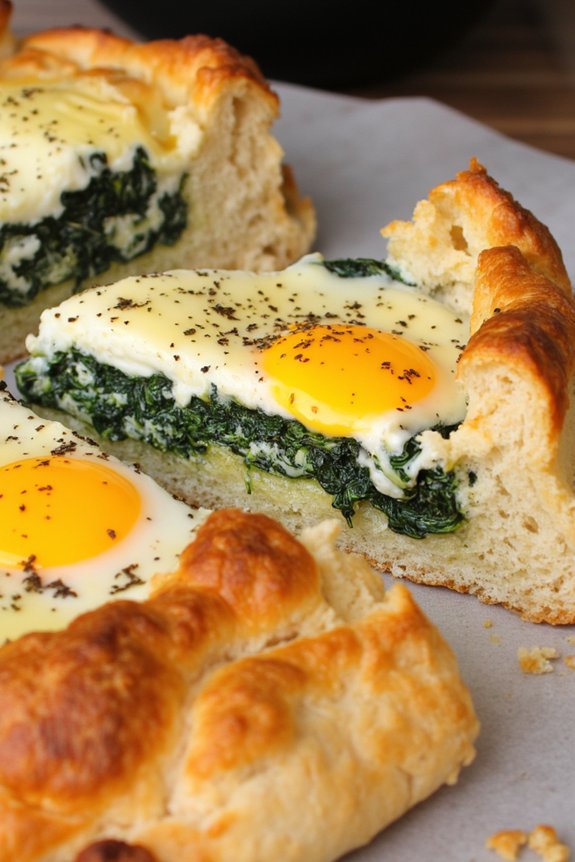
Torta Pasqualina, a classic Italian Easter pie, hails from the Liguria region and is beloved for its rich, savory filling encased in a delicate pastry. Traditionally, this pie is filled with a combination of spinach or Swiss chard, ricotta cheese, and eggs, with whole eggs added to the filling that cook to a delightful golden yolk inside the pie.
Torta Pasqualina is a celebration of spring, symbolizing rebirth and renewal, with its vibrant green filling and the eggs reminiscent of new life. It’s often enjoyed during Easter festivities as a symbol of good fortune and abundance.
This pie is prepared with a thin, flaky crust that resembles puff pastry, but is typically made from scratch using simple pantry ingredients. The preparation involves layering the filling and carefully cracking whole eggs into the pie, which bake to a picturesque finish when sliced.
It’s a versatile dish that can be served warm or at room temperature, making it a perfect addition to any Easter brunch or gathering. With its flavorful filling and impressive presentation, Torta Pasqualina is as much a feast for the eyes as it’s for the palate.
Ingredients for Torta Pasqualina (serves 4-6 people):
- 500g fresh spinach or Swiss chard
- 500g ricotta cheese
- 6 large eggs
- 100g grated Parmesan cheese
- 5 tablespoons olive oil
- 300g all-purpose flour
- 150ml water
- Salt and pepper to taste
- Nutmeg to taste
Cooking Instructions:
- Prepare the Dough: In a mixing bowl, combine the flour, a pinch of salt, and 2 tablespoons of olive oil. Gradually add water and knead until you form a smooth and elastic dough. Cover with a damp cloth and let it rest for about 30 minutes.
- Cook the Spinach: Wash the spinach leaves thoroughly, then blanch them in boiling water for 2-3 minutes until wilted. Drain and squeeze out excess water. Chop finely and set aside.
- Make the Filling: In a large bowl, combine the ricotta cheese, chopped spinach, grated Parmesan, and 1 beaten egg. Season with salt, pepper, and a pinch of nutmeg. Mix until well combined.
- Roll out the Dough: Divide the rested dough into four equal parts. Roll out two parts into thin sheets, slightly larger than your pie dish. Place one sheet at the bottom of a greased pie dish, ensuring it covers the sides.
- Assemble the Pie: Spread the spinach and ricotta filling evenly over the dough in the pie dish. Make four small wells in the filling and crack an egg into each well. Season the eggs with a little salt.
- Cover the Pie: Roll out the remaining dough portions into thin sheets. Cover the pie with one sheet, then brush with olive oil. Place the second sheet on top, and crimp the edges to seal the pie. Trim any excess dough.
- Bake the Pie: Preheat your oven to 180°C (350°F). Brush the top of the pie with a little olive oil and bake for about 45-50 minutes, or until the crust is golden brown and crispy.
- Cool and Serve: Allow the Torta Pasqualina to cool slightly before slicing. Serve warm or at room temperature.
Extra Tips:
When preparing Torta Pasqualina, make certain your spinach is well-drained to prevent excess moisture from making the filling too wet.
If you prefer, you can substitute Swiss chard for the spinach for a slightly different flavor. To elevate your pie, consider adding herbs like marjoram or thyme to the filling.
Confirm the eggs are cracked carefully into the wells to maintain their shape during baking. This pie can be made a day in advance and stored in the refrigerator, making it an excellent make-ahead dish for busy holiday preparations.
Colomba Di Pasqua

Colomba Di Pasqua, also known as the “Easter Dove,” is a traditional Italian cake enjoyed during the Easter holiday. Its shape resembles a dove, symbolizing peace and resurrection. This delightful sweet bread is similar to panettone, with a soft, fluffy interior and a fragrant, rich flavor.
Colomba Di Pasqua is often enriched with candied orange peels and topped with pearl sugar and almonds, creating a beautifully textured crust. It’s a festive treat that brings joy and warmth to any Easter celebration, embodying the essence of Italian culinary traditions.
Creating Colomba Di Pasqua at home is a rewarding experience that fills your kitchen with the comforting aroma of freshly baked bread. The process requires patience and attention to detail, as it involves several stages of rising and kneading to achieve the perfect texture.
Despite its complexity, the result is a stunning centerpiece for your Easter table, impressing your guests with its elegance and deliciousness. Whether you’re a seasoned baker or new to this Italian delicacy, following this recipe will guide you to a successful and satisfying baking journey.
Ingredients (Serves 4-6):
- 500g all-purpose flour
- 150g granulated sugar
- 150g softened butter
- 200ml warm milk
- 25g fresh yeast or 7g active dry yeast
- 3 large eggs
- 1 egg yolk
- Zest of 1 orange
- Zest of 1 lemon
- 100g candied orange peel
- 1 teaspoon vanilla extract
- 1/2 teaspoon salt
- 100g whole almonds
- 50g pearl sugar
- 1 tablespoon honey
Cooking Instructions:
- Prepare the Yeast Mixture: In a small bowl, dissolve the yeast in 100ml of the warm milk with a teaspoon of sugar. Let it sit for about 10 minutes until it becomes frothy, indicating that the yeast is active.
- Make the Dough: In a large mixing bowl, combine the flour, sugar, and salt. Add the frothy yeast mixture, the remaining milk, eggs, egg yolk, vanilla extract, orange zest, lemon zest, and softened butter. Mix until a dough begins to form.
- Knead the Dough: Transfer the dough onto a floured surface and knead for about 10 minutes until it’s smooth and elastic. Alternatively, you can use a stand mixer with a dough hook attachment for about 8 minutes.
- First Rise: Place the dough in a lightly greased bowl, cover it with a damp cloth, and let it rise in a warm place for about 2 hours or until it doubles in size.
- Incorporate the Candied Peel: Once the dough has risen, gently deflate it and incorporate the candied orange peel by kneading it into the dough.
- Shape the Dough: Divide the dough into two parts. Shape one part into an oval for the body of the dove and the other into two smaller pieces for the wings. Place the shaped dough into a dove-shaped mold or a regular loaf pan.
- Second Rise: Cover the dough again and let it rise for another hour until it has doubled in size.
- Prepare the Topping: Preheat the oven to 180°C (350°F). In a small bowl, mix 1 tablespoon of honey with 1 tablespoon of water. Brush this mixture over the dough, then sprinkle the pearl sugar and whole almonds over the top.
- Bake the Colomba: Bake in the preheated oven for 30-35 minutes, or until golden brown and a skewer inserted into the center comes out clean. If the top browns too quickly, cover with aluminum foil.
- Cool and Serve: Remove from the oven and let it cool on a wire rack before slicing and serving.
Extra Tips:
To guarantee your Colomba Di Pasqua is light and airy, make sure to knead the dough thoroughly until it’s smooth and elastic. This helps develop the gluten, which is essential for the bread’s structure.
Also, be patient with the rising times; the dough needs ample time to rise to achieve the perfect texture. If you’re using a regular loaf pan instead of a dove-shaped mold, you can still enjoy the delicious flavor and texture of this traditional cake, even if it lacks the iconic dove shape.
Pastiera Napoletana
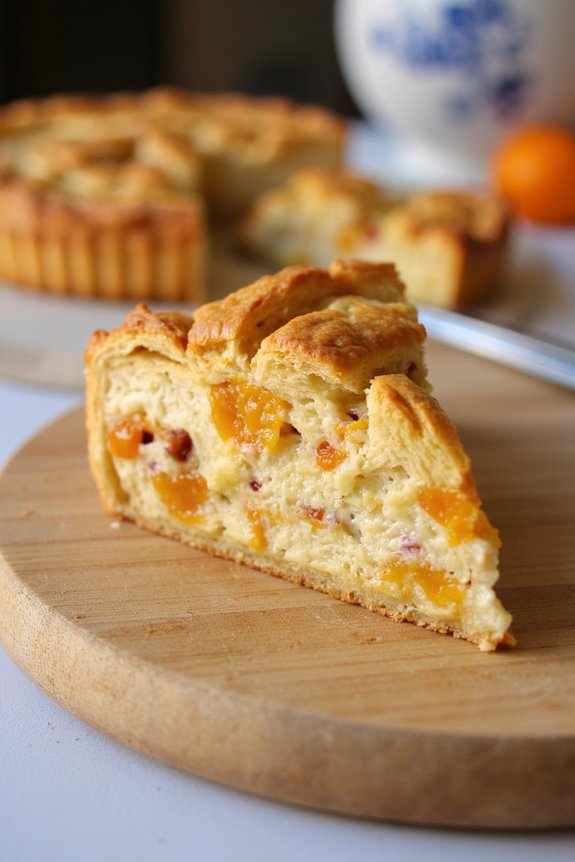
Pastiera Napoletana is a traditional Italian dessert that’s an integral part of the Easter celebration in Naples and throughout Italy. This delicious pie combines a rich, creamy filling made from ricotta cheese, cooked wheat, candied citrus peels, and a hint of orange blossom water, all encased in a buttery shortcrust pastry.
The unique texture and flavor of Pastiera Napoletana make it a beloved treat that has been passed down through generations, each family adding their own special touch to the recipe. The process of making Pastiera Napoletana is a labor of love, often starting a few days before Easter Sunday to allow the flavors to blend perfectly.
The preparation involves creating a delicate balance between the sweet, creamy filling and the crisp, tender crust. The aroma of orange blossom and vanilla fills the kitchen, bringing a sense of warmth and tradition that symbolizes the joy and renewal of the Easter season.
Whether you’re continuing a family tradition or trying this iconic dessert for the first time, Pastiera Napoletana is sure to be a memorable addition to any Easter feast.
Ingredients for 4-6 servings:
- 1 cup cooked wheat berries
- 1 cup whole milk
- 2 tablespoons unsalted butter
- 1 tablespoon granulated sugar
- 1 cup ricotta cheese
- 2/3 cup granulated sugar
- 3 large eggs
- 1 teaspoon vanilla extract
- 1 tablespoon orange blossom water
- 1 lemon, zested
- 1 orange, zested
- 1/4 cup candied citron and orange peel, finely chopped
- 1 1/2 cups all-purpose flour
- 1/2 cup powdered sugar
- 1/2 cup unsalted butter, cold and diced
- 2 large egg yolks
- Pinch of salt
Cooking Instructions:
1. Prepare the Pastry Dough: In a large bowl, combine the flour, powdered sugar, and salt. Add the cold, diced butter and rub it into the flour mixture with your fingertips until it resembles coarse breadcrumbs.
Add the egg yolks and mix until the dough comes together. Wrap the dough in plastic wrap and refrigerate for at least 30 minutes.
2. Cook the Wheat: In a saucepan, combine the cooked wheat berries, whole milk, 2 tablespoons of unsalted butter, and 1 tablespoon of sugar. Cook over low heat for about 20 minutes, stirring occasionally until the mixture is creamy and the wheat is tender.
Allow it to cool before using.
3. Prepare the Filling: In a large mixing bowl, combine the ricotta cheese and 2/3 cup of granulated sugar. Mix until smooth. Add the eggs, one at a time, beating well after each addition.
Stir in the vanilla extract, orange blossom water, lemon zest, and orange zest. Fold in the cooled wheat mixture and the chopped candied peel.
4. Assemble the Pie: Preheat your oven to 350°F (175°C). Roll out the chilled pastry dough on a floured surface to fit a 9-inch pie dish. Line the dish with the pastry, trimming any excess.
Pour the filling into the pastry shell. Use any remaining pastry to create lattice strips to decorate the top of the pie.
5. Bake the Pastiera: Place the pie in the preheated oven and bake for 60-70 minutes, or until the filling is set and the pastry is golden brown.
Allow the pie to cool completely, then refrigerate for at least 24 hours before serving to allow the flavors to develop fully.
Extra Tips:
For the best results, prepare the Pastiera Napoletana a day or two in advance. This allows the flavors to meld beautifully, resulting in a more aromatic and flavorful dessert.
If you can’t find pre-cooked wheat berries, you can cook your own by soaking them overnight and then simmering until tender. Additionally, make certain not to overwork the pastry dough to maintain its flaky texture.
When slicing the finished pie, use a sharp knife and wipe it clean between cuts for neat, attractive slices. Enjoy your Pastiera Napoletana with a dusting of powdered sugar for an extra touch of sweetness!
Casatiello Napoletano

Casatiello Napoletano is a traditional savory bread from Naples, Italy, typically enjoyed during Easter celebrations. This rich and flavorful bread is made with a dough similar to pizza or bread dough, enriched with eggs, lard, and filled with a variety of cured meats and cheeses. The hallmark of this dish is the whole eggs, complete with their shells, that are nestled into the dough before baking, symbolizing rebirth and renewal.
Casatiello Napoletano is perfect for a festive family meal, offering a hearty and satisfying blend of textures and flavors that are bound to delight. This recipe serves 4-6 people, making it ideal for a family gathering or Easter brunch. The bread requires some time to rise, so plan ahead to guarantee you have ample time for preparation and baking. With its crispy crust and savory filling, Casatiello Napoletano is a true celebration of Italian culinary tradition and a proof of the comforting flavors of home-cooked meals.
Ingredients:
- 500g all-purpose flour
- 15g fresh yeast or 7g active dry yeast
- 250ml lukewarm water
- 100g lard or unsalted butter, softened
- 10g salt
- 50g grated Pecorino Romano cheese
- 150g diced salami or prosciutto
- 150g diced provolone cheese
- 4 whole eggs
- Olive oil, for greasing
Cooking Instructions:
- Prepare the Dough: Dissolve the yeast in lukewarm water and let it sit for a few minutes until it becomes frothy. In a large mixing bowl, combine the flour and salt. Gradually add the yeast mixture to the flour, mixing until a dough starts to form. Knead in the softened lard or butter until the dough is smooth and elastic. This should take about 10 minutes by hand or 5 minutes with a stand mixer.
- First Rise: Place the dough in a lightly oiled bowl, cover it with a damp cloth, and let it rise in a warm place for about 2 hours, or until it has doubled in size.
- Prepare the Filling: While the dough is rising, dice the salami or prosciutto and provolone cheese. Grate the Pecorino Romano cheese and set it aside.
- Incorporate the Filling: Once the dough has risen, turn it out onto a floured surface. Roll it into a rectangle approximately 1 cm thick. Sprinkle the grated Pecorino, diced salami/prosciutto, and provolone evenly over the dough.
- Shape the Bread: Roll the dough tightly into a log from the long side. Form the log into a ring and seal the ends together. Place the dough ring into a greased round baking pan.
- Add the Eggs: Make four evenly spaced indentations in the dough ring and place a whole egg (in its shell) into each indentation. Secure each egg with two strips of dough, forming a cross, to hold them in place.
- Second Rise: Cover the dough ring with a damp cloth and let it rise again in a warm place for about 1 hour, or until it’s visibly puffed.
- Bake the Casatiello: Preheat your oven to 180°C (350°F). Bake the Casatiello for about 50-60 minutes, or until it’s golden brown and sounds hollow when tapped.
- Cool and Serve: Allow the Casatiello to cool slightly before cutting into it. Serve warm or at room temperature.
Extra Tips:
When making Casatiello Napoletano, the quality of the ingredients can greatly impact the final taste. Opt for high-quality cheeses and cured meats to enhance the flavors of the bread.
If you’re unable to find Pecorino Romano, Parmesan can be used as a substitute. Additionally, if lard is unavailable or not preferred, unsalted butter is a suitable alternative.
Remember to allow the dough ample time to rise in a warm, draft-free environment to achieve the perfect texture. Finally, the eggs should be fresh and preferably organic for the best results. Enjoy this delightful Easter bread with family and friends for a truly festive experience.
Agnello Al Forno
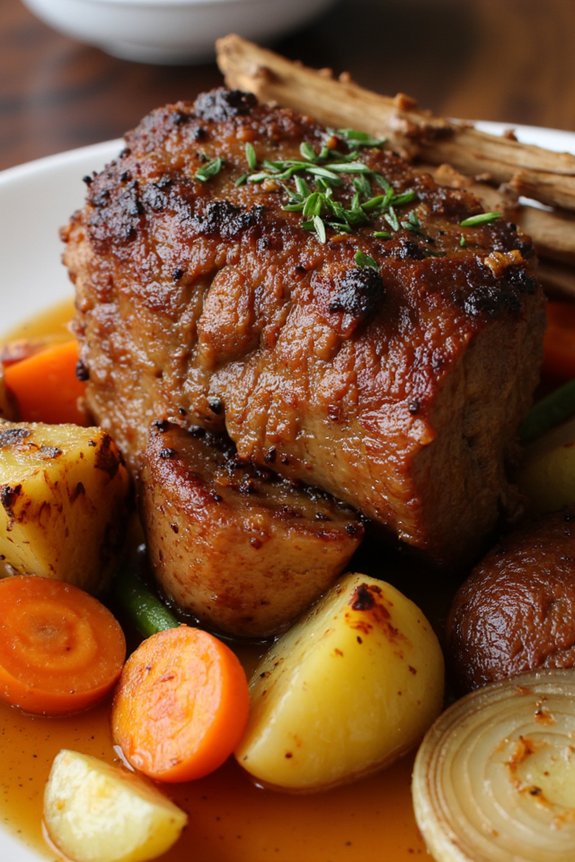
Agnello Al Forno, or baked lamb, is a traditional Italian dish often enjoyed during Easter celebrations. The dish is characterized by its tender, flavorful meat, infused with aromatic herbs and spices. This recipe brings together the robust taste of lamb with the delicate flavors of olive oil, garlic, and rosemary, creating a succulent and savory dish perfect for a festive occasion.
The slow-roasting process allows the lamb to develop a rich, mouth-watering flavor that’s bound to impress your guests. This recipe for Agnello Al Forno is designed to serve 4-6 people, making it ideal for a family gathering or a special holiday meal. The preparation is quite simple, relying on quality ingredients and a little patience to achieve the perfect roast.
With this approach, you’ll create a dish that’s both authentically Italian and utterly delicious, capturing the essence of a traditional Easter feast.
Ingredients (Serves 4-6):
- 2 kg (4.4 lbs) of bone-in lamb shoulder or leg
- 4 tablespoons of extra-virgin olive oil
- 6 cloves of garlic, minced
- 2 tablespoons of fresh rosemary, chopped
- 1 tablespoon of fresh thyme leaves
- 1 cup of dry white wine
- 1 lemon, juiced
- Salt and freshly ground black pepper, to taste
- 4 medium potatoes, peeled and cut into wedges
- 2 large onions, sliced
- 2 carrots, peeled and cut into chunks
Cooking Instructions:
- Preheat the Oven: Start by preheating your oven to 180°C (350°F). This guarantees a consistent cooking temperature for the lamb.
- Season the Lamb: Rub the lamb shoulder or leg with olive oil, making sure it’s evenly coated. Mix the minced garlic, rosemary, thyme, salt, and pepper, then massage this mixture into the lamb, covering all sides for maximum flavor infusion.
- Prepare the Vegetables: In a large roasting pan, arrange the potato wedges, onion slices, and carrot chunks. Drizzle with a little olive oil and season with salt and pepper. Toss the vegetables to coat them thoroughly.
- Place the Lamb: Position the seasoned lamb on top of the vegetable bed in the roasting pan. This will allow the juices from the lamb to flavor the vegetables as they cook.
- Add Wine and Lemon: Pour the white wine and lemon juice over the lamb and vegetables. The acidity of the wine and lemon helps to tenderize the meat and adds a bright flavor to the dish.
- Roast the Lamb: Place the roasting pan in the preheated oven. Roast for about 2-2.5 hours, or until the lamb is tender and has reached an internal temperature of at least 65°C (150°F). Baste the lamb occasionally with its own juices to keep it moist.
- Rest the Lamb: Once cooked, remove the roasting pan from the oven. Allow the lamb to rest for 15-20 minutes before carving. This resting period helps the juices redistribute throughout the meat, making sure it remains juicy and tender.
Extra Tips:
For an even more flavorful dish, consider marinating the lamb overnight in the olive oil, garlic, rosemary, thyme, salt, and pepper mixture. This allows the flavors to penetrate deeper into the meat.
If you prefer your lamb well-done, extend the roasting time accordingly, but always keep an eye on the internal temperature to avoid overcooking. When serving, garnish with fresh herbs for added freshness and visual appeal.
Uova Sode Ripiene
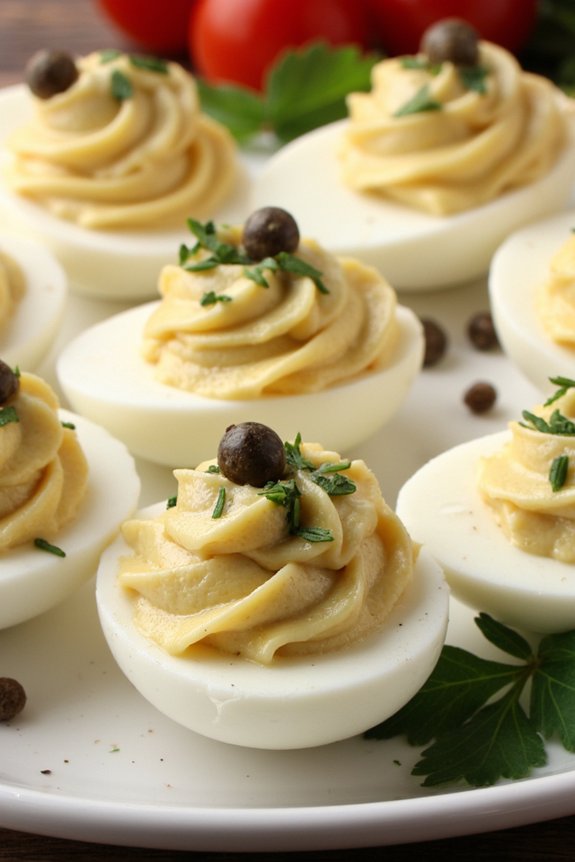
Uova Sode Ripiene, or Italian Stuffed Eggs, is a delightful and savory dish that’s perfect for your Easter celebration. This traditional Italian appetizer is a wonderful way to start a festive meal, combining the creamy richness of hard-boiled eggs with flavorful fillings. Each bite is a perfect blend of textures and tastes, making it a favorite among both adults and children.
Whether served as a starter or as part of a larger spread, Uova Sode Ripiene is certain to bring a touch of Italian flair to your Easter table. The beauty of this dish lies in its simplicity and the versatility of its filling. Typically, the yolks of hard-boiled eggs are mixed with ingredients like tuna, capers, and mayonnaise, creating a creamy and savory mixture that’s then piped back into the egg whites.
The result is a visually appealing and delicious appetizer that can be enhanced with various herbs and spices. Uova Sode Ripiene can be prepared in advance, allowing you to enjoy your holiday gathering without the stress of last-minute cooking.
Ingredients for 4-6 servings:
- 6 large eggs
- 1 can (about 5 ounces) of tuna in olive oil, drained
- 1 tablespoon capers, rinsed and chopped
- 3 tablespoons mayonnaise
- 1 tablespoon fresh lemon juice
- Salt and pepper to taste
- Fresh parsley, chopped, for garnish
- Extra capers for garnish (optional)
Cooking Instructions:
- Boil the Eggs: Place the eggs in a saucepan and cover them with cold water. Bring the water to a boil over medium-high heat. Once boiling, turn off the heat and cover the saucepan. Let the eggs sit in the hot water for 9-12 minutes.
- Cool and Peel: After the eggs are done cooking, transfer them to a bowl of ice water to cool for about 5 minutes. Once cooled, gently peel the eggs and cut them in half lengthwise.
- Prepare the Filling: Carefully remove the yolks from the egg halves and place them in a mixing bowl. Add the drained tuna, chopped capers, mayonnaise, lemon juice, salt, and pepper. Mix thoroughly until the filling is smooth and creamy.
- Stuff the Eggs: Spoon or pipe the filling back into the egg white halves. Be generous with the filling to guarantee each egg half is well-stuffed.
- Garnish and Serve: Arrange the stuffed eggs on a serving platter. Garnish with chopped parsley and extra capers if desired. Serve immediately or refrigerate until ready to serve.
Extra Tips:
When preparing Uova Sode Ripiene, make sure that the eggs aren’t overcooked to prevent a greenish ring from forming around the yolks. Using eggs that are a few days old makes peeling easier.
You can adjust the filling’s flavor by adding more lemon juice for tanginess or extra mayonnaise for creaminess. If you prefer a spicier kick, consider incorporating a bit of Dijon mustard or a sprinkle of paprika into the filling.
This dish can be made a day in advance and stored in the refrigerator, making it a convenient option for busy holiday cooking schedules.
Risotto Alla Milanese
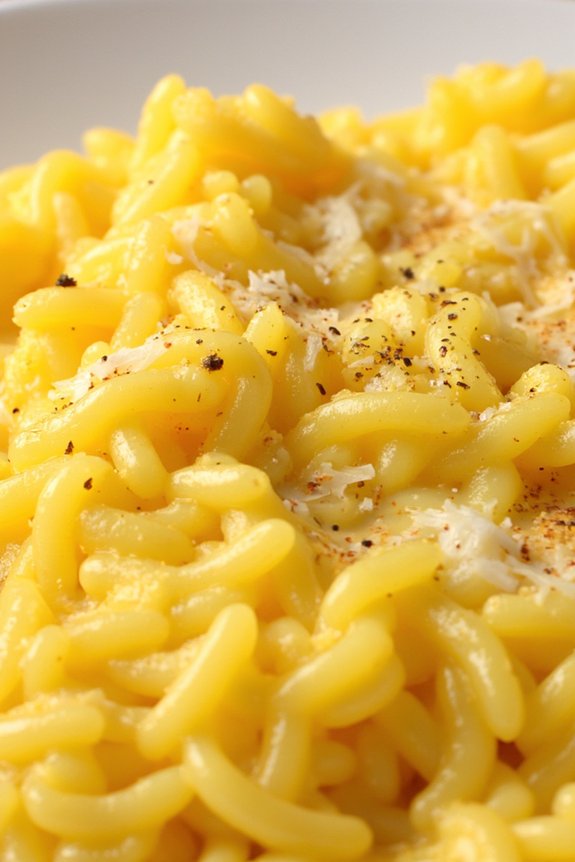
Risotto Alla Milanese is a classic Italian dish, perfect for celebrating Easter with family and friends. This creamy and luxurious risotto is distinguished by its beautiful golden hue, which comes from the addition of saffron threads. Originating from Milan, this dish is often served as a first course or alongside veal dishes, such as Osso Buco. The combination of Arborio rice, saffron, and rich beef broth creates a savory and aromatic flavor profile that’s both comforting and elegant.
To achieve the perfect Risotto Alla Milanese, it’s vital to use high-quality ingredients and practice patience while cooking. The key to a perfect risotto is the gradual addition of hot broth, which allows the rice to release its starches, resulting in a creamy texture. Stirring frequently helps to achieve this consistency, guaranteeing that each grain of rice is cooked to perfection. With a little attention to detail, this classic Italian dish will certainly become a staple in your Easter celebrations.
Ingredients (Serves 4-6):
- 2 cups Arborio rice
- 1/2 teaspoon saffron threads
- 6 cups beef broth
- 1/2 cup dry white wine
- 1 medium onion, finely chopped
- 3 tablespoons unsalted butter
- 1/2 cup grated Parmesan cheese
- Salt, to taste
- Black pepper, to taste
Cooking Instructions:
- Prepare the Saffron: In a small bowl, soak the saffron threads in 2 tablespoons of warm beef broth. Allow it to steep while you prepare the other ingredients, as this will help release the saffron’s color and flavor.
- Heat the Broth: In a medium saucepan, bring the beef broth to a gentle simmer. Keep it warm over low heat throughout the cooking process.
- Sauté the Onion: In a large, heavy-bottomed skillet or saucepan, melt 2 tablespoons of butter over medium heat. Add the finely chopped onion and sauté until it becomes translucent, about 5 minutes.
- Toast the Rice: Add the Arborio rice to the skillet with the onions. Stir constantly for about 2 minutes, guaranteeing each grain is coated with butter and becomes slightly translucent at the edges.
- Deglaze with Wine: Pour in the white wine and stir continuously until the wine is almost completely absorbed by the rice.
- Add Broth Gradually: Begin adding the warm beef broth, one ladleful at a time, to the rice. Stir constantly and allow each addition of broth to be absorbed before adding the next. Continue this process until the rice is creamy and cooked through, about 18-20 minutes.
- Incorporate the Saffron: Halfway through the broth addition, pour in the saffron-infused broth and stir well to evenly distribute the saffron throughout the risotto.
- Finish with Butter and Cheese: Once the rice is cooked to your desired consistency, remove the pan from heat. Stir in the remaining tablespoon of butter and the grated Parmesan cheese. Season with salt and black pepper to taste.
- Serve Immediately: Risotto is best enjoyed fresh, so serve it immediately while it’s still creamy and hot.
Extra Tips:
When making Risotto Alla Milanese, it’s essential to maintain a gentle simmer of the broth and avoid rushing the process by adding too much broth at once. Patience and constant stirring are key to achieving the perfect creamy texture. If you run out of broth before the rice is fully cooked, you can add a bit of hot water to finish cooking the rice. Finally, make sure your Parmesan cheese is freshly grated for the best flavor and texture in your risotto.
Panettone Ripieno
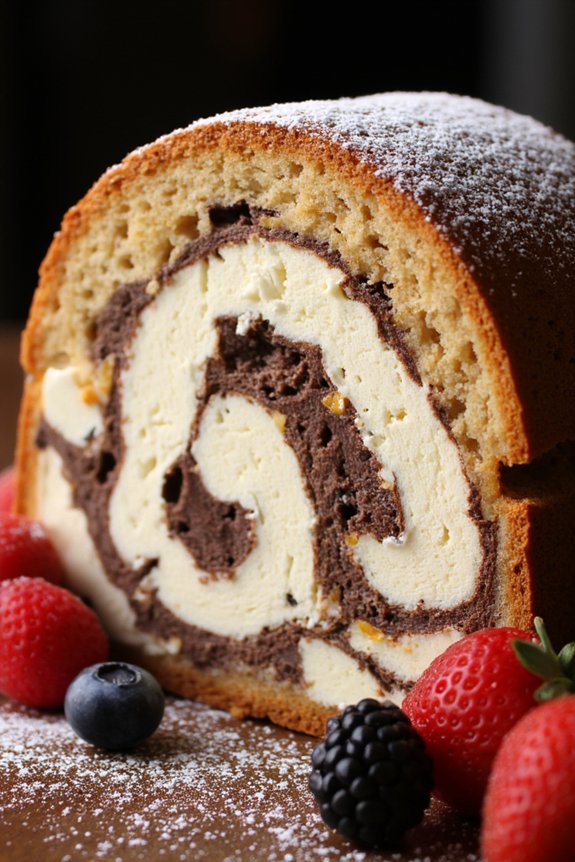
Panettone Ripieno is a delightful Italian Easter dessert that elevates the traditional panettone by transforming it into a decadent filled version. This dessert is as much a treat for the eyes as it’s for the palate. The classic dome-shaped Italian bread, known for its rich and buttery flavor, is hollowed out and filled with a luscious mascarpone cream, making it an irresistible centerpiece for your Easter table.
The combination of the light, airy cake with the creamy filling creates a harmonious blend of textures and flavors that’s certain to impress your guests. Creating Panettone Ripieno is a special way to celebrate Easter with your family and friends. The process involves carefully preparing the panettone by removing its interior, which is then mixed with a variety of ingredients to create a rich filling.
This mixture is then returned to the shell of the panettone, allowing each slice to reveal a creamy surprise. With a few simple steps, you can transform a regular store-bought panettone into a gourmet dessert that will be the highlight of your Easter spread.
Ingredients (Serves 4-6):
- 1 large panettone
- 250g mascarpone cheese
- 100ml heavy cream
- 100g dark chocolate, chopped
- 50g sugar
- 2 tablespoons rum or Marsala wine
- 1 teaspoon vanilla extract
- Zest of 1 orange
- Powdered sugar, for dusting
- Fresh berries or candied fruit, for garnish (optional)
Cooking Instructions:
- Prepare the Panettone: Start by carefully cutting off the top of the panettone and setting it aside. Hollow out the inside of the panettone, leaving about 1-inch thick walls all around. Be gentle to guarantee the outer shell remains intact. Crumble the removed interior into small pieces and set aside.
- Make the Mascarpone Cream: In a mixing bowl, combine the mascarpone cheese, heavy cream, sugar, and vanilla extract. Beat the mixture until it’s smooth and fluffy. If you prefer a sweeter filling, you can adjust the sugar to taste.
- Prepare the Chocolate: Melt the chopped dark chocolate in a heatproof bowl over a pot of simmering water, or in the microwave in short bursts. Stir until smooth, then let it cool slightly.
- Combine Ingredients: Add the crumbled panettone pieces to the mascarpone mixture, followed by the melted chocolate, rum or Marsala wine, and orange zest. Mix everything together until well combined.
- Fill the Panettone: Spoon the mascarpone mixture back into the hollowed-out panettone shell, pressing down gently to guarantee it’s packed in tightly. Place the reserved top back on the panettone.
- Chill the Dessert: Wrap the filled panettone in plastic wrap and refrigerate for at least 2 hours, or until the filling is set and chilled.
- Serve: Before serving, dust the top of the panettone with powdered sugar. Slice it carefully and garnish with fresh berries or candied fruit if desired.
Extra Tips:
To make the most out of your Panettone Ripieno, verify that the mascarpone and heavy cream are chilled before mixing, as this will help achieve a fluffier texture.
If you don’t have a sharp knife to slice the panettone neatly, use a serrated bread knife to prevent crumbling. For added flavor, consider infusing the mascarpone cream with your favorite liqueurs or extracts.
Additionally, you can personalize the filling by adding nuts, dried fruits, or even a hint of espresso to the mascarpone mixture. Enjoy this Italian Easter treat with a cup of coffee or a glass of dessert wine for a truly indulgent experience.
Frittata Di Pasqua
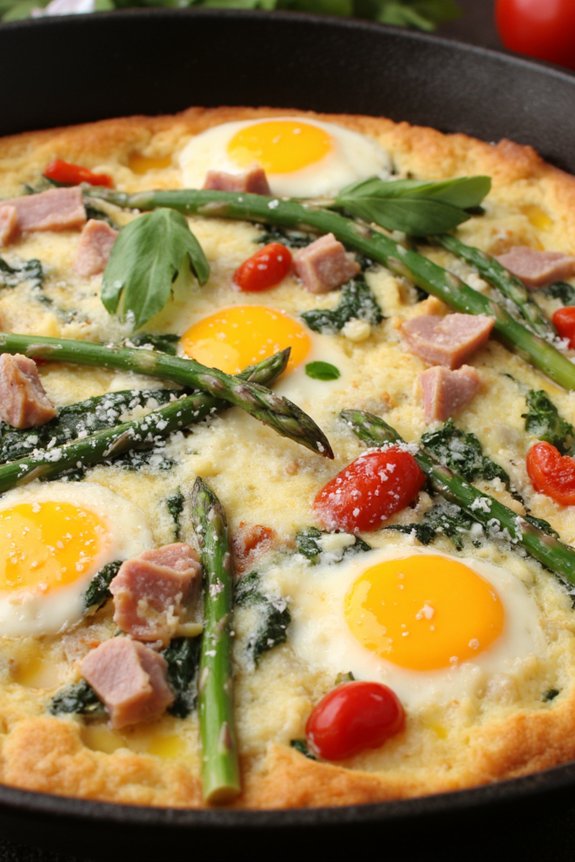
Frittata di Pasqua, also known as Italian Easter Frittata, is a cherished tradition in many Italian households. This delightful dish is typically enjoyed during Easter celebrations and is renowned for its rich flavors and simple preparation. The frittata combines a variety of fresh and vibrant ingredients, which symbolize the renewal of spring, making it a perfect addition to your Easter menu.
Traditionally, it incorporates seasonal vegetables, meats, and cheeses, creating a harmonious blend of textures and tastes. Whether served hot or at room temperature, Frittata di Pasqua is a versatile dish that can be enjoyed as a main course, side dish, or even a savory breakfast option.
This hearty frittata isn’t only delicious but also incredibly easy to prepare, making it an ideal choice for both novice and experienced cooks. Its adaptability allows you to customize the ingredients to suit your preferences or to accommodate what you have on hand.
The key to a perfect frittata lies in its fluffy texture and the balance of flavors, which can be achieved by carefully whisking the eggs and evenly distributing the fillings. Gather your family and friends around the table and celebrate Easter with this traditional Italian favorite that captures the essence of the season.
Ingredients (Serves 4-6):
- 8 large eggs
- 1 cup grated Parmesan cheese
- 1 cup diced cooked ham
- 1 cup chopped spinach
- 1/2 cup chopped asparagus
- 1/2 cup diced red bell pepper
- 1/2 cup chopped onions
- 2 cloves garlic, minced
- 1/4 cup fresh parsley, chopped
- Salt and pepper, to taste
- 2 tablespoons olive oil
Cooking Instructions:
1. Preheat the Oven: Start by preheating your oven to 350°F (175°C). This will guarantee that the frittata cooks evenly and develops a golden top.
2. Prepare the Egg Mixture: In a large bowl, whisk together the eggs, Parmesan cheese, salt, and pepper until well combined and slightly frothy. This aerates the mixture, contributing to a fluffy frittata.
3. Sauté the Vegetables: Heat the olive oil in an oven-safe skillet over medium heat. Add the onions and garlic, sautéing until the onions are translucent.
Then, add the asparagus, red bell pepper, and spinach, cooking until the vegetables are tender and any excess moisture has evaporated.
4. Combine Ingredients: Add the diced ham to the skillet, stirring to combine with the vegetables. Pour the egg mixture over the ingredients in the skillet, gently stirring to distribute everything evenly.
5. Cook on Stovetop: Let the frittata cook on the stovetop for about 5-7 minutes, or until the edges start to set but the center remains slightly runny.
6. Bake the Frittata: Transfer the skillet to the preheated oven and bake for 10-12 minutes, or until the frittata is fully set and has a slight golden hue on top.
7. Garnish and Serve: Remove from the oven and let it cool for a few minutes. Sprinkle with fresh parsley before slicing and serving.
Extra Tips:
To prevent the frittata from sticking, make sure your skillet is well-oiled or consider using a non-stick skillet. If you’re adding any additional ingredients such as different vegetables or cheeses, be mindful of the moisture content, as excess moisture can lead to a soggy frittata.
Always allow the frittata to cool slightly before slicing, as this helps it set further and makes it easier to cut cleanly. Remember, Frittata di Pasqua is just as delicious at room temperature, making it a great candidate for picnics or potlucks. Enjoy experimenting with ingredients to make this classic dish uniquely yours!
Grissini Torinesi
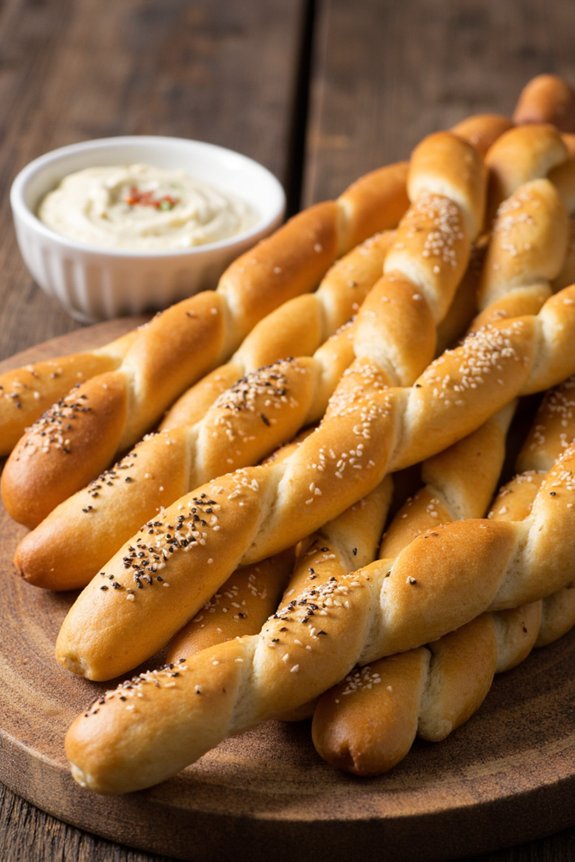
Grissini Torinesi, also known as traditional Italian breadsticks, are a beloved staple that originated in the city of Turin, Italy. These thin, crispy breadsticks are often served as an appetizer or snack and are perfect for dipping into olive oil or accompanying a charcuterie board.
With their delightful crunch and subtle flavor, Grissini Torinesi are a wonderful addition to any Easter celebration, adding a touch of Italian flavor to the festivities.
Making Grissini Torinesi at home is relatively simple and requires just a few basic ingredients. The key to achieving the perfect texture lies in the dough’s consistency and the thinness of the breadsticks. This recipe serves 4-6 people and provides detailed instructions to guarantee your Grissini Torinesi turn out deliciously crisp and golden brown.
Ingredients:
- 500g all-purpose flour
- 7g active dry yeast
- 1 teaspoon sugar
- 1 teaspoon salt
- 300ml warm water
- 3 tablespoons olive oil
- 1 egg (for egg wash)
- Optional: sesame seeds, poppy seeds, or coarse salt for topping
Instructions:
- Prepare the yeast mixture: In a small bowl, combine the warm water, sugar, and active dry yeast. Stir gently and let it sit for about 5-10 minutes until the mixture becomes frothy, indicating that the yeast is activated.
- Mix the dough: In a large mixing bowl, combine the flour and salt. Make a well in the center and pour in the yeast mixture and olive oil. Using a wooden spoon or your hands, mix until the dough starts to come together.
- Knead the dough: Transfer the dough onto a lightly floured surface and knead for about 10 minutes until it becomes smooth and elastic. If the dough is too sticky, add a little more flour as needed.
- Let the dough rise: Place the kneaded dough in a lightly oiled bowl, cover it with a damp cloth or plastic wrap, and let it rise in a warm place for about 1 hour, or until it has doubled in size.
- Preheat the oven: Preheat your oven to 200°C (390°F) and line a baking sheet with parchment paper.
- Shape the Grissini: Once the dough has risen, punch it down to remove excess air. Take small portions of the dough and roll them out into thin strips, about the thickness of a pencil. Place the strips on the prepared baking sheet, leaving some space between each.
- Apply egg wash and toppings: Beat the egg in a small bowl and brush it over each breadstick to give them a nice golden color. Sprinkle your choice of sesame seeds, poppy seeds, or coarse salt on top for added flavor.
- Bake the Grissini: Place the baking sheet in the preheated oven and bake the Grissini for 15-20 minutes, or until they’re golden brown and crispy.
- Cool and serve: Once baked, remove the Grissini from the oven and let them cool on a wire rack. Serve them as an appetizer or snack with your favorite dips or alongside a charcuterie board.
Extra Tips:
To achieve evenly crispy Grissini, make sure to roll the dough strips as uniformly as possible. If you prefer a more rustic look, you can twist the dough strips slightly before baking.
Be mindful of the baking time, as Grissini can quickly turn from golden to overly browned if left in the oven for too long. Additionally, these breadsticks can be stored in an airtight container for up to a week, maintaining their delightful crunch for days.
Zeppole Di San Giuseppe

Zeppole di San Giuseppe are delightful Italian pastries traditionally made to celebrate St. Joseph’s Day, which falls on March 19th. These delicious pastries are perfect for Easter celebrations as well, featuring a light and airy choux pastry that’s fried or baked and then filled with a rich and creamy custard. Topped with a cherry or a dusting of powdered sugar, Zeppole di San Giuseppe are a sweet treat that encapsulates the flavors of spring and celebration.
Originating from Southern Italy, especially from Naples, these pastries have become a beloved tradition across the country, with various regional adaptations. The key to making perfect Zeppole di San Giuseppe is guaranteeing the pastry is light and the custard is perfectly smooth and flavorful. Whether you’re making these for a special occasion or simply to enjoy with family and friends, this recipe will help you create a delightful batch of Zeppole for a serving size of 4-6 people.
Ingredients:
For the Choux Pastry:
- 1 cup water
- 1/2 cup unsalted butter
- 1/4 teaspoon salt
- 1 cup all-purpose flour
- 4 large eggs
For the Pastry Cream Filling:
- 2 cups whole milk
- 1/2 cup granulated sugar
- 1/4 cup all-purpose flour
- 4 large egg yolks
- 1 teaspoon vanilla extract
- Zest of 1 lemon
For Frying and Garnishing:
- Vegetable oil for frying
- Powdered sugar for dusting
- Maraschino cherries or candied cherries
Cooking Instructions:
- Prepare the Choux Pastry: In a medium saucepan, bring the water, butter, and salt to a boil over medium heat. Once boiling, remove from heat and immediately add the flour, stirring vigorously with a wooden spoon until a dough forms and pulls away from the sides of the pan.
- Incorporate the Eggs: Allow the dough to cool slightly. Add the eggs one at a time, beating well after each addition until the dough is smooth and glossy. The dough should be thick but pipeable.
- Shape the Zeppole: Transfer the choux pastry into a piping bag fitted with a large star tip. Pipe circles of dough, about 3 inches in diameter, onto parchment paper.
- Fry the Pastries: Heat vegetable oil in a deep fryer or a large, deep saucepan to 350°F (175°C). Carefully drop the dough circles into the hot oil, a few at a time, and fry until golden brown, about 5 minutes per side. Remove with a slotted spoon and drain on paper towels.
- Make the Pastry Cream: In a saucepan, heat the milk until just boiling. In a separate bowl, whisk together the sugar, flour, and egg yolks until smooth. Gradually pour the hot milk into the yolk mixture, whisking constantly. Return the mixture to the saucepan and cook over medium heat, stirring constantly, until thickened. Remove from heat and stir in vanilla extract and lemon zest. Let cool.
- Assemble the Zeppole: Once the pastries and custard are cool, slice each pastry in half horizontally. Pipe or spoon the pastry cream onto the bottom half of each pastry, then cover with the top half.
- Garnish and Serve: Dust the filled pastries with powdered sugar and top each with a cherry. Serve immediately to enjoy the fresh and delightful taste of Zeppole di San Giuseppe.
Extra Tips:
When making the choux pastry, it’s important to allow the dough to cool slightly before adding the eggs to prevent them from cooking too quickly. If you prefer baked Zeppole, preheat your oven to 375°F (190°C) and bake the piped dough circles for about 25-30 minutes, or until golden and puffed.
Also, guarantee the oil is at the correct temperature for frying to avoid greasy pastries. For variations, you can add a hint of cinnamon or almond extract to the custard for additional flavor.
