

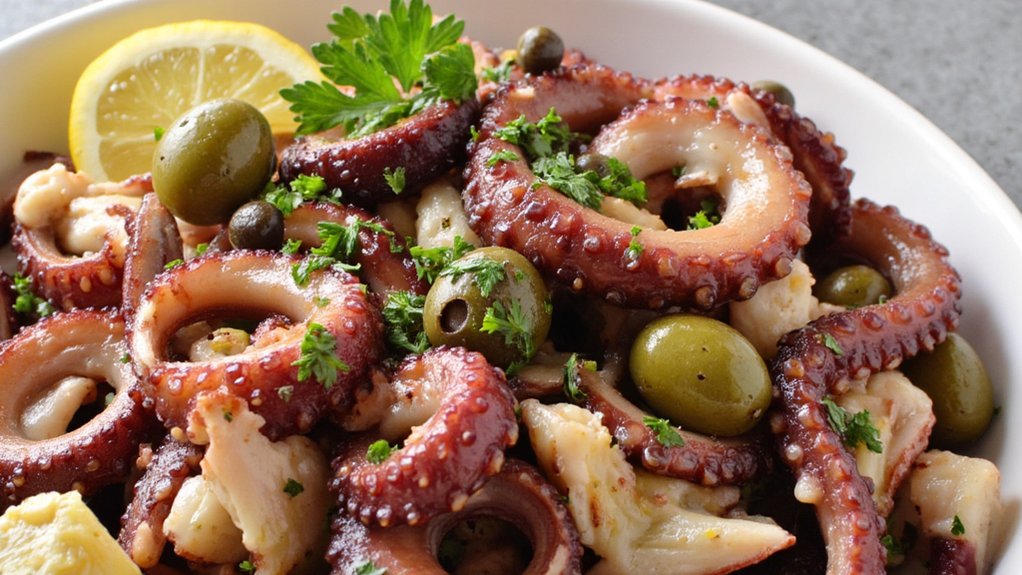
Craving a taste of the Italian coast from the comfort of your home?
I’ve gathered 12 delicious seafood recipes that are sure to bring the vibrant flavors of Italy straight to your kitchen.
From refreshing grilled calamari to a comforting Tuscan seafood stew, each dish offers a little escape to sun-soaked shores.
Ready to indulge in these seaside delights?
Classic Italian Cioppino
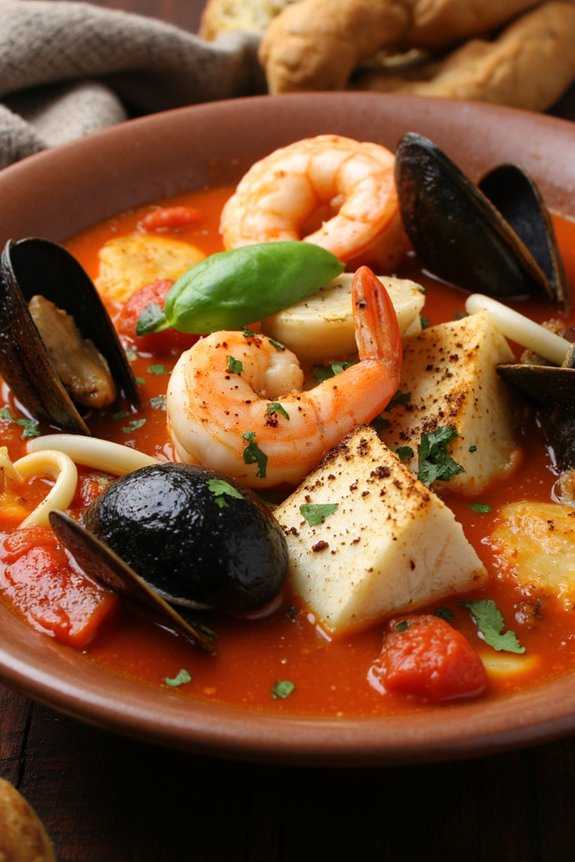
Cioppino is a classic Italian-American seafood stew, brimming with a medley of oceanic delights. Originating from the bustling fishing ports of San Francisco, this dish combines the rich flavors of the sea with a robust, aromatic tomato broth. It’s a perfect representation of Italian culinary tradition blended with the fresh catch of the Pacific.
Traditionally, cioppino is made using a variety of seafood, often dictated by the freshest available catch. This makes it not only a versatile dish but also one that bursts with vibrant flavors and textures, offering a hearty and satisfying meal for all seafood lovers.
The beauty of cioppino lies in its simplicity and ability to bring together different kinds of seafood in a harmonious symphony of taste. The base of the stew is a tomato and wine broth infused with herbs, garlic, and a touch of heat from red pepper flakes. As the seafood simmers, it absorbs these flavors, creating a rich and comforting dish that warms the soul and satisfies the palate.
Perfect for gatherings or a special family dinner, cioppino is best enjoyed with crusty bread to sop up the delicious broth.
Ingredients for 4-6 servings:
- 1/4 cup olive oil
- 1 large onion, chopped
- 4 cloves garlic, minced
- 1 teaspoon dried oregano
- 1 teaspoon red pepper flakes
- 2 bay leaves
- 1 (28-ounce) can crushed tomatoes
- 1 1/2 cups dry white wine
- 4 cups seafood stock or clam juice
- 1 pound mussels, scrubbed and debearded
- 1 pound clams, scrubbed
- 1 pound shrimp, peeled and deveined
- 1 pound firm white fish (such as halibut or cod), cut into chunks
- 1/2 pound squid, cleaned and sliced into rings
- Salt and freshly ground black pepper, to taste
- 1/4 cup chopped fresh basil
- 1/4 cup chopped fresh parsley
- Crusty bread, for serving
Cooking Instructions:
- Prepare the Base: In a large pot or Dutch oven, heat the olive oil over medium heat. Add the chopped onion and sauté until translucent, about 5 minutes. Stir in the minced garlic, oregano, red pepper flakes, and bay leaves, cooking for another 2 minutes until fragrant.
- Create the Broth: Pour in the crushed tomatoes, white wine, and seafood stock. Stir to combine, bring the mixture to a simmer, and let it cook uncovered for about 30 minutes, allowing the flavors to meld.
- Add the Seafood: Increase the heat to medium-high, and add the mussels and clams to the pot. Cover and cook until they start to open, about 5 minutes. Then, add the shrimp, fish, and squid. Stir gently and cover again, cooking until the shrimp turn pink and the fish is opaque, about 5-7 minutes.
- Season and Finish: Season the cioppino with salt and freshly ground black pepper to taste. Stir in the fresh basil and parsley. Discard any unopened mussels or clams.
- Serve: Ladle the cioppino into bowls, ensuring each serving has a mix of seafood. Serve hot with crusty bread to soak up the flavorful broth.
Extra Tips:
When making cioppino, make certain all your seafood is as fresh as possible for the best flavor. If you can’t find fresh seafood, high-quality frozen options can also work well.
Remember to clean the mussels and clams thoroughly to avoid grit in your stew. Additionally, if you want a spicier kick, you can adjust the amount of red pepper flakes to your liking.
Finally, make sure to have plenty of crusty bread on hand, as it’s essential for enjoying every drop of the delicious broth.
Lemon and Herb Grilled Calamari

Lemon and Herb Grilled Calamari is a delightful Italian seafood dish that brings the vibrant flavors of the Mediterranean to your table. This dish features tender calamari marinated in a zesty blend of lemon juice, olive oil, garlic, and fresh herbs, then grilled to perfection. The smoky char from the grill enhances the natural sweetness of the squid, creating a dish that’s both light and flavorful. Perfect for a summer barbecue or a cozy dinner at home, this recipe is bound to impress your guests with its simplicity and elegance.
The key to making the perfect Lemon and Herb Grilled Calamari lies in the freshness of the ingredients. Fresh calamari is essential, as it provides a tender texture that’s far superior to frozen varieties. The marinade, composed of fresh herbs such as parsley and basil, along with lemon zest, infuses the calamari with a bright and aromatic flavor. When grilled, the calamari develops a slightly crispy exterior while remaining juicy and tender on the inside. Serve it with a side of lemon wedges for an extra burst of citrus and a drizzle of olive oil for added richness.
Ingredients (for 4-6 servings):
- 1.5 pounds fresh calamari, cleaned and cut into rings
- 1/4 cup extra virgin olive oil
- 3 tablespoons fresh lemon juice
- Zest of 1 lemon
- 3 cloves garlic, minced
- 1/4 cup fresh parsley, chopped
- 2 tablespoons fresh basil, chopped
- Salt and pepper to taste
- Lemon wedges, for serving
Cooking Instructions:
- Prepare the Marinade: In a large bowl, whisk together the olive oil, lemon juice, lemon zest, minced garlic, chopped parsley, and chopped basil. Season with salt and pepper to taste.
- Marinate the Calamari: Add the cleaned calamari rings to the bowl with the marinade. Toss to guarantee the calamari is evenly coated. Cover the bowl with plastic wrap and refrigerate for at least 30 minutes, allowing the flavors to meld.
- Preheat the Grill: Heat your grill to medium-high heat. If using a charcoal grill, verify the coals are evenly distributed and covered with white ash before grilling.
- Grill the Calamari: Remove the calamari from the marinade and let any excess drip off. Place the calamari rings directly on the grill grates. Grill for about 2-3 minutes on each side, or until they’re opaque and have light grill marks. Be careful not to overcook, as calamari can become rubbery.
- Serve: Transfer the grilled calamari to a serving platter. Garnish with additional chopped parsley and serve with lemon wedges on the side for squeezing over the calamari.
Extra Tips:
For the best results, make sure to pat the calamari dry with paper towels before marinating to help the marinade adhere better. If fresh herbs aren’t available, you can substitute with dried herbs, but reduce the quantity to about 1/3 as dried herbs are more concentrated.
Additionally, using a grill basket can prevent the calamari from slipping through the grates. Keep a close eye on the calamari as it grills, as it cooks quickly and can easily overcook. Serve immediately for the best taste and texture.
Spaghetti Alle Vongole
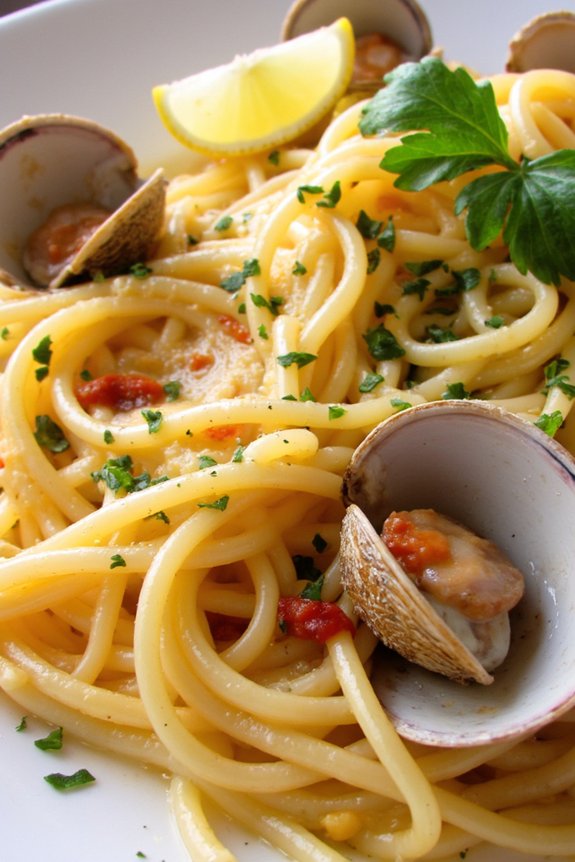
Spaghetti Alle Vongole is a classic Italian seafood dish that beautifully combines the simplicity of pasta with the rich, briny flavors of fresh clams. Originating from the coastal regions of Italy, this dish is a reflection of the country’s love for seafood and its ability to create delicious meals with minimal ingredients.
The combination of garlic, parsley, and white wine enhances the natural taste of the clams, making this dish a favorite among seafood lovers. Whether you’re hosting a dinner party or preparing a cozy meal for your family, Spaghetti Alle Vongole is bound to impress with its exquisite taste and elegant presentation.
To guarantee the best results, it’s essential to use the freshest clams you can find, preferably from a reliable fish market. The clams should be alive when you purchase them, and any that are open should close when tapped—this indicates they’re still fresh.
The pasta should be cooked al dente to provide a perfect balance to the tender clams. This recipe serves 4-6 people, making it perfect for a family meal or a small gathering.
Ingredients:
- 500g spaghetti
- 1 kg fresh clams, cleaned and scrubbed
- 4 tablespoons extra virgin olive oil
- 4 cloves garlic, thinly sliced
- 1/2 teaspoon red pepper flakes
- 200ml dry white wine
- Salt to taste
- Freshly ground black pepper to taste
- A handful of fresh parsley, chopped
- Lemon wedges for serving
Cooking Instructions:
- Prepare the Clams: Begin by soaking the clams in a large bowl of cold water for about 20 minutes. This helps to purge any sand or grit. After soaking, scrub each clam under cold running water and discard any that remain open when tapped.
- Cook the Pasta: In a large pot of boiling salted water, cook the spaghetti until al dente, according to package instructions. Reserve about 1 cup of pasta water, then drain the spaghetti.
- Sauté Aromatics: In a large, deep skillet, heat the olive oil over medium heat. Add the sliced garlic and red pepper flakes, sautéing until the garlic becomes fragrant and golden, approximately 1-2 minutes.
- Add Clams and Wine: Increase the heat to medium-high, then add the clams to the skillet. Pour in the white wine and cover the skillet. Allow the clams to cook for 5-7 minutes, or until they’ve opened. Discard any clams that don’t open.
- Combine Pasta and Sauce: Add the cooked spaghetti to the skillet with the clams. Toss everything together, adding reserved pasta water a little at a time to achieve a silky sauce. Season with salt and pepper to taste.
- Finish and Serve: Remove the skillet from the heat and stir in the chopped parsley. Serve immediately, garnishing with lemon wedges for a fresh citrus touch.
Extra Tips:
When preparing Spaghetti Alle Vongole, timing is everything. Make sure that the pasta is cooked al dente and ready to be tossed with the clams as soon as they open. This helps the pasta to absorb the flavors of the sauce and prevents it from overcooking.
Additionally, remember to monitor the clams closely—overcooked clams can become tough and chewy. To enhance the dish’s flavor, consider adding a knob of butter when tossing the pasta, which will add richness and depth.
Sicilian Swordfish Stew

Sicilian Swordfish Stew, or “Pesce Spada alla Siciliana,” is a vibrant and flavorful dish that captures the essence of Sicilian coastal cuisine. The combination of fresh swordfish, ripe tomatoes, and an array of Mediterranean ingredients creates a stew that’s both hearty and invigorating.
This dish is a reflection of Sicily’s rich culinary heritage, where the bounty of the sea meets the lush produce of the land. It’s perfect for serving at family gatherings or a cozy dinner, offering a taste of the Mediterranean in every bite.
This recipe for Sicilian Swordfish Stew is crafted to serve 4-6 people, making it ideal for a small dinner party or a family meal. The stew is easy to prepare, yet it delivers complex flavors that will impress your guests.
The key to this dish lies in selecting the freshest ingredients available, particularly the swordfish, which should be firm and moist with a pleasant ocean scent. Pair this stew with crusty bread or a simple green salad to complete the meal.
Ingredients:
- 2 lbs swordfish, cut into 1-inch cubes
- 4 tablespoons olive oil
- 1 large onion, finely chopped
- 4 garlic cloves, minced
- 2 cups cherry tomatoes, halved
- 1 cup tomato puree
- 1/2 cup dry white wine
- 1/4 cup capers, rinsed
- 1/2 cup green olives, pitted and sliced
- 1 tablespoon fresh oregano, chopped
- 1/4 cup fresh parsley, chopped
- Salt and pepper to taste
- 1/2 teaspoon red pepper flakes (optional)
- Juice of 1 lemon
Cooking Instructions:
- Prepare the Swordfish: Begin by washing the swordfish cubes under cold water and pat them dry with paper towels. Set aside.
- Sautéing the Aromatics: In a large pot or Dutch oven, heat the olive oil over medium heat. Add the chopped onion and sauté for about 5 minutes until it becomes translucent.
- Add the minced garlic and continue to sauté for another 1-2 minutes, making sure the garlic doesn’t burn.
- Add Tomatoes and Wine: Stir in the cherry tomatoes and cook until they start to soften. Pour in the dry white wine and let it simmer for a couple of minutes to allow the alcohol to evaporate, enhancing the depth of flavor.
- Incorporate the Swordfish: Add the swordfish cubes to the pot, gently stirring to coat them with the aromatic mixture. Cook for about 5 minutes until the fish starts to turn opaque.
- Build the Stew: Add the tomato puree, capers, green olives, and red pepper flakes (if using). Stir well to combine all ingredients. Season with salt and pepper to taste.
- Simmer: Lower the heat to a gentle simmer and let the stew cook for about 20-25 minutes, until the swordfish is cooked through and tender. Stir occasionally to prevent sticking.
- Finish with Herbs and Lemon: Just before serving, stir in the fresh oregano, parsley, and lemon juice. Adjust seasoning if necessary.
Extra Tips:
When making Sicilian Swordfish Stew, it’s important to monitor the cooking time closely, as overcooked swordfish can become dry and tough.
If you prefer a thicker stew, you can reduce the liquid by simmering it uncovered for a few extra minutes. Feel free to add other seafood like shrimp or mussels for variation.
For a more robust flavor, consider using a mix of black and green olives. Always taste the stew before serving to confirm the seasoning is balanced, and don’t forget to serve with a side of crusty bread to soak up the delicious sauce.
Pan-Seared Scallops With Garlic Butter
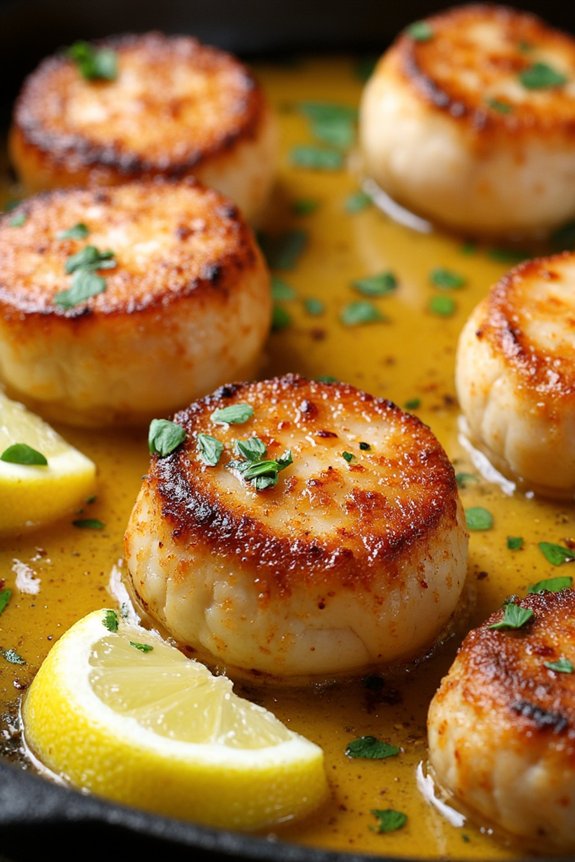
Pan-seared scallops with garlic butter is an Italian-inspired seafood dish that exudes elegance and simplicity. The key to achieving perfectly cooked scallops lies in the searing process, which imparts a beautiful golden-brown crust while maintaining a tender, juicy interior. The addition of garlic butter not only enhances the natural sweetness of the scallops but also adds a rich, savory depth to the dish.
Ideal for a special occasion or a refined weeknight dinner, this recipe is sure to impress with its delightful blend of flavors and textures. To serve 4-6 people, this dish pairs wonderfully with a side of fresh, crusty bread or a light salad, making it a complete and satisfying meal. The buttery sauce can be used to drizzle over both the scallops and any accompanying sides, guaranteeing that every bite is infused with the luscious taste of garlic and herbs.
By following the steps outlined below, you’ll master the art of pan-searing scallops and creating a memorable dining experience for your family or guests.
Ingredients:
- 1 1/2 pounds large sea scallops (approximately 16-20 scallops)
- Salt and freshly ground black pepper
- 2 tablespoons olive oil
- 4 tablespoons unsalted butter
- 4 cloves garlic, minced
- 2 tablespoons fresh lemon juice
- 2 tablespoons chopped fresh parsley
- Lemon wedges, for serving
Instructions:
- Prepare the Scallops: Begin by patting the scallops dry with paper towels to remove excess moisture. This is essential for achieving a good sear. Season both sides of the scallops generously with salt and freshly ground black pepper.
- Heat the Pan: In a large skillet, heat the olive oil over medium-high heat. Make sure the pan is hot before adding the scallops to guarantee a proper sear.
- Sear the Scallops: Place the scallops in the skillet, making sure not to overcrowd the pan. Cook the scallops for about 2-3 minutes on one side without moving them, allowing a golden crust to form. Flip the scallops and cook for an additional 2 minutes until the other side is golden brown and the scallops are opaque in the center. Remove the scallops from the pan and set them aside.
- Make the Garlic Butter Sauce: Reduce the heat to medium and add the butter to the same skillet. Allow it to melt and then add the minced garlic. Sauté the garlic for about 1 minute until fragrant, taking care not to burn it.
- Add Lemon and Parsley: Stir in the fresh lemon juice and chopped parsley, mixing well with the butter and garlic. Let the sauce simmer for about 1 minute to blend the flavors.
- Combine and Serve: Return the scallops to the skillet, spooning the garlic butter sauce over them to coat. Allow the scallops to warm through for an additional 30 seconds. Serve immediately with lemon wedges on the side.
Extra Tips:
When cooking pan-seared scallops with garlic butter, it’s important to use dry scallops rather than wet or treated ones, as the latter can release excess liquid and prevent a proper sear. If possible, purchase scallops that are labeled as “dry” or ask your fishmonger for confirmation.
Additionally, make sure your skillet is preheated to the right temperature to achieve that perfect golden crust. If the scallops release easily from the pan, they’re ready to be flipped. Finally, keep the garlic from burning by reducing the heat when making the sauce, as burnt garlic can introduce a bitter taste to the dish.
Amalfi Coast Lemon Shrimp Risotto

The Amalfi Coast is famous for its breathtaking views, beautiful landscapes, and, of course, its delectable cuisine. One of the standout dishes from this region is the Amalfi Coast Lemon Shrimp Risotto. This dish combines the fresh and zesty flavor of Amalfi lemons with succulent shrimp and creamy risotto, creating a harmonious blend of taste and texture.
It’s vital to bring a taste of Italy into your home, capturing the essence of the Mediterranean with every bite. Creating this delightful dish requires patience and attention to detail, as the creamy consistency of a good risotto is achieved through a slow and steady cooking process.
The key to mastering the Amalfi Coast Lemon Shrimp Risotto is balancing the flavors so that the citrusy tang of the lemon enhances the natural sweetness of the shrimp without overpowering it. The result is a luxurious and comforting meal that’s sure to impress family and friends.
Ingredients (Serves 4-6)
- 1 pound large shrimp, peeled and deveined
- 1 tablespoon olive oil
- 1 small onion, finely chopped
- 2 garlic cloves, minced
- 1 ½ cups Arborio rice
- 1 cup dry white wine
- 5 cups chicken or vegetable broth
- Zest and juice of 2 Amalfi lemons
- ½ cup grated Parmesan cheese
- 2 tablespoons unsalted butter
- Salt and pepper, to taste
- Fresh parsley, chopped, for garnish
Cooking Instructions
- Prepare the Shrimp: In a large pan over medium heat, add the olive oil and let it warm up. Add the shrimp and cook for about 2-3 minutes on each side until they turn pink and opaque. Remove from the pan and set aside.
- Sauté the Aromatics: In the same pan, add the chopped onion and garlic. Sauté them until the onion becomes translucent and the garlic is fragrant, about 3-4 minutes.
- Toast the Rice: Add the Arborio rice to the pan with the onions and garlic. Stir the rice continuously for about 2 minutes until it’s lightly toasted and coated with the oil.
- Deglaze with Wine: Pour in the white wine, stirring frequently, until the wine is fully absorbed by the rice.
- Cook the Risotto: Begin adding the broth to the rice, one cup at a time, allowing each addition to be absorbed before adding the next. Stir frequently, maintaining a gentle simmer, until the rice is al dente and creamy. This should take approximately 18-20 minutes.
- Add Lemon and Shrimp: Stir in the lemon zest, lemon juice, cooked shrimp, Parmesan cheese, and butter. Mix well until the cheese and butter are melted and the shrimp are heated through. Season with salt and pepper to taste.
- Rest and Serve: Let the risotto sit for a couple of minutes before serving. This allows the flavors to meld and the risotto to set to the perfect consistency.
- Garnish: Serve the risotto warm, garnished with fresh parsley for a burst of color and additional flavor.
Extra Tips
When making risotto, it’s important to use a high-quality Arborio rice, as it has the perfect starch content to achieve that creamy texture.
Stirring continuously is vital to prevent the rice from sticking to the bottom of the pan and to evenly distribute the heat. If you don’t have Amalfi lemons, regular lemons will do, but the unique flavor of Amalfi lemons can elevate the dish.
Finally, taste as you go to adjust seasoning and confirm the perfect balance of flavors. Enjoy your culinary journey to the Amalfi Coast with this delightful dish!
Venetian-Style Sarde in Saor

Venetian-Style Sarde in Saor is a traditional Italian dish that hails from the Veneto region, particularly famous in Venice. This recipe is a delightful combination of sweet and sour flavors, reflecting the unique Venetian culinary tradition where seafood is often preserved in saor, a sweet and tangy marinade. The dish is usually served as an appetizer or a light meal, perfect for enjoying with a glass of crisp white wine. The sardines are first lightly fried and then layered with onions cooked in vinegar, pine nuts, and raisins, creating a dish that’s both flavorful and aromatic.
The origins of Sarde in Saor date back to the Middle Ages when Venetian sailors needed a method to preserve fish for long sea voyages. The saor, which means “flavor” in Venetian dialect, was an effective preservation method, combining vinegar and onions to keep the fish fresh. Today, it’s a celebrated dish enjoyed during the Venetian festival, Festa del Redentore, and served in trattorias across Venice. The combination of ingredients creates a harmonious balance, with the acidity of the vinegar complementing the natural sweetness of the onions and raisins.
Ingredients (serving size: 4-6 people):
- 1 kg fresh sardines, cleaned and filleted
- 2 large onions, thinly sliced
- 100 ml white wine vinegar
- 3 tablespoons olive oil
- 50 g raisins
- 50 g pine nuts
- 3 tablespoons flour, for dusting
- Salt and pepper, to taste
- Vegetable oil, for frying
Instructions:
- Prepare the Sardines: Rinse the sardines under cold water and pat them dry with paper towels. Lightly season the sardines with salt and pepper.
- Dust and Fry the Sardines: Lightly dust the sardines with flour, shaking off any excess. Heat vegetable oil in a frying pan over medium heat. Once hot, fry the sardines in batches until golden brown and crispy, about 2-3 minutes per side. Remove from the pan and place on paper towels to drain excess oil.
- Cook the Onions: In a separate pan, heat the olive oil over medium heat. Add the sliced onions and cook until they become soft and translucent, about 10 minutes. Stir occasionally to prevent them from browning.
- Add Vinegar and Simmer: Once the onions are softened, add the white wine vinegar, raisins, and pine nuts to the pan. Stir the mixture and let it simmer for about 5 minutes, allowing the raisins to plump up and the flavors to meld together.
- Layer the Dish: In a shallow dish, place a layer of fried sardines, followed by a layer of the onion mixture. Repeat the layers until all ingredients are used, finishing with the onion mixture on top.
- Marinate: Cover the dish with plastic wrap and refrigerate for at least 24 hours. This marination allows the flavors to intensify and the fish to absorb the saor.
Extra Tips:
For the best results, allow the Sarde in Saor to marinate for up to 48 hours, as this will enhance the flavor profile even further. Confirm the sardines are fresh and thoroughly cleaned, as this impacts the final taste of the dish.
If you prefer a less sweet dish, you can adjust the quantity of raisins to your liking. Also, consider serving the dish at room temperature to fully appreciate the depth of flavors. This dish pairs wonderfully with a crisp white wine, like Pinot Grigio, which complements the tangy and sweet notes of the saor.
Tuscan Seafood Stew

Tuscan Seafood Stew, also known as Cacciucco, is a hearty and flavorful Italian dish that showcases the best of coastal Tuscany‘s seafood. This aromatic stew combines a variety of fresh seafood with tomatoes, herbs, and a hint of spice, all simmered to perfection. The dish is traditionally served with toasted bread rubbed with garlic, providing a delightful contrast to the rich, savory broth. Perfect for a cozy family dinner or a special occasion, this dish is sure to impress with its vibrant flavors and comforting textures.
The origins of Cacciucco date back to the port city of Livorno, where it was originally created by fishermen who used the catch of the day to make a nourishing meal. Over time, it has become a beloved staple in Tuscan cuisine, celebrated for its unique combination of ingredients and robust taste. This recipe serves 4-6 people, making it ideal for a family meal or a gathering with friends. With just a handful of fresh ingredients and a little patience, you can bring a taste of Tuscany to your own kitchen.
Ingredients
- 2 tablespoons olive oil
- 1 large onion, finely chopped
- 2 cloves garlic, minced
- 1 teaspoon red pepper flakes
- 1 cup dry white wine
- 1 can (14 ounces) crushed tomatoes
- 2 cups fish or seafood stock
- 1 bay leaf
- 1 pound mussels, cleaned and debearded
- 1 pound clams, cleaned
- 1/2 pound squid, cleaned and sliced into rings
- 1 pound firm white fish fillets (such as cod or halibut), cut into 2-inch pieces
- 1/2 pound shrimp, peeled and deveined
- Salt and freshly ground black pepper, to taste
- 2 tablespoons chopped fresh parsley
- Crusty bread, for serving
Cooking Instructions
- Prepare the Base: In a large, heavy-bottomed pot or Dutch oven, heat the olive oil over medium heat. Add the chopped onion and sauté until it becomes translucent, about 5 minutes. Stir in the minced garlic and red pepper flakes, cooking for another minute until fragrant.
- Add Liquids and Simmer: Pour in the white wine and let it simmer for a few minutes, allowing the alcohol to evaporate and the flavors to meld. Add the crushed tomatoes, seafood stock, and bay leaf to the pot. Stir well and bring the mixture to a gentle simmer.
- Cook the Seafood: Add the mussels and clams to the pot, cover, and cook for about 5 minutes until they begin to open. Then, add the squid, fish fillets, and shrimp. Cover and simmer for another 5-7 minutes, or until the shrimp are pink and opaque, the fish is cooked through, and all the shellfish have opened. Discard any shellfish that don’t open.
- Season and Finish: Remove the bay leaf and season the stew with salt and freshly ground black pepper to taste. Stir in the chopped parsley for a burst of freshness.
- Serve: Ladle the stew into bowls, making sure each serving has a good mix of seafood. Serve with slices of crusty bread, toasted and rubbed with garlic, to soak up the delicious broth.
Extra Tips
When preparing Tuscan Seafood Stew, it’s crucial to use the freshest seafood available for the best flavor and texture. If possible, visit a local fish market to select your ingredients.
Also, when cleaning mussels and clams, verify that they’re scrubbed well and any beards are removed from the mussels. For a richer broth, consider using homemade seafood stock.
Finally, adjust the level of red pepper flakes to your liking if you prefer a milder or spicier stew. Enjoy your culinary journey to Tuscany with this delightful dish!
Grilled Branzino With Fresh Herbs
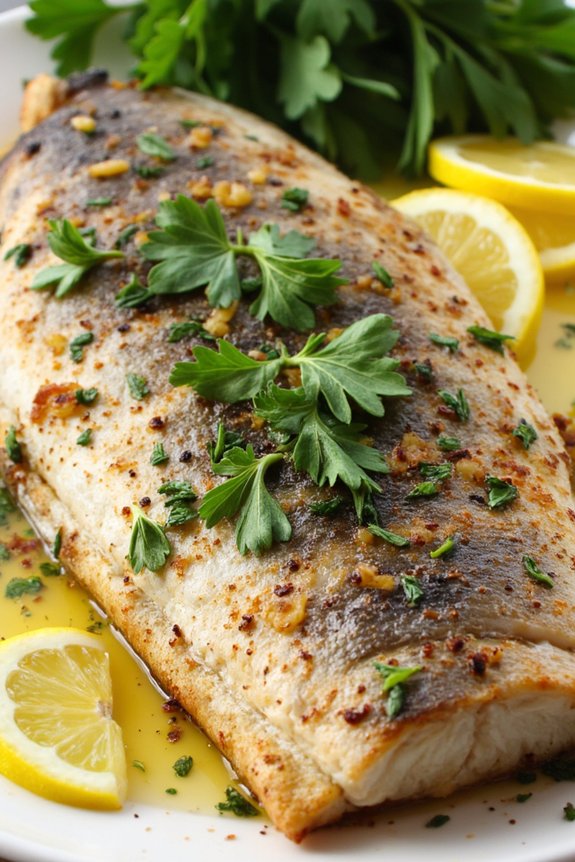
Grilled Branzino With Fresh Herbs is a delightful Italian seafood dish that highlights the natural flavors of the fish, enhanced by aromatic herbs. Branzino, also known as European sea bass, is a popular choice for grilling due to its tender, flaky texture and mild taste. This recipe incorporates fresh herbs that infuse the fish with a vibrant and aromatic flavor profile, making it a perfect dish for a summer gathering or a special dinner at home.
The preparation of Grilled Branzino With Fresh Herbs involves marinating the fish to allow the herbs to impart their flavors deeply. The grilling process gives the fish a slight smokiness, complementing the fresh herb mixture beautifully. This dish isn’t only flavorful but also healthy, providing a good source of protein and omega-3 fatty acids. Serve it with a side of grilled vegetables or a simple salad for a complete meal that’s sure to impress your guests.
Ingredients for 4-6 People:
- 2 whole Branzino (about 1-1.5 pounds each), cleaned and scaled
- 1 bunch of fresh basil
- 1 bunch of fresh parsley
- 4 sprigs of fresh rosemary
- 4 sprigs of fresh thyme
- 4 cloves of garlic, minced
- 1 lemon, sliced
- 1/4 cup of olive oil
- Salt and pepper to taste
- Lemon wedges for serving
Cooking Instructions:
- Prepare the Marinade: In a bowl, combine the minced garlic, olive oil, salt, and pepper. Finely chop the basil, parsley, rosemary, and thyme, and add them to the bowl. Mix thoroughly to combine all the ingredients.
- Marinate the Fish: Rinse the Branzino under cold water and pat dry with paper towels. Make three diagonal slashes on each side of the fish to allow the marinade to penetrate. Rub the herb marinade generously over the entire surface of the fish, including inside the cavity. Stuff the cavity with lemon slices and a few sprigs of the herbs.
- Preheat the Grill: Preheat your grill to medium-high heat, about 400°F (200°C). If using a charcoal grill, make certain the coals are white-hot before cooking.
- Grill the Branzino: Place the fish on the grill grates and cook for about 5-6 minutes per side. Use a spatula to gently flip the fish halfway through cooking. The skin should be crispy and the flesh opaque and flaky when done. A meat thermometer inserted into the thickest part should read 145°F (63°C).
- Serve: Remove the fish from the grill and let it rest for a few minutes. Serve with lemon wedges on the side for added zest.
Extra Tips:
When grilling Branzino, make certain that the grill is well-oiled to prevent the fish from sticking. You can also use a fish basket or foil to make flipping easier and to maintain the fish’s shape.
If fresh herbs aren’t available, dried herbs can be used, but fresh will always provide a more vibrant flavor. Additionally, consider experimenting with different herbs according to your preference or what’s available, such as oregano or dill, to add a personal touch to the dish.
Linguine With Clams and White Wine
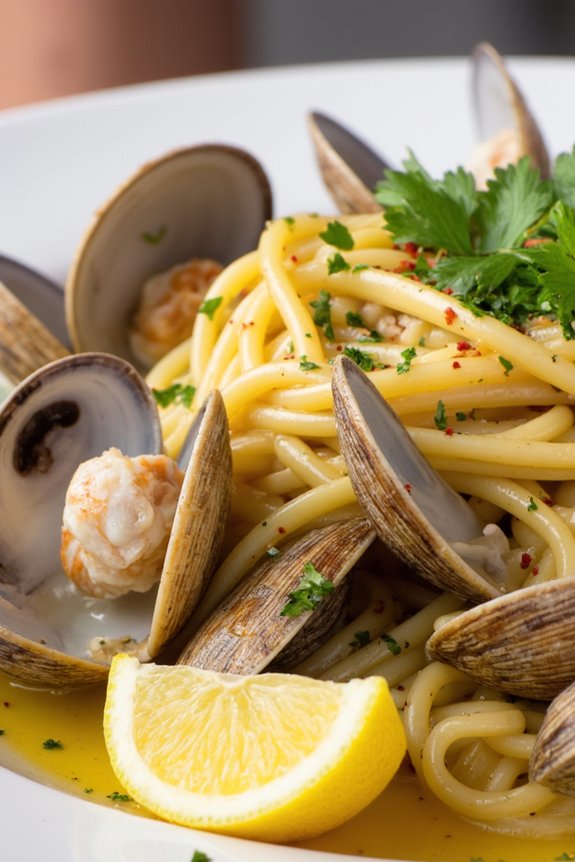
Linguine with Clams and White Wine is a classic Italian seafood dish that combines the briny sweetness of clams with the rich flavor of white wine and the aromatic essence of garlic and parsley.
It’s a simple yet elegant dish that highlights the fresh ingredients used, perfect for a family dinner or a special occasion. This recipe brings the taste of the sea to your home kitchen, allowing you to experience the authentic flavors of coastal Italy.
The dish isn’t only delicious but also quick to prepare, making it an ideal choice for a weeknight meal. The combination of linguine, a type of pasta that pairs beautifully with seafood, and the savory sauce creates a harmonious balance of flavors.
As the clams steam open, they release their juices, which meld with the wine and garlic, creating a sauce that’s both light and full of depth. The addition of freshly chopped parsley adds a touch of freshness, completing this delightful seafood dish.
Ingredients for 4-6 servings:
- 1 pound (450 grams) of linguine
- 3 pounds (1.4 kg) of fresh clams, scrubbed and rinsed
- 1/4 cup (60 ml) of extra-virgin olive oil
- 4 cloves of garlic, minced
- 1/2 cup (120 ml) of dry white wine
- 1/4 teaspoon of red pepper flakes
- Salt and pepper to taste
- 1/4 cup (60 grams) of chopped fresh parsley
- Lemon wedges for serving
Cooking Instructions:
- Prepare the Clams: Begin by scrubbing and rinsing the clams under cold running water to remove any sand or debris. Discard any clams that are cracked or don’t close when tapped.
- Cook the Linguine: In a large pot, bring salted water to a boil. Add the linguine and cook according to the package instructions until al dente. Drain and set aside, reserving a cup of pasta water.
- Sauté the Garlic: In a large skillet or pot, heat the extra-virgin olive oil over medium heat. Add the minced garlic and sauté for about 1 minute until fragrant, being careful not to burn it.
- Add Clams and Wine: Increase the heat to medium-high and add the clams to the skillet, followed by the white wine and red pepper flakes. Cover the skillet and let the clams steam for about 5-7 minutes, or until they open. Discard any clams that don’t open.
- Combine with Pasta: Add the cooked linguine to the skillet, tossing it with the clams and the sauce. If the sauce is too thick, add some reserved pasta water to reach the desired consistency.
- Season and Garnish: Season with salt and pepper to taste. Stir in the chopped parsley and toss everything together until well combined.
- Serve: Serve the linguine with clams immediately, garnished with lemon wedges for a fresh burst of flavor.
Extra Tips:
When selecting clams, choose those that are tightly closed and free from any unpleasant odors. If using frozen clams, thaw them thoroughly before cooking.
It’s essential not to overcook the clams to prevent them from becoming tough and chewy. Also, be careful not to add too much salt, as the clams themselves can be quite briny.
Finally, a good quality dry white wine will enhance the dish’s flavor, so choose one that you’d enjoy drinking.
Fritto Misto Di Mare

Fritto Misto Di Mare is a delightful Italian seafood dish that perfectly showcases the bounty of the sea. This dish, which translates to “mixed fried seafood,” combines a variety of seafood items, lightly battered and fried to golden perfection. It’s a quintessential part of Italian coastal cuisine, particularly popular in regions like Liguria and Sicily, where fresh seafood is abundant.
Fritto Misto Di Mare is often served as an appetizer or a main course, accompanied by a squeeze of fresh lemon juice and sometimes a side of aioli or tartar sauce for dipping.
The beauty of Fritto Misto Di Mare lies in its simplicity and the fresh, high-quality ingredients that make it truly shine. A mix of seafood such as shrimp, calamari, and small fish like anchovies or sardines is typically used, but you can tailor the selection to your preference or what’s available at your local market.
The seafood is coated in a light batter, usually made with flour and sometimes a hint of cornstarch for extra crispiness, then deep-fried until crispy and golden. This dish is a fantastic way to bring a taste of the Italian coast to your table and is sure to be a hit with seafood lovers.
Ingredients for 4-6 servings:
- 250g calamari, cleaned and sliced into rings
- 250g shrimp, peeled and deveined
- 250g small fish (e.g., anchovies or sardines), cleaned
- 1 cup all-purpose flour
- 1/4 cup cornstarch
- Salt and pepper to taste
- Vegetable oil for frying
- Lemon wedges for serving
Cooking Instructions:
- Prepare the Seafood: Begin by cleaning and preparing your seafood. Rinse the calamari, shrimp, and small fish under cold water and pat them dry with paper towels. Confirm all seafood is well-cleaned and excess moisture is removed to prevent oil splatter during frying.
- Mix the Batter: In a large bowl, combine the all-purpose flour, cornstarch, a pinch of salt, and a dash of pepper. Mix well to confirm even distribution of the seasoning.
- Heat the Oil: In a large, deep frying pan or pot, pour enough vegetable oil to cover the seafood. Heat the oil to 350°F (175°C), using a thermometer to maintain the correct temperature for an even fry.
- Coat the Seafood: Dredge the prepared seafood in the flour mixture, ensuring each piece is lightly and evenly coated. Shake off any excess flour to prevent clumping.
- Fry the Seafood: Carefully add the seafood to the hot oil in batches to avoid overcrowding the pan. Fry each batch for about 3-4 minutes or until the seafood is golden brown and crispy. Use a slotted spoon to transfer the cooked seafood to a paper towel-lined plate to drain excess oil.
- Season and Serve: Lightly sprinkle the fried seafood with a little more salt while it’s still hot. Serve immediately with lemon wedges on the side for squeezing over the top.
Extra Tips:
When making Fritto Misto Di Mare, it’s important to keep the oil temperature consistent throughout the frying process. If the oil is too cool, the batter will absorb more oil and become greasy; too hot, and the batter may burn before the seafood is cooked through.
Also, consider experimenting with the seafood selection based on what’s fresh and local to your area. A touch of paprika or cayenne pepper can be added to the flour mixture for an extra kick of flavor if desired. Enjoy this dish fresh for the best texture and flavor experience!
Octopus Salad With Capers and Olives

Octopus Salad With Capers and Olives is a delightful Italian seafood dish that brings the taste of the Mediterranean to your table. This invigorating salad combines tender octopus with the briny flavors of capers and olives, balanced with a hint of lemon and fresh herbs. It’s perfect as a light appetizer or a main course for a summer meal, offering a delightful combination of textures and flavors that seafood lovers will adore.
The key to this dish is confirming the octopus is cooked to perfection, resulting in a tender and succulent texture. Paired with the salty bite of capers and the rich flavor of olives, this salad is both simple and sophisticated. The addition of fresh herbs and a zesty lemon dressing ties all the components together, creating a harmonious blend that’s both vibrant and satisfying.
Ingredients (serving size: 4-6 people):
- 2 pounds of fresh octopus
- 1 lemon, sliced
- 1 onion, quartered
- 1 bay leaf
- 1 cup of mixed olives, pitted and halved
- 2 tablespoons of capers, rinsed
- 1/4 cup of extra virgin olive oil
- 2 tablespoons of lemon juice
- Salt and pepper to taste
- 1/4 cup of fresh parsley, chopped
- 1 tablespoon of fresh oregano, chopped
Instructions:
- Prepare the Octopus: Rinse the octopus thoroughly under cold water to remove any sand or grit. In a large pot, bring water to a boil and add the lemon slices, onion, and bay leaf. Submerge the octopus in the boiling water and reduce the heat to a simmer. Cook the octopus for about 45-60 minutes or until tender. You should be able to easily pierce the thickest part of the tentacles with a fork.
- Cool and Slice the Octopus: Once cooked, remove the octopus from the pot and allow it to cool slightly. Cut the octopus into bite-sized pieces, removing any excess skin if desired.
- Prepare the Dressing: In a small bowl, whisk together the olive oil, lemon juice, salt, and pepper. Adjust the seasoning to taste.
- Assemble the Salad: In a large mixing bowl, combine the octopus pieces, olives, and capers. Pour the dressing over the salad and toss gently to coat the ingredients evenly.
- Add Fresh Herbs: Add the chopped parsley and oregano to the salad and give it a final toss to confirm the herbs are well distributed.
- Chill and Serve: Cover the salad and refrigerate for at least 30 minutes to allow the flavors to meld. Serve chilled or at room temperature, garnished with additional parsley if desired.
Extra Tips:
When cooking octopus, it’s important not to rush the process; cooking it slowly confirms it remains tender rather than chewy. Some chefs prefer to tenderize the octopus by freezing it before cooking, which can help break down the muscle fibers.
Additionally, you can add a cork from a wine bottle to the cooking water—an old Italian trick said to help tenderize the octopus. Finally, feel free to experiment with different types of olives or add a splash of good-quality vinegar for an extra punch of flavor.
