


Gather your loved ones around a table filled with the rich aromas and vibrant colors of Italian cuisine. Serving up big batches of classic dishes like Lasagna Alla Bolognese or Eggplant Parmesan brings such joy. Whether you’re a seasoned chef or just love cooking at home, these recipes are sure to impress. Discover the secrets that make them perfect for any crowd. Let’s explore the universal appeal of these timeless favorites.
Lasagna Alla Bolognese
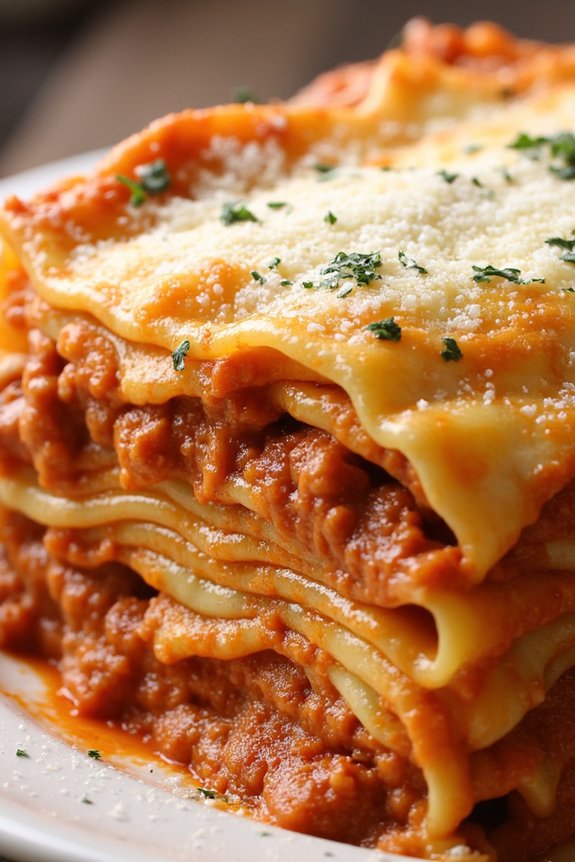
Lasagna Alla Bolognese is a quintessential Italian dish that’s perfect for feeding a crowd. This hearty and flavorful casserole features layers of rich Bolognese sauce, creamy béchamel, and tender pasta sheets, all topped with a generous sprinkle of Parmesan cheese. The combination of these layers creates a mouthwatering meal that’s both comforting and satisfying.
Whether you’re hosting a dinner party or simply want to enjoy a classic Italian meal with your loved ones, Lasagna Alla Bolognese is bound to impress.
The origins of Lasagna Alla Bolognese trace back to the Emilia-Romagna region of Italy, where it has been a beloved staple for generations. The key to this dish’s success lies in the slow-cooked Bolognese sauce, which is prepared with a base of sautéed vegetables, ground meats, tomatoes, and wine, simmered to perfection.
The béchamel sauce adds a creamy contrast to the robust meat sauce, while the lasagna sheets provide structure and texture. When baked in the oven, the flavors meld together beautifully, resulting in a dish that’s both rich and decadent.
Ingredients (Serves 4-6):
- 9-12 lasagna sheets
- 2 tablespoons olive oil
- 1 onion, finely chopped
- 1 carrot, finely chopped
- 1 celery stalk, finely chopped
- 2 cloves garlic, minced
- 500g ground beef
- 250g ground pork
- 1/2 cup red wine
- 1 can (400g) crushed tomatoes
- 2 tablespoons tomato paste
- 1 cup beef broth
- 1 teaspoon dried oregano
- Salt and pepper to taste
- 4 tablespoons butter
- 4 tablespoons all-purpose flour
- 3 cups milk
- A pinch of nutmeg
- 1 cup grated Parmesan cheese
Cooking Instructions:
- Prepare the Bolognese Sauce: Heat olive oil in a large skillet over medium heat. Add the onion, carrot, and celery, and sauté until they’re soft and translucent, about 5-7 minutes. Stir in the garlic and cook for another minute.
- Cook the Meats: Add the ground beef and pork to the skillet, breaking the meat apart with a wooden spoon. Cook until browned and no longer pink, about 10 minutes.
- Add Liquid Ingredients: Pour in the red wine and let it simmer until it has reduced by half. Stir in the crushed tomatoes, tomato paste, beef broth, oregano, salt, and pepper. Reduce the heat to low and let the sauce simmer for at least 45 minutes, stirring occasionally.
- Prepare the Béchamel Sauce: In a separate saucepan, melt the butter over medium heat. Stir in the flour and cook for 1-2 minutes, forming a roux. Gradually whisk in the milk, guaranteeing there are no lumps. Add a pinch of nutmeg and continue to whisk until the sauce thickens, about 10 minutes.
- Preheat the Oven: Preheat your oven to 180°C (350°F).
- Assemble the Lasagna: In a 9×13 inch baking dish, spread a thin layer of Bolognese sauce. Place a layer of lasagna sheets on top, followed by more Bolognese sauce, then a layer of béchamel sauce. Repeat the layers until all ingredients are used, finishing with béchamel sauce on top. Sprinkle with grated Parmesan cheese.
- Bake the Lasagna: Cover the baking dish with aluminum foil and bake in the preheated oven for 25 minutes. Remove the foil and bake for an additional 15 minutes, or until the top is golden and bubbly.
- Rest and Serve: Allow the lasagna to rest for at least 10 minutes before slicing and serving. This helps the layers set and makes serving easier.
Extra Tips:
For an even richer flavor, prepare the Bolognese sauce a day in advance to allow the flavors to meld overnight.
When it comes to the béchamel sauce, be certain that you whisk constantly to prevent any lumps from forming. If you’re looking to add extra depth, consider using a mix of different cheeses, such as mozzarella or provolone, alongside the Parmesan for topping.
Finally, make sure to use fresh lasagna sheets if possible, as they cook more evenly and provide a better texture. Enjoy your homemade Lasagna Alla Bolognese with a side of fresh salad or crusty bread for a complete meal.
Risotto Milanese

Risotto Milanese is a luxurious and creamy rice dish hailing from the heart of Milan, Italy. Known for its vibrant yellow hue, this classic Italian recipe gets its color from saffron, a highly prized spice that imparts a subtle earthy flavor. Perfect for feeding a crowd, Risotto Milanese combines simple ingredients to create an elegant dish that can stand alone as a main course or complement a larger meal.
The key to a perfect risotto is patience; slowly adding broth and stirring frequently allows the rice to release its starch, resulting in a rich and creamy consistency. This dish is deeply rooted in Italian tradition, often served during celebrations and gatherings. With every bite, you can taste the harmony of flavors from the aromatic saffron to the luscious butter and Parmesan cheese.
The key to success with Risotto Milanese is to use high-quality ingredients, such as Arborio rice, which is essential for achieving the creamy texture. This recipe serves 4-6 people, making it ideal for a family meal or a small dinner party.
Ingredients (serves 4-6):
- 1 ½ cups Arborio rice
- 4 cups chicken or vegetable broth
- 1 cup dry white wine
- 1 medium onion, finely chopped
- 2 tablespoons olive oil
- 3 tablespoons unsalted butter
- ½ teaspoon saffron threads
- ¾ cup grated Parmesan cheese
- Salt and pepper to taste
Cooking Instructions:
- Prepare the Saffron: In a small bowl, combine the saffron threads with 2 tablespoons of hot water. Set aside to allow the saffron to steep and release its color and aroma.
- Heat the Broth: In a medium saucepan, heat the chicken or vegetable broth over low heat. Keep it warm throughout the cooking process, as hot broth helps the rice absorb liquid more efficiently.
- Sauté the Onion: In a large, heavy-bottomed pot, heat the olive oil over medium heat. Add the finely chopped onion and sauté for about 5 minutes, or until the onion becomes translucent and soft.
- Toast the Rice: Add the Arborio rice to the pot with the onions. Stir the rice frequently for about 2-3 minutes, making sure that each grain is coated with the oil and begins to toast slightly.
- Add Wine: Pour in the dry white wine and stir continuously until the wine has almost completely evaporated. This step deglazes the pot and infuses the rice with additional flavor.
- Add Broth Gradually: Begin adding the warm broth one ladle at a time. Stir the risotto frequently, allowing each addition of broth to be absorbed before adding the next. Continue this process for about 18-20 minutes, until the rice is cooked al dente.
- Incorporate Saffron: Halfway through cooking, add the saffron water (including threads) to the risotto. Stir well to distribute the saffron evenly, giving the risotto its signature golden color.
- Finish the Risotto: Once the rice is tender and creamy, remove the pot from heat. Stir in the butter and grated Parmesan cheese, mixing until both are fully incorporated. Season with salt and pepper to taste.
- Serve: Serve the Risotto Milanese hot, garnished with additional Parmesan cheese if desired.
Extra Tips: To achieve the perfect creamy texture, remember to stir the risotto frequently, which helps release the starches from the rice. It’s important to add the broth gradually to maintain control over the consistency. If you prefer a slightly looser risotto, add a bit more broth at the end.
Using a high-quality Parmesan cheese will greatly enhance the flavor of the dish. Finally, be sure to taste and adjust the seasoning before serving to guarantee a well-balanced flavor profile.
Osso Buco
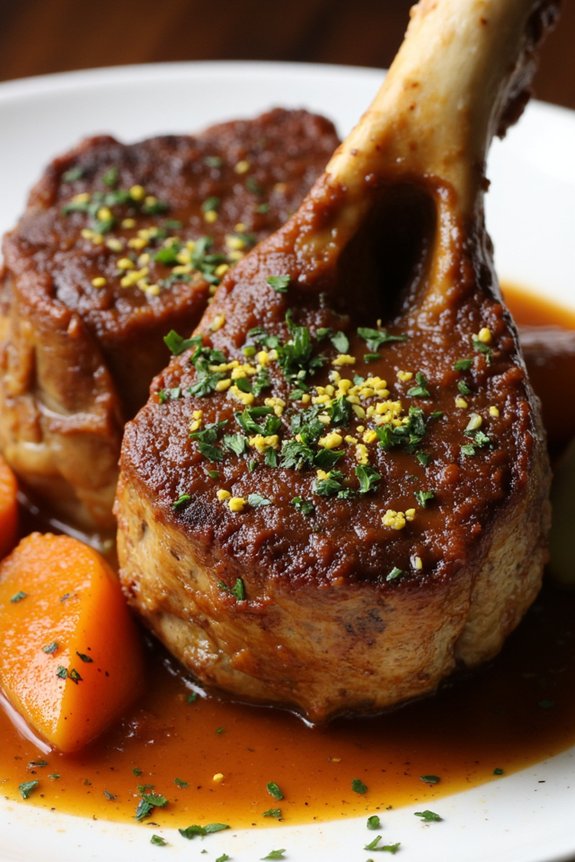
Osso Buco, which translates to “bone with a hole,” is an Italian classic that showcases the rich flavors of slow-braised veal shanks. This dish originates from the Lombardy region and is traditionally served with a gremolata, a zesty mixture of lemon zest, garlic, and parsley, to elevate its depth.
The beauty of Osso Buco lies in its ability to transform a humble cut of meat into an elegant and comforting meal, perfect for feeding a crowd. The slow-cooking process allows the marrow in the bone to melt and infuse the sauce with an unparalleled richness, making it a true Italian delicacy.
To prepare Osso Buco for 4-6 people, you’ll need to start by gathering the freshest ingredients. The key to a successful Osso Buco is to guarantee that each component, from the veal shanks to the vegetables and the broth, is of high quality.
The dish is typically served with a side of saffron risotto or creamy polenta, which complements the succulent meat and robust sauce. With patience and a bit of love, you can create an impressive meal that will transport your guests to the sun-drenched countryside of Italy.
Ingredients for Serving 4-6 People:
- 4-6 pieces of veal shanks, about 1 1/2 inches thick
- Salt and freshly ground black pepper
- 1/2 cup all-purpose flour, for dredging
- 1/4 cup olive oil
- 1/4 cup unsalted butter
- 1 large onion, finely chopped
- 2 carrots, peeled and diced
- 2 celery stalks, diced
- 4 cloves garlic, minced
- 1 cup dry white wine
- 2 cups chicken or beef broth
- 1 can (14 oz) diced tomatoes
- 2 tablespoons tomato paste
- 2 bay leaves
- 1 teaspoon dried thyme
- Zest of 1 lemon
- 2 tablespoons chopped fresh parsley
Cooking Instructions:
- Prepare the Veal Shanks: Season the veal shanks generously with salt and pepper. Dredge each piece in flour, shaking off any excess.
- Brown the Veal Shanks: Heat the olive oil and butter in a large, heavy-bottomed pot or Dutch oven over medium-high heat. Add the veal shanks in a single layer and sear them until they’re golden brown on all sides, about 4-5 minutes per side. Remove the shanks from the pot and set them aside.
- Sauté the Vegetables: In the same pot, add the chopped onion, carrots, celery, and garlic. Cook over medium heat until the vegetables are softened and beginning to caramelize, about 8-10 minutes.
- Deglaze the Pot: Pour in the white wine, scraping up any browned bits from the bottom of the pot with a wooden spoon. Let the wine reduce by half.
- Assemble the Braise: Return the veal shanks to the pot. Add the broth, diced tomatoes, tomato paste, bay leaves, and thyme. Bring the mixture to a gentle simmer.
- Braise the Osso Buco: Cover the pot with a lid and transfer it to a preheated oven at 350°F (175°C). Allow the veal shanks to braise for 1.5 to 2 hours, or until the meat is tender and falling off the bone.
- Prepare the Gremolata: While the veal is cooking, combine the lemon zest and chopped parsley in a small bowl. Set aside for garnish.
- Finish and Serve: Once cooked, remove the bay leaves from the pot. Serve the Osso Buco hot, garnished with the gremolata, alongside risotto or polenta.
Extra Tips:
For the best flavor, try to use bone-in veal shanks with plenty of marrow, as this will enhance the richness of the dish. If you prefer a thicker sauce, you can remove the shanks once cooked and continue simmering the sauce on the stovetop to reduce it further.
Remember to adjust the seasoning with salt and pepper to taste before serving. Additionally, preparing the Osso Buco a day in advance can help the flavors meld together even more, making it an ideal dish for entertaining.
Eggplant Parmesan
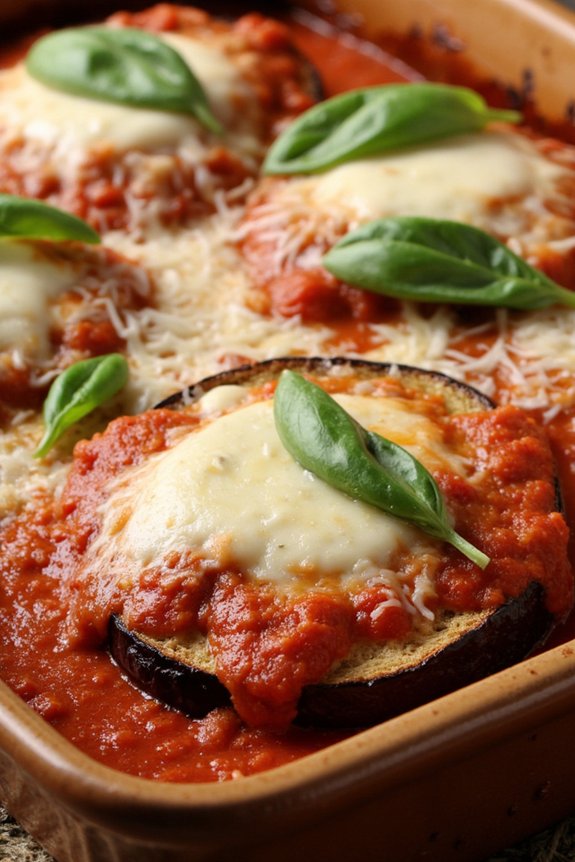
Eggplant Parmesan, or “Melanzane alla Parmigiana,” is a classic Italian dish that’s perfect for feeding a crowd. This comforting casserole features layers of tender eggplant slices, hearty tomato sauce, melted mozzarella, and freshly grated Parmesan cheese. The dish is baked to golden perfection, resulting in a rich and flavorful meal that’s sure to satisfy.
Eggplant Parmesan isn’t only delicious but also a wonderful vegetarian option that’s satisfying enough for both vegetarians and meat-lovers alike.
The key to a great Eggplant Parmesan is properly preparing the eggplants. By slicing the eggplants and lightly salting them, you draw out excess moisture and any bitterness, which results in a better texture and flavor. Once the eggplants are perfectly prepared, they’re coated in breadcrumbs and lightly fried or baked until golden brown.
This dish is a great make-ahead option, as the flavors meld beautifully if prepared in advance, making it ideal for entertaining or family gatherings.
Ingredients for 4-6 servings:
- 3 medium eggplants
- Salt (for sweating the eggplants)
- 1 1/2 cups all-purpose flour
- 4 large eggs
- 2 cups breadcrumbs
- 1/2 cup grated Parmesan cheese
- 2 cups marinara sauce
- 2 cups shredded mozzarella cheese
- Olive oil (for frying)
- Fresh basil leaves (for garnish)
- Black pepper to taste
Cooking Instructions:
- Prepare the Eggplants: Slice the eggplants into 1/4-inch thick rounds. Lay them out on a baking sheet or cutting board, and sprinkle both sides with salt. Let them sit for about 30 minutes to draw out excess moisture. Rinse the eggplant slices under cold water and pat them dry with paper towels.
- Set Up the Breading Station: Place the flour in a shallow dish. In a separate bowl, beat the eggs. Combine the breadcrumbs with 1/4 cup of the grated Parmesan cheese in another shallow dish.
- Bread the Eggplants: Dip each eggplant slice into the flour, shaking off any excess. Then dip it into the beaten eggs, and finally coat it with the breadcrumb mixture, pressing gently to adhere.
- Fry the Eggplants: In a large skillet, heat olive oil over medium-high heat. Fry the breaded eggplant slices in batches, cooking each side for about 3 minutes or until golden brown. Transfer the cooked eggplant to a paper towel-lined plate to drain any excess oil.
- Assemble the Dish: Preheat your oven to 375°F (190°C). Spread a thin layer of marinara sauce on the bottom of a baking dish. Layer half of the fried eggplants, then cover with half of the remaining marinara sauce, half of the mozzarella, and a sprinkle of Parmesan. Repeat the layers with the remaining ingredients.
- Bake: Cover the dish with foil and bake for 25 minutes. Remove the foil and bake for an additional 15 minutes, or until the cheese is bubbly and golden brown.
- Garnish and Serve: Allow the Eggplant Parmesan to cool slightly before serving. Garnish with fresh basil leaves and additional grated Parmesan if desired. Serve warm.
Extra Tips:
For an even lighter version of Eggplant Parmesan, consider baking the breaded eggplant slices instead of frying. Simply place them on a baking sheet lined with parchment paper, and bake at 400°F (200°C) for about 15-20 minutes, flipping halfway through. This method reduces the oil content while still delivering a crispy texture.
When assembling the casserole, use a high-quality marinara sauce or make your own for the best flavor. Finally, this dish can be made a day in advance and reheated just before serving, allowing the flavors to deepen and meld beautifully.
Chicken Cacciatore
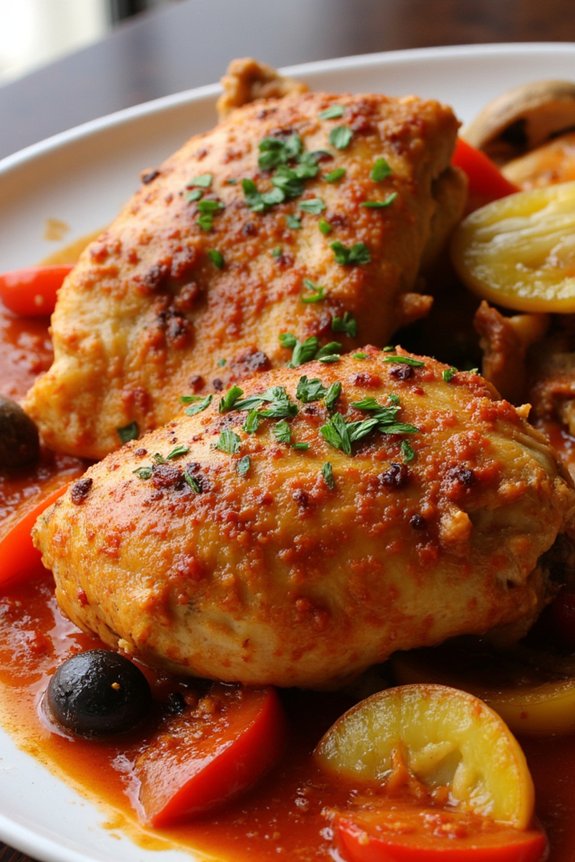
Chicken Cacciatore is a traditional Italian dish that translates to “hunter’s chicken.” This savory stew-like meal is known for its rich flavors and comforting warmth, making it an excellent choice for feeding a crowd.
It’s a rustic dish that combines tender chicken pieces with a flavorful tomato-based sauce, enhanced by the aromatic presence of herbs, bell peppers, and mushrooms. Whether you’re hosting a family dinner or a gathering with friends, Chicken Cacciatore offers a satisfying and hearty meal that’s sure to impress.
The origins of Chicken Cacciatore are rooted in the Italian countryside, where hunters would prepare the dish using the ingredients they’d on hand. The slow-cooked sauce allows the flavors to meld beautifully, while the chicken remains juicy and tender.
This recipe serves 4-6 people and is perfect for those who enjoy a dish that’s both nourishing and easy to prepare. With its enticing aroma and delightful taste, Chicken Cacciatore is a classic Italian dish that never goes out of style.
Ingredients for 4-6 servings:
- 6 bone-in, skin-on chicken thighs
- Salt and pepper to taste
- 2 tablespoons olive oil
- 1 large onion, chopped
- 2 cloves garlic, minced
- 1 red bell pepper, sliced
- 1 yellow bell pepper, sliced
- 8 oz mushrooms, sliced
- 1/2 cup dry white wine
- 1 can (28 oz) crushed tomatoes
- 1 teaspoon dried oregano
- 1 teaspoon dried basil
- 1/2 teaspoon red pepper flakes (optional)
- 1/4 cup black olives, pitted and sliced
- 1/4 cup capers, drained
- 1/4 cup chopped fresh parsley
Cooking Instructions:
- Prepare the Chicken: Season the chicken thighs with salt and pepper on both sides. Heat olive oil in a large, heavy-bottomed skillet or Dutch oven over medium-high heat. Add the chicken thighs, skin side down, and sear until golden brown, about 5 minutes per side. Remove the chicken from the pan and set aside.
- Sauté the Vegetables: In the same pan, add the chopped onion and minced garlic. Sauté for about 2 minutes until the onion becomes translucent. Add the sliced bell peppers and mushrooms, and cook for an additional 5 minutes, stirring occasionally, until the vegetables are softened.
- Deglaze with Wine: Pour in the white wine to deglaze the pan, scraping up any brown bits from the bottom. Allow the wine to reduce slightly, about 2-3 minutes.
- Combine Ingredients: Add the crushed tomatoes, oregano, basil, and red pepper flakes (if using) to the pan. Stir to combine. Return the chicken thighs to the pan, nestling them into the sauce. Reduce the heat to low, cover, and let simmer for about 30-40 minutes, or until the chicken is cooked through and tender.
- Add Finishing Touches: Stir in the olives and capers, and let cook for an additional 5 minutes. Adjust seasoning with salt and pepper to taste.
- Garnish and Serve: Sprinkle the chopped fresh parsley over the dish just before serving. Serve hot with crusty bread, pasta, or polenta to soak up the delicious sauce.
Extra Tips:
For the best results, use bone-in, skin-on chicken thighs as they provide more flavor and stay moist during cooking. If you prefer a lighter version, you can substitute chicken breasts but adjust the cooking time as they cook faster.
Adding a splash of balsamic vinegar can enhance the sauce’s depth of flavor. This dish can also be made a day ahead, as the flavors meld beautifully overnight. Reheat gently on the stovetop before serving for peak taste.
Fettuccine Alfredo
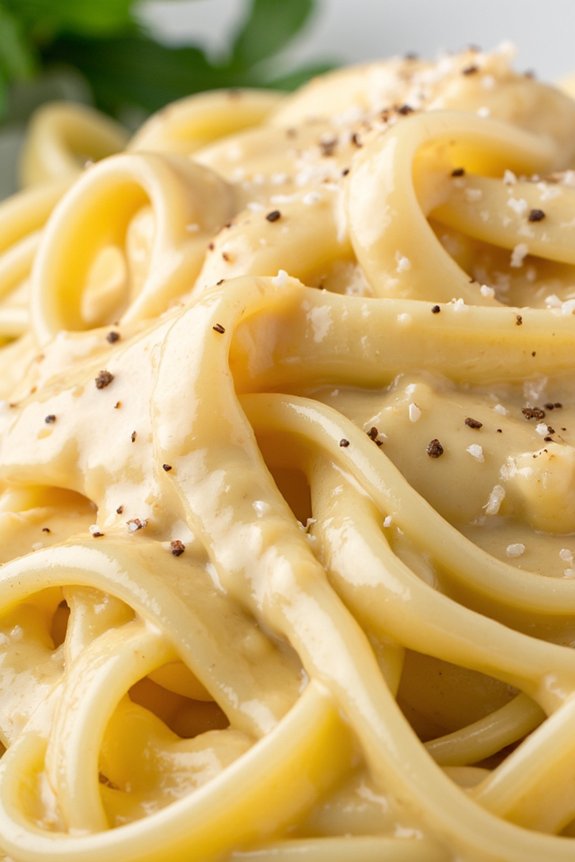
Fettuccine Alfredo is a classic Italian dish known for its rich and creamy texture that effortlessly combines pasta with a velvety sauce made from butter, Parmesan cheese, and cream. This dish is perfect for feeding a crowd, as its comforting flavors are sure to please everyone at the table.
Originating from Rome, this dish has grown in popularity worldwide and is a staple in many Italian restaurants. When prepared correctly, Fettuccine Alfredo offers a luxurious blend of creaminess and subtle cheese flavors that coat the pasta perfectly.
Ideal for gatherings or family dinners, this recipe serves 4-6 people and can be easily scaled up for larger groups. The simplicity of the ingredients allows for quick preparation, making it a go-to option for those looking to create an impressive meal without spending hours in the kitchen.
Whether you’re serving it as a main dish or as a side, Fettuccine Alfredo is sure to be a hit at any event.
Ingredients (Serves 4-6):
- 500g (1 lb) fettuccine pasta
- 1 cup unsalted butter
- 1 1/2 cups heavy cream
- 2 cups freshly grated Parmesan cheese
- Salt, to taste
- Freshly ground black pepper, to taste
- Chopped fresh parsley, for garnish (optional)
Instructions:
- Cook the Pasta: Begin by bringing a large pot of salted water to a boil. Add the fettuccine and cook according to package instructions until al dente. Reserve about 1 cup of pasta water, then drain the pasta and set aside.
- Make the Sauce: In a large skillet over medium heat, melt the butter. Once melted, add the heavy cream and bring to a gentle simmer, stirring continuously to combine.
- Incorporate the Cheese: Gradually add the grated Parmesan cheese to the butter and cream mixture, stirring constantly until the cheese has melted and the sauce is smooth and creamy. If the sauce is too thick, add some reserved pasta water, a little at a time, until the desired consistency is reached.
- Combine Pasta and Sauce: Add the cooked fettuccine to the skillet with the Alfredo sauce. Toss the pasta gently to coat it evenly with the sauce. Season with salt and freshly ground black pepper to taste.
- Serve: Transfer the Fettuccine Alfredo to a serving platter or individual plates. Garnish with chopped fresh parsley, if desired, and serve immediately.
Extra Tips: To guarantee your Fettuccine Alfredo has the best flavor and texture, use freshly grated Parmesan cheese rather than pre-packaged options, as it melts more smoothly into the sauce.
Be cautious not to overheat the sauce after adding the cheese, as this can cause it to separate. If you prefer a lighter version, you can substitute half of the heavy cream with milk, although this may slightly affect the creaminess of the dish.
Additionally, feel free to add cooked chicken, shrimp, or vegetables like broccoli or peas for added flavor and nutrition.
Porchetta

Porchetta is a traditional Italian dish that has been delighting crowds for centuries. Its origins can be traced back to central Italy, particularly the Lazio region. This dish is a deliciously savory, moist, and flavorful roasted pork, often seasoned with garlic, rosemary, fennel, and other herbs, making it a standout centerpiece at any gathering.
Porchetta is known for its crispy skin and tender, juicy meat, making it perfect for feeding a group of 4-6 people. Whether served as a main course or sliced and stuffed into sandwiches, Porchetta is sure to impress your guests with its rich flavors and aromatic herbs.
Crafting the perfect Porchetta requires patience and attention to detail, as the pork needs to be seasoned well in advance and slow-roasted to achieve that signature crispy skin and tender interior. This recipe will guide you through the process of creating a mouthwatering Porchetta that captures the essence of Italian cuisine.
With just a few simple ingredients and some careful preparation, you’ll be ready to serve up a dish that’s both rustic and elegant, bringing a taste of Italy to your table.
Ingredients for 4-6 People:
- 1 boneless pork belly, approximately 3-4 pounds
- 2 tablespoons olive oil
- 6 cloves garlic, minced
- 1 tablespoon fennel seeds
- 2 tablespoons fresh rosemary, finely chopped
- 1 tablespoon fresh sage, finely chopped
- Zest of 1 lemon
- 1 tablespoon salt
- 1 teaspoon black pepper
- 1 teaspoon red pepper flakes (optional)
Cooking Instructions:
- Prepare the Pork Belly: Lay the pork belly flat on a clean surface, skin side down. Score the flesh lightly with a sharp knife, being careful not to cut through to the skin. This will help the seasoning penetrate the meat.
- Make the Seasoning: In a small bowl, combine the minced garlic, fennel seeds, chopped rosemary, sage, lemon zest, salt, black pepper, and red pepper flakes (if using). Mix well to form a fragrant paste.
- Season the Pork: Rub the seasoning paste evenly over the scored side of the pork belly, pressing it into the cuts. Roll the pork belly tightly into a cylindrical shape, with the skin on the outside. Tie the roll securely with kitchen twine at 1-inch intervals to maintain its shape during roasting.
- Refrigerate Overnight: Place the tied pork belly on a plate or tray. Cover it loosely with plastic wrap and refrigerate overnight, or for at least 12 hours. This allows the flavors to fully penetrate the meat.
- Preheat the Oven: Preheat your oven to 325°F (165°C).
- Roast the Porchetta: Transfer the rolled and tied pork belly to a roasting pan. Drizzle with olive oil to help crisp the skin. Roast in the preheated oven for about 2.5 to 3 hours, or until the internal temperature reaches 145°F (63°C).
- Crisp the Skin: Increase the oven temperature to 450°F (230°C) for an additional 15-20 minutes, or until the skin is golden brown and crispy. Keep a close eye on it to prevent burning.
- Rest and Serve: Remove the Porchetta from the oven and let it rest for 15-20 minutes before slicing. This allows the juices to redistribute, keeping the meat moist and tender. Slice and serve as desired.
Extra Tips:
For an even more flavorful Porchetta, consider marinating the pork belly with the seasoning paste for up to 24 hours before cooking. This enhances the depth of flavor and aroma.
Additionally, if you want an extra crispy skin, pat the skin dry with paper towels before roasting and avoid basting it with juices during cooking. Finally, use a meat thermometer to guarantee perfect doneness, and remember that resting the meat is essential for the best texture and flavor.
Enjoy your Porchetta with a side of roasted vegetables or a fresh Italian salad for a complete meal.
Caponata
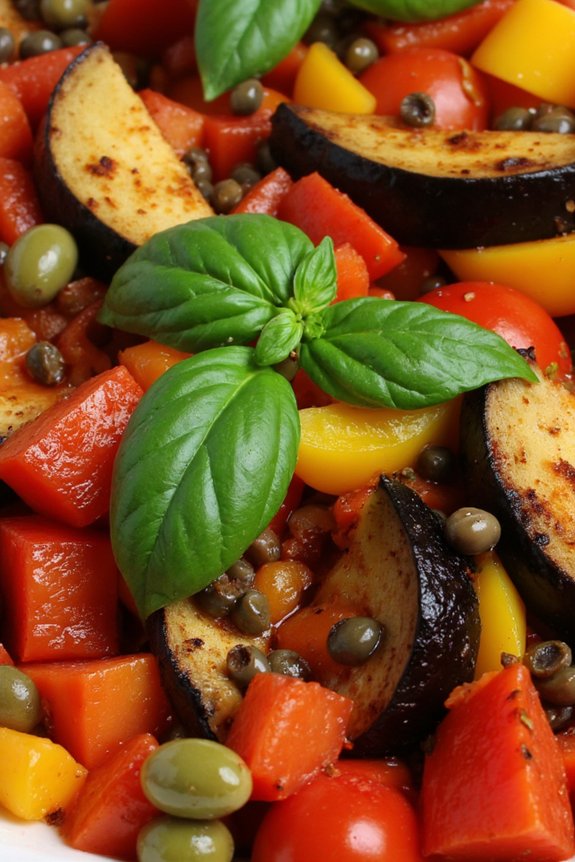
Caponata is a quintessential Sicilian dish that showcases the vibrant flavors of Italy. This sweet and tangy vegetable stew is packed with eggplants, tomatoes, and a medley of other vegetables, all simmered to perfection in a vinegar-based sauce. Traditionally served as an appetizer or side dish, Caponata is a crowd-pleaser that can easily be doubled or tripled for larger gatherings. It embodies the essence of Mediterranean cuisine, focusing on fresh ingredients and balanced flavors.
Perfect for feeding a group of 4-6 people, Caponata can be served warm, at room temperature, or even cold, making it a versatile addition to any meal. The dish is often accompanied by crusty bread, making it an excellent choice for a light lunch or an appetizer before a hearty Italian feast. With its rich and complex flavors, Caponata is sure to become a favorite at your table.
Ingredients for 4-6 servings:
- 2 medium eggplants, diced
- 1 large onion, chopped
- 3 cloves garlic, minced
- 1 red bell pepper, diced
- 1 yellow bell pepper, diced
- 3 large tomatoes, diced
- 1/4 cup capers, drained
- 1/2 cup green olives, pitted and sliced
- 1/4 cup red wine vinegar
- 3 tablespoons sugar
- 1/4 cup extra virgin olive oil
- Salt and pepper to taste
- Fresh basil leaves for garnish
Cooking Instructions:
- Prepare the Eggplant: Begin by salting the diced eggplant to remove any bitterness. Place the eggplant in a colander, sprinkle generously with salt, and let it sit for about 30 minutes. Rinse well and pat dry with a paper towel.
- Sauté the Vegetables: In a large skillet or saucepan, heat the olive oil over medium heat. Add the chopped onion and minced garlic, sautéing until the onion becomes translucent and the garlic is fragrant, about 5 minutes.
- Cook the Eggplant: Add the diced eggplant to the pan, stirring to coat it with the oil. Cook for 8-10 minutes until the eggplant begins to soften and brown.
- Add the Peppers and Tomatoes: Stir in the diced red and yellow bell peppers and cook for another 5 minutes. Add the diced tomatoes and continue to cook until they start to break down and release their juices, about 10 minutes.
- Incorporate Remaining Ingredients: Add the capers, green olives, red wine vinegar, and sugar to the mixture. Stir well to combine and season with salt and pepper to taste.
- Simmer the Caponata: Reduce the heat to low and let the mixture simmer uncovered for about 20-25 minutes, stirring occasionally, until the vegetables are tender and the flavors meld together.
- Serve and Garnish: Remove from heat and allow the Caponata to cool slightly before serving. Garnish with fresh basil leaves for a burst of flavor and color.
Extra Tips:
For best results, make the Caponata a day ahead. This allows the flavors to develop and meld together even more, enhancing the overall taste.
If you prefer a smoother texture, you can chop the vegetables more finely or even pulse them a few times in a food processor before cooking.
Additionally, feel free to adjust the sugar and vinegar to balance the sweetness and acidity to your liking.
Caponata is also highly adaptable; try adding pine nuts or raisins for a unique twist.
Minestrone Soup
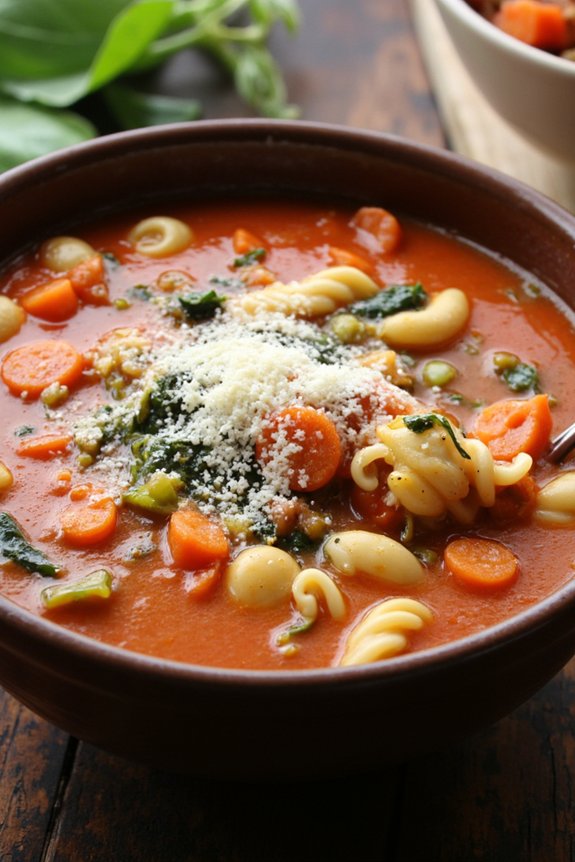
Minestrone Soup is a quintessential Italian dish that’s perfect for feeding a crowd. This hearty vegetable soup is known for its rich flavors and wholesome ingredients, making it a staple in Italian households. With a medley of seasonal vegetables, beans, and pasta, Minestrone Soup isn’t only nutritious but also incredibly satisfying.
It’s a versatile dish that can be adapted to whatever vegetables you have on hand, and it’s perfect for serving as a starter or the main course when paired with crusty bread. This recipe for Minestrone Soup serves 4-6 people, making it ideal for a family dinner or a small gathering. The soup is both filling and light, capturing the essence of Italian comfort food.
By combining simple ingredients in a single pot, you’ll create a symphony of flavors that are sure to warm both the body and soul. Whether you’re looking for a delicious way to enjoy fresh produce or a comforting meal on a chilly day, this Minestrone Soup is bound to become a favorite.
Ingredients:
- 2 tablespoons olive oil
- 1 medium onion, diced
- 2 cloves garlic, minced
- 2 carrots, diced
- 2 celery stalks, diced
- 1 zucchini, diced
- 1 potato, peeled and diced
- 1 can (14 oz) diced tomatoes
- 4 cups vegetable broth
- 1 can (15 oz) cannellini beans, drained and rinsed
- 1 cup green beans, trimmed and cut into 1-inch pieces
- 1 teaspoon dried oregano
- 1 teaspoon dried basil
- Salt and pepper to taste
- 1 cup small pasta (such as ditalini or elbow)
- 2 cups fresh spinach
- Grated Parmesan cheese, for serving (optional)
Instructions:
- Prepare the Vegetables: Begin by heating 2 tablespoons of olive oil in a large pot over medium heat. Add the diced onion and minced garlic, and sauté for about 3-4 minutes until the onion becomes translucent and fragrant.
- Add the Vegetables: Stir in the diced carrots, celery, zucchini, and potato. Cook for another 5 minutes, stirring occasionally, until the vegetables begin to soften.
- Incorporate the Tomatoes and Broth: Pour in the can of diced tomatoes along with their juices and the vegetable broth. Stir well to combine.
- Add Beans and Green Beans: Add the drained and rinsed cannellini beans and the cut green beans to the pot. Mix in the dried oregano and basil, and season with salt and pepper to taste.
- Simmer the Soup: Bring the mixture to a gentle boil, then reduce the heat to low. Cover the pot and let the soup simmer for about 30 minutes, allowing the flavors to meld and the vegetables to tenderize.
- Cook the Pasta: While the soup is simmering, cook the pasta separately according to package instructions. Drain and set aside.
- Combine Pasta and Spinach: Once the soup has simmered, add the cooked pasta and fresh spinach to the pot. Stir until the spinach wilts and the pasta is heated through.
- Serve: Ladle the soup into bowls and top with grated Parmesan cheese, if desired. Serve hot with crusty bread on the side.
Extra Tips:
For a richer flavor, you can deglaze the pan with a splash of white wine before adding the tomatoes and broth. If you prefer a thicker soup, mash some of the beans before adding them to the pot.
Minestrone is also an excellent make-ahead dish, as the flavors continue to develop over time. Just be sure to store the pasta separately if you plan to refrigerate leftovers to prevent it from absorbing too much liquid and becoming mushy. Enjoy this versatile soup with a side of garlic bread or a fresh salad for a complete meal.
Seafood Paella

Seafood Paella is a vibrant and flavorful dish that brings the essence of the sea to your table. Although originally a Spanish creation, it has been embraced by Italian cuisine, making it a delightful addition to any gathering or family meal. This vibrant dish combines a variety of fresh seafood, aromatic rice, and a blend of spices to create a harmonious and satisfying meal that’s perfect for feeding a crowd.
The rich flavors and beautiful presentation of Seafood Paella make it an ideal choice for those special occasions when you want to impress your guests with something both delicious and visually stunning.
Preparing Seafood Paella requires some planning and patience, but the reward is well worth the effort. The key to a successful paella is using the freshest ingredients possible, especially when it comes to the seafood. The combination of shrimp, mussels, and calamari coupled with the fragrant saffron-infused rice creates a dish that’s both luxurious and comforting.
With the right preparation, Seafood Paella can become the highlight of your meal, transporting your guests to the coastal regions of Italy with every bite.
Ingredients (Serves 4-6):
- 2 tablespoons olive oil
- 1 onion, finely chopped
- 2 cloves garlic, minced
- 1 red bell pepper, diced
- 1 teaspoon smoked paprika
- 1/2 teaspoon saffron threads
- 2 cups Arborio or paella rice
- 4 cups seafood or chicken stock
- 1/2 cup dry white wine
- 12 large shrimp, peeled and deveined
- 12 mussels, scrubbed and debearded
- 8 ounces calamari, cleaned and sliced into rings
- 1 cup frozen peas
- Salt and pepper to taste
- Lemon wedges and fresh parsley for garnish
Cooking Instructions:
- Prepare the Base: In a large paella pan or wide skillet, heat the olive oil over medium heat. Add the chopped onion and garlic, sautéing until the onion becomes translucent, about 3-4 minutes. Stir in the diced red bell pepper and cook for another 2 minutes until softened.
- Add the Spices and Rice: Sprinkle the smoked paprika and saffron threads into the pan, stirring to combine with the vegetables. Add the Arborio rice, stirring well to coat the grains in the oil and spices. Cook for 1-2 minutes until the rice appears slightly translucent.
- Simmer with Stock: Pour in the seafood or chicken stock and white wine, stirring gently to distribute the rice evenly. Bring the mixture to a simmer, allowing it to cook for about 10 minutes without stirring, until the rice has absorbed most of the liquid.
- Add the Seafood: Distribute the shrimp, mussels, and calamari evenly over the rice. Cover the pan with a lid or foil, and let the paella cook for another 10-15 minutes. The mussels should open, and the shrimp should be pink and opaque.
- Incorporate Peas and Season: Sprinkle the frozen peas over the top of the paella, seasoning with salt and pepper to taste. Cover again and cook for an additional 5 minutes, guaranteeing the peas are heated through and the flavors meld together.
- Rest and Serve: Remove the paella from the heat and let it rest, covered, for 5 minutes. Garnish with fresh parsley and lemon wedges before serving.
Extra Tips:
To confirm your Seafood Paella is perfectly cooked, resist the urge to stir the rice once you’ve added the stock. The secret to a good paella is to let it develop a crispy crust, known as “socarrat,” at the bottom of the pan.
Also, be mindful of the cooking times for the seafood; overcooking can make shrimp and calamari rubbery. Finally, use a broad, shallow pan to allow the rice to cook evenly and absorb all the delicious flavors. Enjoy your culinary journey with this exquisite dish!
Tiramisu

Tiramisu is a classic Italian dessert that’s as beloved as it’s delicious. Known for its layers of coffee-soaked ladyfingers, rich mascarpone cream, and a dusting of cocoa powder, this dessert is a crowd pleaser that’s perfect for gatherings. The name “Tiramisu” translates to “pick me up” in Italian, a nod to the invigorating coffee and cocoa flavors that define this dish.
Whether you’re hosting a dinner party or just want to enjoy a taste of Italy at home, this recipe will guide you through creating a luscious tiramisu that serves 4-6 people.
The key to a great tiramisu lies in the quality of its ingredients. Freshly brewed espresso, high-quality mascarpone cheese, and authentic Italian ladyfingers (savoiardi) are vital for achieving the perfect balance of flavors and textures.
Preparing tiramisu in advance is ideal, as it allows the flavors to meld together beautifully, resulting in a creamy, decadent dessert that’s sure to impress your guests. Follow this recipe to create a memorable tiramisu that’s both traditional and tantalizing.
Ingredients for 4-6 Servings:
- 1 cup espresso or strong coffee, cooled to room temperature
- 3 tablespoons coffee liqueur (optional)
- 3 large eggs, separated
- 1/2 cup granulated sugar, divided
- 8 ounces mascarpone cheese, at room temperature
- 1 teaspoon vanilla extract
- 24-30 ladyfingers (savoiardi)
- Unsweetened cocoa powder, for dusting
- Dark chocolate shavings, for garnish (optional)
Cooking Instructions:
1. Prepare the Coffee Mixture:
Brew 1 cup of strong espresso or coffee and let it cool to room temperature. If you like, add 3 tablespoons of coffee liqueur to the cooled coffee for an extra depth of flavor. Set aside.
2. Make the Mascarpone Cream:
In a large mixing bowl, whisk together the egg yolks and 1/4 cup of the sugar until the mixture is pale and creamy. Add the mascarpone cheese and vanilla extract, and gently fold until smooth and well combined.
3. Whip the Egg Whites:
In a separate clean bowl, beat the egg whites until soft peaks form. Gradually add the remaining 1/4 cup sugar and continue to beat until stiff peaks are achieved. Carefully fold the egg whites into the mascarpone mixture, ensuring the mixture remains light and airy.
4. Assemble the Tiramisu:
Quickly dip each ladyfinger into the coffee mixture, ensuring they’re soaked but not soggy. Lay a layer of soaked ladyfingers in the bottom of a 9×9 inch dish or similar-sized serving dish. Spread half of the mascarpone cream over the ladyfingers, smoothing the top with a spatula.
5. Repeat the Layers:
Add another layer of coffee-soaked ladyfingers over the mascarpone cream. Spread the remaining mascarpone mixture on top. Smooth the surface with a spatula.
6. Chill the Dessert:
Cover the dish with plastic wrap and refrigerate for at least 4 hours, preferably overnight. This chilling time allows the flavors to meld and the dessert to set properly.
7. Finish and Serve:
Before serving, dust the top of the tiramisu generously with unsweetened cocoa powder. If desired, garnish with dark chocolate shavings for an extra touch of elegance. Slice and serve chilled.
Extra Tips:
When making tiramisu, it’s essential to gently fold the egg whites into the mascarpone to maintain the cream’s airy texture.
Avoid over-soaking the ladyfingers in coffee, as they can become overly soggy and compromise the structure of the dessert. Preparing tiramisu a day in advance not only enhances the flavors but also makes it a convenient dessert option for entertaining.
Additionally, feel free to customize the coffee liqueur according to personal preference, or omit it entirely for a non-alcoholic version.
